
How can the structural integrity of warehouse racking systems be improved?
The structural integrity of warehouse racking systems is improved through competent design and installation, correct load management, routine inspections, effective impact protection and prompt repair or replacement of damaged components. Preventative maintenance, documented safety checks and trained personnel help keep the system stable, compliant and fit for purpose.
The structural integrity of warehouse racking systems is improved by combining competent design, correct installation, controlled loading, regular inspections, effective impact protection and prompt repair of damage. The objective is to ensure that every upright, beam, connector, baseplate and brace can safely perform its intended function throughout the system’s service life.
Start with a suitable design and competent installation
Warehouse racking should be designed for the building, operating conditions, stored loads and handling equipment used on site. The design should account for factors such as floor condition, clearances, aisle layout, pallet dimensions, load distribution, seismic considerations where relevant, and the risk of impact from lift trucks or other vehicles.
Installation should be carried out by competent operatives in accordance with the manufacturer’s instructions and the approved design. Uprights must be plumb, frames correctly aligned, beams properly connected and locking devices fully engaged. Baseplates should be securely fixed to a suitable floor, with any required shims or packers installed correctly. Unauthorised alterations, mixed components or improvised repairs can change the way loads are transferred and may reduce the system’s capacity.
Control the loads placed on the system
Load capacity is determined by the design of the complete warehouse racking system, not by an individual beam or upright considered in isolation. Safe working load notices should be displayed where they can be seen by operatives and should reflect the installed configuration. They should identify the relevant beam and bay capacities, pallet arrangement and any restrictions that apply.
- Store only loads that are suitable for the specified pallet positions and capacity.
- Keep pallets stable, undamaged and correctly positioned on the beams or supports.
- Distribute loads evenly and avoid placing concentrated loads where the design does not allow for them.
- Do not exceed stated capacities or use a bay for a different purpose without a competent design review.
- Review the system whenever pallet sizes, load weights, handling equipment or the storage layout changes.
Loads should be placed and removed carefully to minimise sudden impacts. Pallets should not be dragged across beams, pushed into adjacent loads or left projecting into aisles. These practices can damage components and create additional forces that were not considered in the original design.
Prevent impact damage
Impact from lift trucks is a common threat to the integrity of warehouse racking. Upright guards, end-of-aisle protection, column protection and suitable barriers can reduce the likelihood and severity of contact. Protection should be selected for the type of traffic, vehicle speeds, operating clearances and the particular components being protected. It must not obstruct inspections, reduce required clearances or introduce new trip and handling hazards.
Protection does not remove the need for careful driving and effective traffic management. Clearly defined routes, suitable aisle widths, speed controls, pedestrian segregation, good visibility and operator training all help reduce collision risk. Damaged protection should also be reported and repaired, as a missing or displaced guard leaves the underlying structure exposed.
Inspect the system at appropriate intervals
Routine visual checks by trained site personnel can identify obvious problems between formal inspections. These checks should look for bent uprights or beams, damaged braces, missing locking pins, loose fixings, displaced protection, uneven loading, leaning frames and changes to the floor or surrounding area. Findings should be recorded and escalated through the site’s reporting procedure.
A more detailed warehouse racking inspection should be completed by a technically competent person at a suitable frequency, with the interval based on the operating environment, level of use, previous damage and risk assessment. In the UK, inspection arrangements are commonly aligned with the principles of HSE guidance HSG76 Warehousing and storage: A guide to health and safety and the relevant provisions of BS EN 15635. The inspection should consider the whole installation, including structural components, connections, floor fixings, load notices, protection, access arrangements and evidence of overloading or impact.
Act promptly when damage is found
Damage should be assessed rather than ignored or judged acceptable solely because the system remains in use. A bent upright, distorted beam, cracked weld, displaced brace or damaged connector may affect the load path and the stability of connected bays. The correct response depends on the severity and location of the defect.
- Report the damage immediately to the responsible person.
- Prevent further loading of an affected location where its safety is uncertain.
- Unload or isolate the area when required by the competent assessor.
- Arrange an appropriate repair or replacement using compatible components.
- Do not straighten, weld, drill or modify structural parts without competent technical approval.
- Reinspect the area and remove any restriction only when it has been confirmed safe.
Temporary measures should be clearly controlled and should not become a substitute for a permanent repair. Replacement parts must match the system specification and should be installed in accordance with the manufacturer’s requirements or an approved repair method.
Maintain the surrounding environment
Structural performance can be affected by conditions around the installation. Floors should remain capable of supporting the imposed loads, and settlement, cracking or local deterioration should be investigated. Water ingress, corrosion, chemical exposure and excessive heat can weaken or degrade components over time. Good housekeeping also matters: debris, packaging and damaged pallets can obstruct aisles, conceal defects and increase the likelihood of impact.
Lighting should allow drivers and inspectors to see load positions, protection and structural components clearly. Fire protection, drainage, ventilation and building alterations should be reviewed where they may affect clearances, access or the stored loads. Any significant change to the building or warehouse operation should trigger a review of the warehouse racking layout and risk assessment.
Train people and control changes
Everyone who loads, unloads, inspects, repairs or works near warehouse racking should understand the site rules that apply to them. Training should cover safe loading, load notices, reporting damage, keeping aisles clear, recognising unsafe conditions and the actions required after an impact. Lift-truck operators also need instruction that reflects the actual aisle layout, vehicle type and handling activities on site.
Changes should be managed formally. Moving beams, adding bays, changing levels, removing braces, fitting accessories or altering the load pattern can affect the original design. Before work begins, the proposed change should be checked by a competent person, documented and approved. Updated load notices, drawings and inspection records should then be made available to the people who need them.
Keep clear records and review recurring problems
Inspection reports, damage notifications, repair records, training records, load information and layout drawings provide evidence that the system is being managed. Records also help identify recurring impact locations, repeated overloading, unsuitable pallets or weaknesses in traffic controls. Addressing the underlying cause is more effective than repeatedly repairing the same component.
A practical improvement programme may therefore combine stronger protection, revised vehicle routes, better pallet control, additional operator training and changes to storage rules. Regular review ensures that preventative measures continue to reflect how the warehouse is actually being used.
In practice, the most reliable way to improve structural integrity is to treat design, operation, inspection and repair as one connected process. Competent inspections can identify developing defects, determine whether a component requires monitoring or urgent action, and provide a clear basis for safe repairs. This preventative approach helps keep warehouse racking stable, compliant and suitable for the loads and working conditions placed upon it.
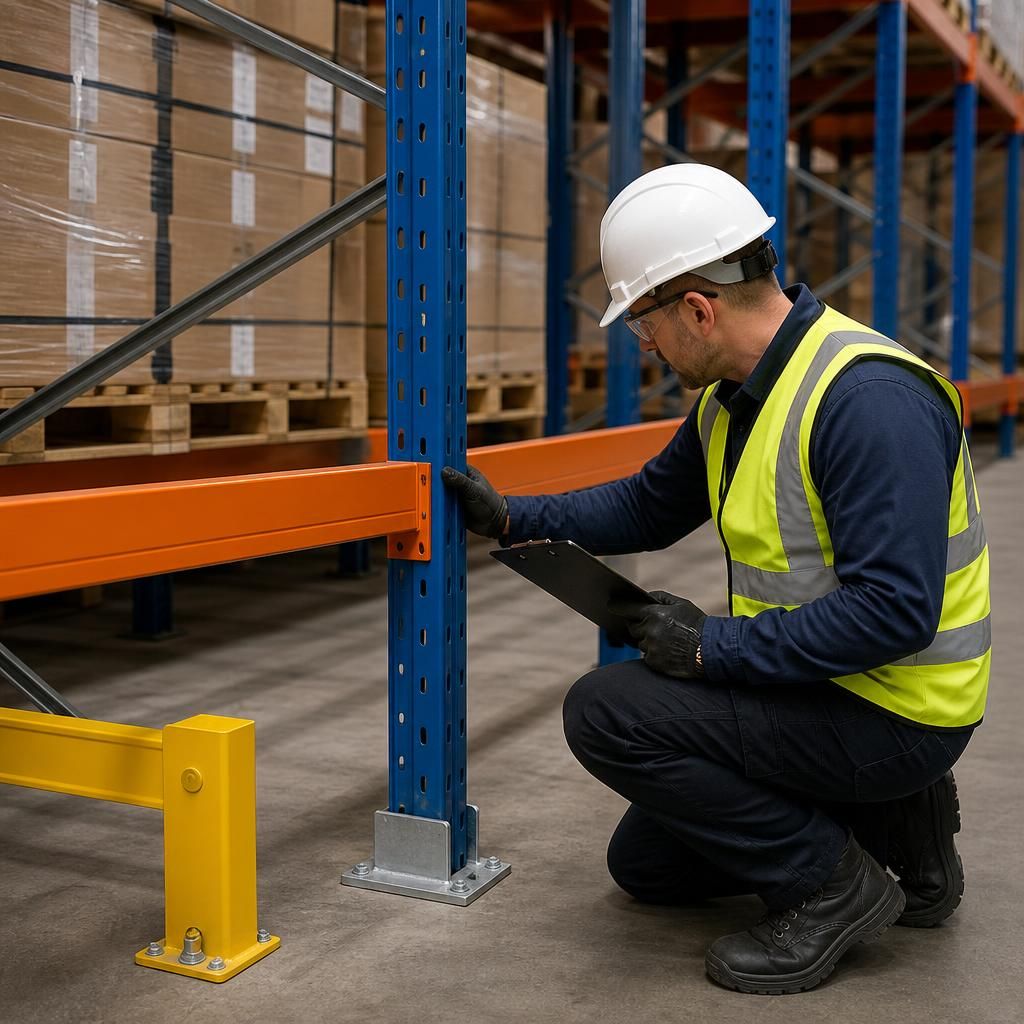
The structural integrity of warehouse racking is best protected when damage is reported, assessed and repaired before the affected area is used again. Bent uprights, distorted beams, damaged braces, loose connections and displaced protection can alter how loads transfer through the system, even when the installation appears stable.
After an impact or defect is identified, isolate the affected location where necessary and arrange assessment by a competent person. Repairs should use compatible components and an approved method; structural parts should never be straightened, welded, drilled or modified without technical authorisation. A follow-up inspection should confirm that the warehouse racking is safe before normal loading resumes.
Arrange an expert warehouse racking integrity assessment
Arrange an expert warehouse racking integrity assessment to identify damage, loading risks and structural concerns before they affect safety or operations. Contact Able Racking to agree a suitable inspection and receive clear recommendations for any required repairs or preventative measures.