
What role do safety audits play in maintaining warehouse racking safety?
Safety audits identify damage, overloading, unstable components and other hazards that could affect warehouse racking performance. They support compliance by documenting defects, prioritising corrective action and confirming that the system remains safe for everyday use.
Safety audits play a preventative role in maintaining warehouse racking safety. They provide a structured assessment of the storage system, identifying damage, overloading, instability, missing components and unsafe practices before these defects develop into a serious incident. A properly completed audit also creates a clear record of findings, recommended actions and follow-up checks, helping the warehouse remain compliant and safe for everyday operations.
Unlike an informal visual check, a safety audit considers the condition of the warehouse racking, how it is being used and whether relevant procedures are being followed. It should be carried out by a competent person with suitable knowledge of warehouse racking systems, damage assessment and safe working practices. An audit may be completed as part of a planned inspection programme or arranged after an impact, layout change, loading change or other event that could affect safety.
What does a warehouse racking safety audit assess?
An audit normally examines the complete storage installation rather than focusing on one isolated defect. Depending on the site and system design, the assessment may include:
- Uprights, frames, beams, bracing and baseplates for distortion, dents, cracks, corrosion or other damage.
- Beam connections, safety pins, clips and locking devices to confirm that components are correctly fitted and secure.
- Anchor fixings and floor connections, including signs of movement, loosening or damage.
- Load notices and system identification, checking that the stated capacities are visible, suitable and understood by operatives.
- Evidence of overloading, uneven loading, poor load distribution or goods extending beyond the intended storage position.
- Clearances between stored loads, handling equipment and the warehouse racking.
- Protection in areas exposed to forklift or other vehicle impact.
- Decking, support bars, mesh panels and other components that prevent goods from falling or being incorrectly positioned.
- The surrounding floor, aisles and access routes where defects could affect the stability or safe use of the installation.
- Housekeeping, operating practices and any changes made since the system was installed or last assessed.
The auditor should compare what is present on site with the original design information, load specifications and manufacturer’s guidance where those records are available. This helps identify unauthorised alterations, incompatible components or changes in use that may have reduced the safety margin of the system.
How audits prevent warehouse racking failures
Damage is often caused by contact with handling equipment, unsuitable loading, dropped goods or gradual deterioration. A small bend or displaced connection may not cause an immediate failure, but it can reduce the capacity of the affected area and make further damage more likely. Audits identify these conditions while corrective action is still manageable.
Where a defect presents an immediate risk, the affected area should be isolated or unloaded in accordance with the auditor’s instructions. Damaged components should not be straightened, welded or altered without an appropriate technical assessment. Repairs or replacement parts must be suitable for the original system and installed by competent operatives. Once work is complete, the affected area should be checked before it is returned to service.
An audit also identifies less obvious risks. For example, a system may appear undamaged but still be unsafe if the loads exceed the stated capacity, if beams have been repositioned without approval or if safety pins have been removed. Reviewing the way the installation is operated is therefore as important as examining its physical condition.
How safety audits support compliance
UK businesses have a responsibility to provide and maintain work equipment that is safe for employees and others who may be affected by its use. Warehouse racking should be inspected and maintained in line with applicable health and safety requirements, recognised industry guidance, the manufacturer’s instructions and the original design specification.
A safety audit supports these duties by providing documented evidence that the condition and use of the warehouse racking have been reviewed by a competent person. The report should normally record the areas inspected, defects identified, risk classifications where used, photographs or other supporting evidence, recommended actions and any requirement for a further assessment.
Documentation does not make an unsafe installation safe by itself. Its value comes from linking inspection findings to completed corrective action. Managers should ensure that recommendations are assigned to responsible people, given appropriate priority and closed only when the work has been verified. Repeated or unresolved findings should be escalated rather than allowed to become routine.
Audits should form part of a wider inspection programme
A formal audit is most effective when it supports, rather than replaces, regular in-house checks. Warehouse operatives should report impacts and visible defects immediately, while trained personnel should carry out routine visual checks in accordance with the site’s risk assessment. A competent external or independent inspection provides a more detailed review at planned intervals and after significant changes or incidents.
Staff should know how to recognise common warning signs, including bent uprights, damaged beams, missing locking devices, leaning frames, displaced loads, fallen items and unplanned changes to the layout. They should also understand what to do when a defect is found: stop using the affected location where necessary, prevent access, report the issue and await a competent assessment.
Audits should be scheduled more promptly after a collision, relocation, change of load type, change in handling equipment, structural alteration or suspected overloading. A change to the operating environment can introduce a new hazard even when the warehouse racking itself has not visibly changed.
What happens after an audit?
- Findings are reviewed: The responsible manager considers each defect, its location, the potential consequence and whether the area can remain in use.
- Immediate hazards are controlled: Unsafe bays or sections are isolated, unloaded or clearly marked until a suitable remedy is agreed.
- Repairs are specified: The required action may involve adjustment, replacement, additional protection, load reduction or a technical review.
- Work is completed by competent personnel: Repairs should use compatible components and follow the system design and manufacturer’s requirements.
- Actions are verified: The repaired area is re-inspected and records are updated before normal use resumes.
- Recurring issues are addressed: Repeated impact, poor loading or inadequate training may require changes to traffic routes, procedures or operator instruction.
A clear audit trail is particularly useful when several teams use the same warehouse racking. It helps communicate restrictions across shifts, prevents incomplete actions from being overlooked and provides a reliable reference for future inspections.
In practical terms, safety audits help keep warehouse racking safe by combining condition assessment, operational review and accountable follow-up. They identify risks before failure, support defensible compliance records and provide a basis for targeted repairs and training. When combined with prompt defect reporting, regular visual checks and competent maintenance, audits help preserve the capacity, stability and safe performance of the warehouse racking throughout its working life.
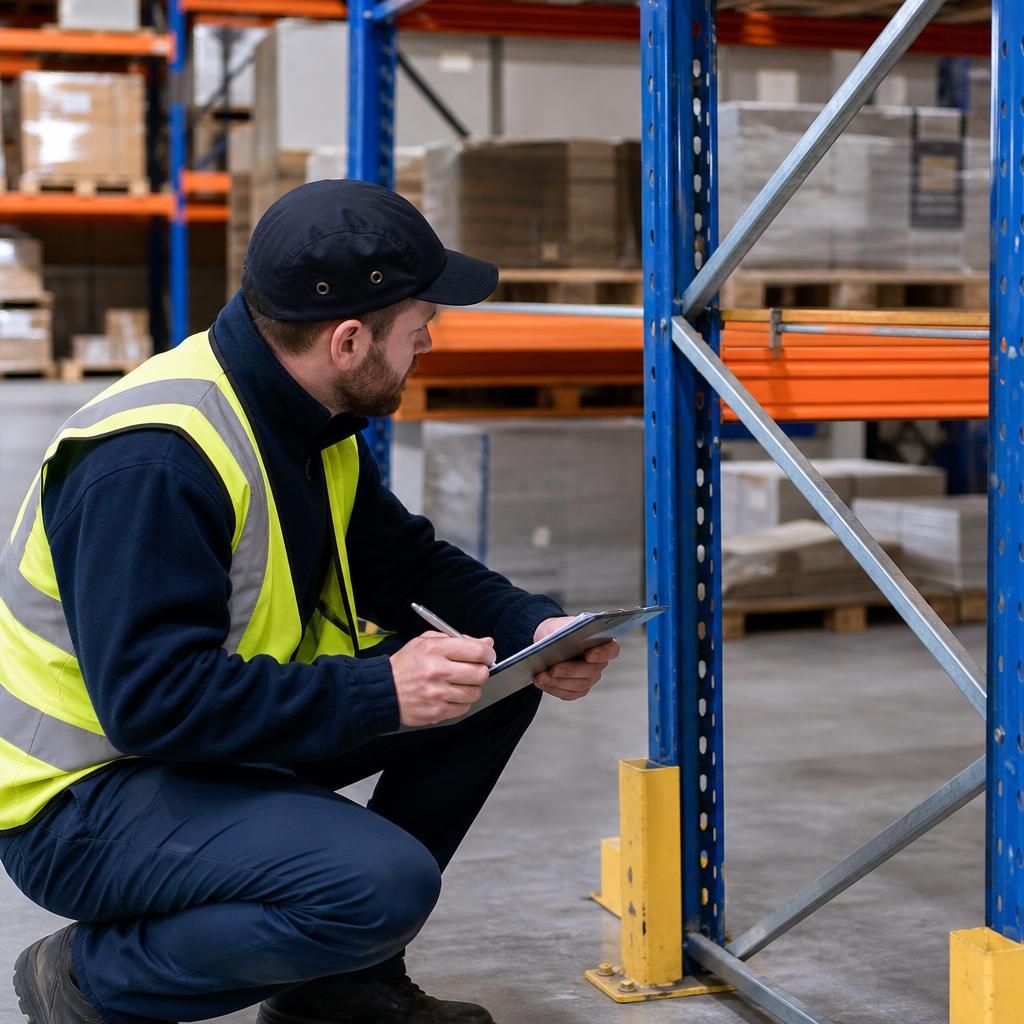
A warehouse racking safety audit is a structured assessment of the installation, its condition and how it is being used. It identifies defects such as impact damage, missing locking devices, overloading, poor load placement and unauthorised alterations before they develop into more serious failures.
The audit report should clearly record each finding, its location, risk and required action. Where an immediate hazard is identified, the affected area should be isolated or unloaded until competent personnel complete suitable repairs and verify that it is safe to return to service. This follow-up is essential: documenting a defect without controlling and resolving it does not make the warehouse racking safe.
Arrange Your Warehouse Racking Safety Audit
Arrange a warehouse racking safety audit with Able Racking to identify defects, review how the system is being used and prioritise any required corrective action. Contact our experienced team to plan a competent inspection for your site.