
How can automation improve warehouse racking efficiency?
Automation improves warehouse racking efficiency by directing storage and retrieval accurately, making better use of available space and reducing unnecessary handling. Automated systems can increase throughput, limit picking errors and support safer operations when they are correctly specified, installed and maintained.
Automation improves warehouse racking efficiency by controlling how goods are stored, retrieved and moved, helping the available storage space support higher throughput with less unnecessary handling. Automated storage and retrieval systems, shuttle systems, conveyors and software-directed picking equipment can improve stock accuracy, reduce travel time and make warehouse racking operations more consistent. The benefits depend on suitable system design, accurate stock data, competent installation and ongoing maintenance.
How automation improves warehouse racking efficiency
- Better use of vertical and horizontal space: Automated equipment can place goods accurately within available storage locations, reducing unused gaps and making better use of the warehouse footprint. The system can be designed around the dimensions, weights and movement requirements of the stored products.
- Faster storage and retrieval: Automated equipment follows programmed routes and storage rules, reducing the time operatives spend travelling, searching for locations or manually positioning loads. This can improve the flow of goods between receiving, storage, picking and dispatch areas.
- Improved stock accuracy: Warehouse control software records where goods are stored and retrieved. When barcode, scanner or other identification systems are correctly integrated, the risk of placing goods in the wrong location or picking the wrong stock is reduced.
- More consistent throughput: Automation applies the same operating sequence each time. This helps maintain a predictable flow of work, particularly where the warehouse handles repeat movements, high-volume picking or goods that need controlled storage conditions.
- Reduced manual handling: Automated movements can limit the need for operatives to carry, lift or repeatedly travel to storage locations. This may reduce handling risks, although safe access, supervision and suitable procedures remain essential.
Which automated systems can support warehouse racking?
The most suitable solution depends on the load type, storage density, order profile, available space and required access. Automated storage and retrieval systems use computer-controlled equipment to place and retrieve pallets or smaller loads from dedicated storage locations. They are often used where accurate stock control, high storage density and repeatable movements are important.
Shuttle systems use powered vehicles to move loads within storage channels. They can support high-density warehouse racking while reducing the need for forklift travel into the storage lanes. Different shuttle arrangements can be selected for first-in, first-out or last-in, first-out stock rotation, depending on the goods and operating requirements.
Conveyors can connect warehouse racking with picking, packing, production or dispatch areas. They reduce repeated manual transport between fixed points, but need to be properly positioned so that they do not obstruct access, emergency routes, inspection points or vehicle movements.
Automated guided vehicles and autonomous mobile robots can move loads between designated areas. These systems may work alongside existing warehouse racking, provided the floor, aisle widths, protection measures and traffic management arrangements are suitable. Automation should be integrated into the overall warehouse layout rather than added without reviewing how people, vehicles and stored loads interact.
How automation affects warehouse layout
Automation can change the space requirements around warehouse racking. Some systems need dedicated equipment zones, transfer points, charging areas, guarding or maintenance access. A layout that appears to provide more storage capacity may be inefficient if it restricts access, creates congestion or makes routine inspection and repair difficult.
Before installation, the proposed arrangement should be assessed against the full operating process. This includes incoming goods, pallet quality, loading patterns, picking methods, dispatch movements, pedestrian routes, emergency access and the space needed to isolate equipment safely. The design should also allow operatives and maintenance engineers to reach relevant components without working beneath suspended loads or entering hazardous areas unnecessarily.
Automation and warehouse racking safety
Automation does not remove the need for warehouse racking inspections or safe working procedures. Automated equipment can place loads accurately, but the warehouse racking must still be correctly specified, assembled, protected and maintained. Impact from vehicles, incorrect loading, damaged components, loose fixings and changes to the system can all affect structural safety.
Safety arrangements should include suitable guarding, interlocked access points where appropriate, emergency stop controls, clearly defined pedestrian and vehicle routes, load information and procedures for dealing with faults. Operatives need training on normal operation, alarm conditions, isolation procedures and the safe recovery of stock when automation is unavailable.
Warehouse racking inspections should consider both the storage structure and the way automated equipment interacts with it. Inspection findings may include damage to frames, beams, guides, protection, rails, floors or access areas. Any defect that could affect safe operation should be assessed promptly, with damaged areas unloaded or isolated where necessary until appropriate repairs are completed.
The importance of software and data
Automation relies on accurate information. The warehouse management or control system must reflect the actual warehouse racking layout, load limits, product locations and stock status. Incorrect dimensions, weights or location data can cause failed movements, poor space utilisation or unsafe storage decisions.
Stock rules should be agreed before commissioning. These may include product compatibility, weight limits, batch control, expiry management and the required rotation method. System alerts should be monitored so that recurring faults, blocked locations and unusual movements are investigated rather than treated as isolated interruptions.
Installation and commissioning considerations
Automated warehouse racking should be installed by competent professionals who understand both the storage structure and the associated equipment. The floor condition, building tolerances, clearances, anchoring, protection and load requirements should be checked before work begins.
Commissioning should include functional testing, safety checks and confirmation that the system performs as designed under realistic operating conditions. Documentation should record the approved layout, load information, operating limits, maintenance requirements and any changes made during installation. Staff should receive practical training before the system is placed into routine use.
Maintenance and continued efficiency
Preventative maintenance helps automated warehouse racking remain reliable and safe. Inspection schedules should cover structural components, moving equipment, sensors, controls, conveyors, guides, safety devices and protective barriers. Cleaning and housekeeping are also important because debris, damaged pallets and obstructions can interfere with automated movements.
Repairs should be completed using suitable components and methods, with alterations assessed before they are made. Adding storage locations, changing load types, modifying software settings or repositioning equipment can affect the original design assumptions. Any significant change should therefore be reviewed by a suitably qualified person.
When automation may not be the right solution
Automation is not automatically more efficient for every warehouse. It may be unsuitable where product dimensions vary significantly, order patterns change frequently, access requirements are unpredictable or the existing floor and layout cannot support the equipment. A partially automated process may provide better value than a fully automated installation if it addresses the main source of delay without creating unnecessary complexity.
The decision should consider the complete operating cost, including installation, software, training, energy, maintenance, inspections, repairs and business continuity during faults. It is also important to plan for manual operating procedures when equipment is offline, so that a technical failure does not create an uncontrolled safety risk or prevent essential access.
Practical steps for improving efficiency
- Review current storage, picking and movement data to identify congestion, repeated handling and inaccurate stock locations.
- Confirm the dimensions, weights, pallet condition and movement frequency of the goods being stored.
- Assess the existing warehouse racking, floor condition, clearances, protection and access arrangements.
- Compare suitable automated options against the required capacity, flexibility, maintenance needs and safety controls.
- Design the system around people, vehicles, emergency routes and inspection access as well as storage capacity.
- Test the software, equipment and safety functions before full operation.
- Maintain the system through planned inspections, preventative servicing, staff training and prompt repairs.
When correctly designed and managed, automation makes warehouse racking more efficient by improving storage accuracy, reducing avoidable movement and supporting a controlled flow of goods. The strongest results come from treating automation as part of the complete warehouse safety and storage system, with competent installation, accurate operating information and regular inspections maintained throughout its working life.
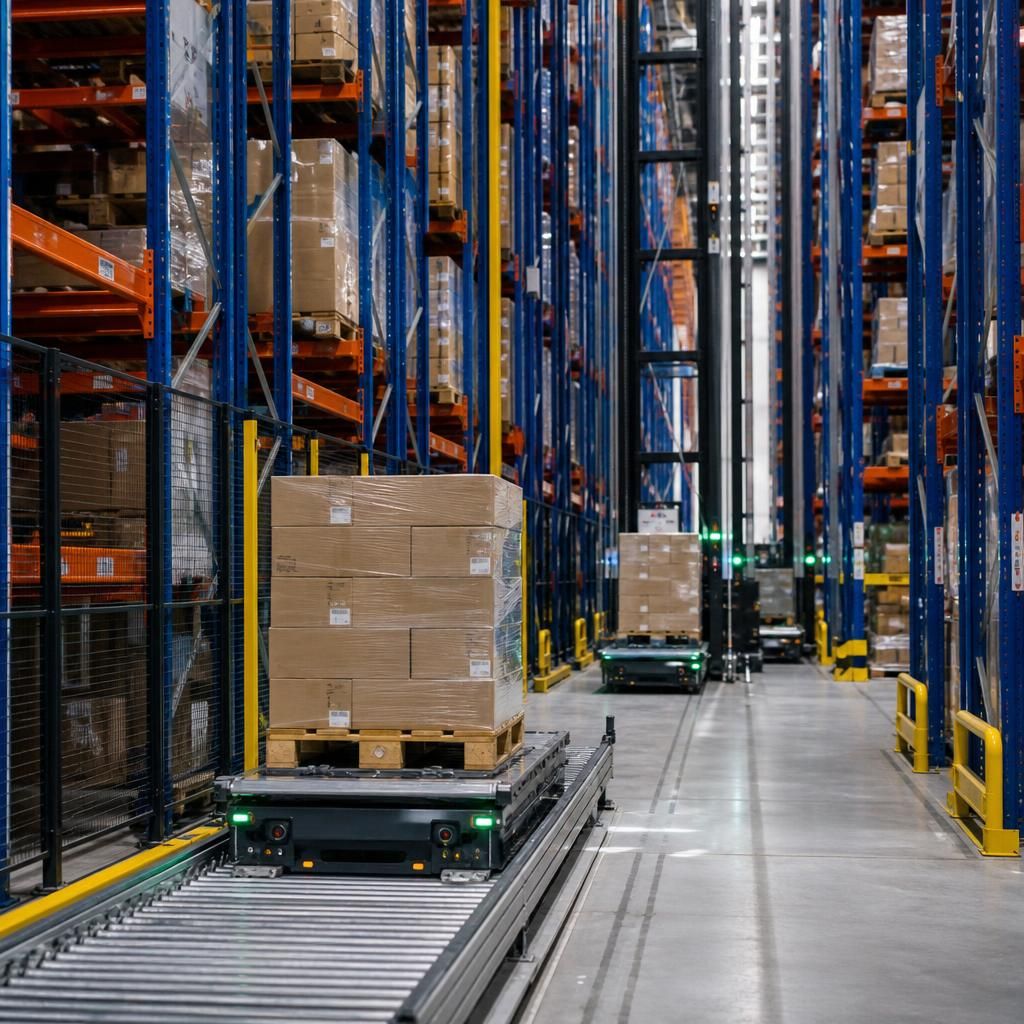
Automation improves warehouse racking efficiency by coordinating storage locations, load movements and stock information through programmed equipment and warehouse control software. This reduces unnecessary travel, supports faster retrieval and helps ensure goods are placed in the correct locations.
Accurate data is essential. The system must reflect the warehouse racking layout, load limits, product dimensions and stock status. When scanners, barcodes or other identification methods are integrated correctly, operatives can locate stock more reliably and reduce picking errors.
Automation should also be designed around safe access, inspection points and maintenance requirements. Regular inspections, preventative servicing and prompt repairs help keep warehouse racking, conveyors, sensors and protective equipment operating safely and consistently.
Discuss Your Warehouse Racking Automation Requirements
Discuss your warehouse racking automation requirements with Able Racking to assess suitable systems, layout considerations, safety controls and ongoing maintenance needs. Our experienced team can help you plan an efficient solution around your storage and handling processes.