
What maintenance practices are essential for ensuring the longevity and safety of cantilever warehouse racking systems?
Essential maintenance for cantilever warehouse racking includes routine visual checks, scheduled expert inspections, prompt repair or replacement of damaged components, and regular verification that loads, supports and restraints remain suitable. Keeping inspection records and ensuring repairs are completed by competent operatives helps preserve system performance, protect staff and extend the serviceable life of the installation.
Maintaining cantilever warehouse racking safely requires a planned programme of visual checks, competent inspections, load-control checks, housekeeping, and prompt repair of defects. Regular maintenance helps identify damage before it affects structural performance, preserves the stability of the installation, and supports compliance with the manufacturer’s instructions, the original design and applicable workplace safety requirements.
Carry out routine visual checks
Warehouse staff should monitor the cantilever warehouse racking during normal operations and report defects immediately. Checks should cover the uprights, bases, arms, bracing, anchors, end stops, support pins and any protective components. Look for:
- Bent, twisted, cracked or visibly deformed steelwork.
- Loose, missing or damaged bolts, pins, clips and fixings.
- Displaced or damaged arms and end restraints.
- Impact marks caused by forklifts, lifting equipment or stored materials.
- Movement, leaning or instability in the structure.
- Corrosion, flaking coatings or other deterioration.
- Cracked or uneven flooring around the base plates and anchors.
Checks are most effective when staff know what normal conditions look like and understand how to report concerns. A damaged area should be made safe and referred to a responsible person rather than being altered or straightened by untrained employees.
Arrange periodic inspections by a competent person
Routine user checks do not replace a formal examination. A competent inspector should assess the cantilever warehouse racking against its design, configuration, loading arrangements and condition. The inspection should consider damage that may not be obvious during daily operations, including distortion at connections, weakened anchors, changes in alignment and signs that the structure is being used outside its intended capacity.
The inspection frequency should reflect the working environment, traffic levels, loading methods, previous damage, age and condition of the installation, together with the manufacturer’s guidance and the site risk assessment. An additional inspection is appropriate after a significant impact, relocation, alteration, unusual loading event or other incident that could affect stability.
Inspection findings should be recorded clearly, with defects prioritised according to their risk. Records should identify the location, condition, recommended action and completion status. Keeping these documents together with layout drawings, load information and repair certificates provides a useful maintenance history and helps demonstrate that defects are being managed.
Remove damaged components from service
Damage to a load-bearing component should never be ignored because the installation appears to remain upright. The affected bay or arm should be unloaded and isolated where necessary, with suitable controls to prevent further use. Repairs or replacements must be specified and completed by competent operatives using components that are compatible with the original system.
Welding, drilling, heating, cutting, bending or improvised reinforcement can change the structural behaviour of the cantilever warehouse racking and may invalidate its design assumptions. Where the original component is no longer available, a suitably qualified person should confirm an engineered replacement or alternative repair. The repaired area should be checked before it is returned to service, and any revised load information or operating instruction should be communicated to staff.
Control loads and storage arrangements
Maintenance also involves ensuring that the system continues to be used as designed. Display clear load notices showing the permitted capacity for the relevant arms, levels and bays. Staff should know whether capacities depend on the length, weight, distribution or overhang of stored goods.
Loads should be positioned centrally and distributed evenly across the supporting arms. Long, flexible or unstable materials may require suitable restraints, supports or guidance to prevent rolling, sliding or excessive movement. Do not exceed the stated capacity, add storage levels, change arm positions or alter the bay layout without confirming that the revised arrangement has been assessed.
Any change in the products being stored, handling equipment, load dimensions or operating method can affect the original design. Review the installation after such changes rather than assuming that an apparently similar load presents the same forces or stability risks.
Protect the structure from impact
Forklift and vehicle impact is a common cause of damage to warehouse racking. Separate vehicle routes from storage where practicable, maintain adequate operating clearances and use trained operators. Physical barriers, column protection and clearly marked traffic routes can reduce the likelihood and severity of contact, provided that protective measures do not obstruct access or create new trip and handling hazards.
After any impact, stop using the affected section until it has been assessed. Even minor-looking contact can loosen anchors, distort bases or transfer damage into connected bracing and arms. Painting over impact marks is not a repair and can conceal evidence that needs to be examined.
Maintain anchors, connections and the supporting floor
Check that base plates remain correctly seated, anchors are secure and connections have not loosened or become distorted. The supporting floor should remain capable of carrying the imposed loads and should be kept free from damage, standing water and debris that could affect stability or access.
Do not assume that tightening a loose fixing resolves the problem. The cause may be damaged threads, movement in the floor, an unsuitable anchor or distortion in the base. A competent person should determine the correct remedial action and confirm that any replacement fixings meet the required specification.
Control corrosion and environmental deterioration
Keep the installation clean and dry where possible, particularly in areas exposed to moisture, chemicals, salt, dust or temperature changes. Remove contaminants using methods that will not damage protective coatings. Investigate rust, coating failure and corrosion promptly, as surface deterioration can progress into a loss of section or reduced connection strength.
Do not apply a coating over corrosion without first assessing the affected component. Where corrosion is significant, seek a competent inspection to establish whether cleaning, treatment, monitoring or replacement is appropriate.
Keep the surrounding area orderly
Good housekeeping reduces both damage and handling risk. Keep access routes, escape routes and working spaces clear. Store materials within the designated footprint and prevent loose items from projecting into traffic routes. Spills, waste and packaging should be removed promptly so that they do not obstruct inspections or cause loads to shift during handling.
Lighting should be sufficient to identify labels, stored materials and defects. Where visibility is poor, improve the lighting or introduce another suitable control rather than relying on staff to work around hidden hazards.
Manage alterations and repairs formally
Maintain current drawings or records showing the bay arrangement, arm positions, load capacities, protection and any approved modifications. No one should relocate arms, remove bracing, add restraints or change the configuration without authorisation and technical review.
Following maintenance, confirm that the installation matches the approved arrangement, that all fixings and restraints are present, and that updated instructions or signage are in place. Staff should be briefed on any change that affects loading, access or handling.
Train staff and review the maintenance programme
Operators, supervisors and maintenance personnel should understand the permitted uses of the cantilever warehouse racking, the signs of damage, the reporting process and the action required when a defect is found. Training should also cover safe loading, unloading and the consequences of placing concentrated or unstable loads on unsuitable arms.
Review the maintenance programme when the warehouse layout, traffic pattern, stored products, handling equipment or incident history changes. Combining daily awareness, documented inspections and technically appropriate repairs gives the installation the best opportunity to remain stable, serviceable and safe throughout its working life.
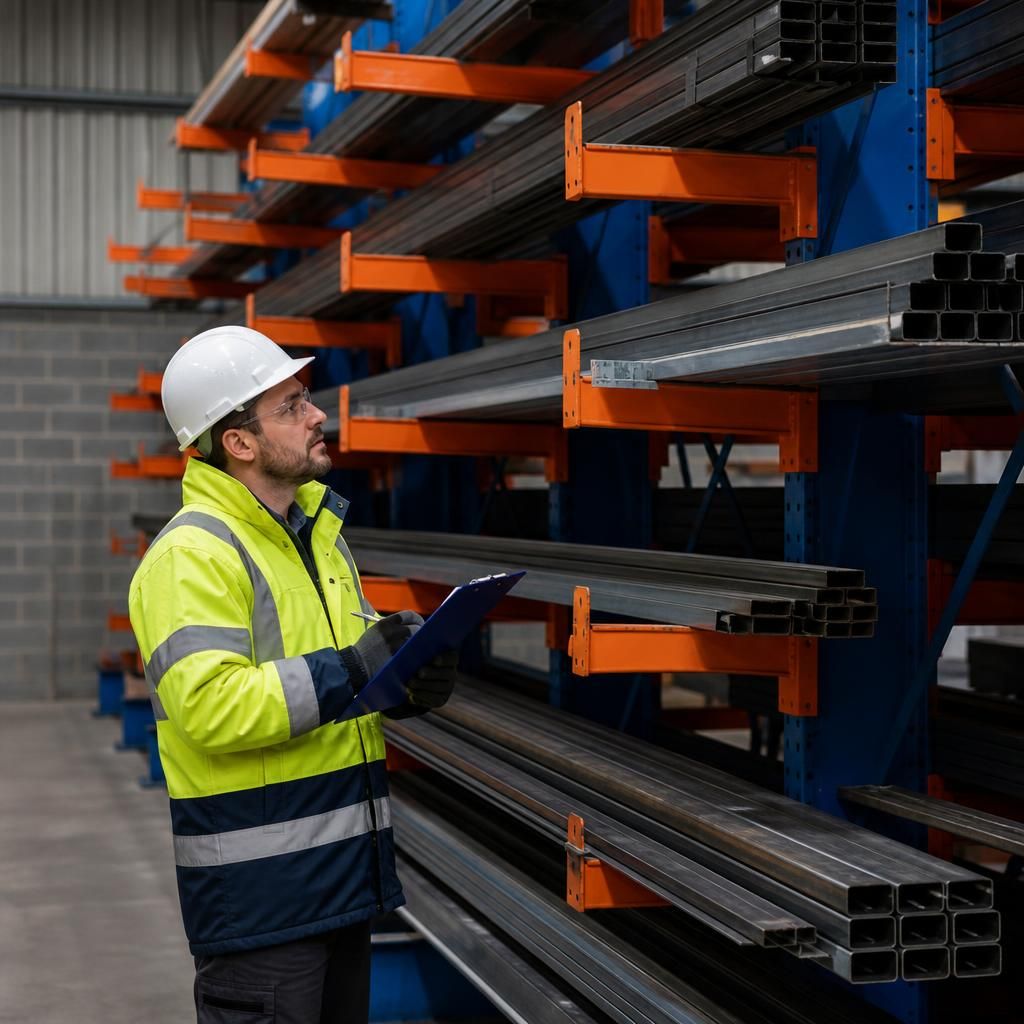
Promptly isolating cantilever warehouse racking after an impact is essential because damage may affect anchors, base plates, connections or bracing even when the structure appears stable. Stop loading and unloading the affected area, prevent access where necessary and report the incident to the responsible person.
A competent person should assess the damage before the cantilever warehouse racking is returned to service. Do not straighten bent steelwork, weld damaged components or paint over impact marks without an appropriate technical assessment. The inspection findings and any approved repair or replacement should be recorded, with updated instructions provided to the operators involved.
Arrange an expert cantilever warehouse racking inspection
Arrange an expert cantilever warehouse racking inspection to identify damage, confirm the system remains suitable for its intended loads and prioritise any necessary repairs. Contact Able Racking to discuss an inspection by a competent operative.