
What are the key safety checks for a cantilever warehouse racking system?
Key safety checks for a cantilever warehouse racking system include inspecting columns, arms, bases, bracing and connections for damage, checking that loads and load positions match the design limits, and confirming the system is securely installed on a suitable floor. Regular inspections should also verify clear aisles, protection from vehicle impact, visible safety information and prompt reporting of any defects.
The key safety checks for a cantilever warehouse racking system are a structured examination of its structural condition, stability, loading arrangements, installation and operating environment. Columns, arms, bases, bracing, connections, anchors and protective measures should be checked for damage or movement, while loads must remain within the system’s design capacity and be positioned as specified. Inspections should also confirm that the floor is suitable, aisles are clear, safety information is visible and defects are reported and dealt with promptly.
Check the columns, arms and bracing
Inspect the main upright columns for bending, twisting, dents, buckling, corrosion, cracks or other deformation. Particular attention should be given to the lower sections, where contact from handling equipment is more likely. Arms should be checked for bending, distortion, damaged end stops and signs that they have become loose or displaced.
Bracing members are essential to the stability of a cantilever warehouse racking system. Check that horizontal and diagonal braces are straight, secure and free from impact damage. Missing, bent or disconnected bracing can affect the system’s ability to resist movement, particularly when it is loaded or exposed to accidental contact.
Examine bases, fixings and connections
Base plates should sit evenly on the floor, with no visible lifting, distortion or cracking around the fixing points. Check that anchors are present, tight and undamaged, and that the column-to-base connections remain secure. Bolts, pins, clips and other connection components should be in their intended positions and show no signs of loosening, shearing or unauthorised alteration.
Any missing or substituted components should be treated as a defect until their suitability has been confirmed by a suitably competent person. Improvised repairs, drilled members and unapproved welds can change the way the structure carries load and should not be accepted without technical assessment.
Confirm the structure is plumb, aligned and stable
Columns should remain vertical and arms should be level and consistently aligned. Visible leaning, spreading, twisting or changes in alignment may indicate impact, foundation movement, overloading or a connection problem. Compare the current condition with the original installation information or previous inspection records where these are available.
Movement that is unusual for the system, particularly after loading or an impact, requires investigation. Do not simply reposition stock or tighten a visible fixing and return the bay to service without establishing the underlying cause.
Verify load limits and load positioning
Confirm that the safe working load information is displayed and remains legible. The information should identify the applicable limits for the system and explain any restrictions on arm loading, bay loading or load distribution. It must correspond with the current configuration; changes to arm levels, components or storage arrangements may invalidate existing information.
Check that stored materials are within the specified weight and dimensional limits, are adequately supported and are distributed evenly. Long or heavy goods should not overhang in a way that creates instability, obstructs routes or places excessive force on individual arms. Loads should be positioned so that they cannot roll, slide, topple or fall during normal handling.
Where the type, size or weight of stored goods has changed, the system should be reviewed before use. The original design may not cover a different load pattern, concentrated loading or increased operating height.
Inspect the floor and anchorage area
The supporting floor must be suitable for the imposed loads and remain in sound condition. Check for cracking, settlement, uneven surfaces, water damage and deterioration around the base plates and anchors. A damaged or contaminated floor can affect the stability of an otherwise satisfactory system.
Keep the area around the bases free from debris and stored goods so that defects can be identified. Any signs of movement, uplift or damaged concrete should be assessed before the affected section is used.
Look for evidence of vehicle impact
Inspect the lower columns, bracing, arms and base protection for marks or distortion caused by forklift trucks, pallet trucks or other handling equipment. Even a minor-looking strike can reduce the capacity of a structural member or loosen its anchorage.
Impact protection should be in place where the risk assessment identifies a foreseeable collision risk. Protection must not conceal damage or prevent access for inspection. After an impact, isolate the affected area where necessary, report the incident and arrange a competent examination before resuming normal use.
Check clearances, aisles and working practices
Aisles and access routes should remain clear, with sufficient space for handling equipment and people to move safely. Check that stored goods do not obstruct fire equipment, emergency routes, lighting, doors or other safety-critical facilities. Materials should not be left beneath or around the system in a way that increases the risk of trips, falling objects or contact damage.
Operating practices should match the system’s design. Loads should be placed and removed in a controlled manner, without dragging goods across arms, striking columns or applying sideways force. Personnel should know how to identify and report defects, and damaged sections should be clearly controlled until they have been assessed.
Review safety information and records
Safety notices, load information and any operating instructions should be visible, accurate and positioned where they can be read before loading or unloading. Check that inspection findings, reported impacts, repairs and alterations are recorded. Good records help identify recurring problems and provide evidence that defects have been managed rather than overlooked.
Repairs and replacements should use suitable components and follow the system designer’s or manufacturer’s requirements. A repair is not complete merely because the damage is no longer obvious; the completed work should restore the intended strength, alignment and protection of the system.
Use the right inspection process
Operators should carry out routine visual checks as part of normal warehouse activities, looking for obvious damage, displaced components, unsafe loads and access obstructions. Findings should be reported immediately through the site’s established process.
A more detailed inspection should be completed at planned intervals by a person with suitable knowledge and experience of warehouse racking safety. The inspection should cover the complete installation, not only areas that are easy to reach or those where a problem has already been reported. Where damage or a significant safety concern is found, the affected location should be unloaded or taken out of service according to the level of risk.
Any defect should be categorised, recorded and followed through to closure. This includes identifying the location, describing the condition, applying temporary controls where required and confirming that repairs or further technical assessment have been completed. Recurring damage may indicate that the layout, protection, load handling method or staff training needs to be changed.
When to arrange a specialist review
Arrange a competent specialist assessment if there is structural damage, unexplained movement, repeated vehicle impact, a change in load requirements, an alteration to the installation or uncertainty about the system’s capacity. Specialist advice is also appropriate where the original design information is missing or where the condition of the floor, anchors or foundations is in doubt.
These checks work together: a sound-looking frame may still be unsafe if it is overloaded, poorly anchored, incorrectly loaded or exposed to uncontrolled impact. Consistent inspections, accurate load information, prompt defect management and trained operating practices are therefore necessary to keep a cantilever warehouse racking system safe, compliant and fit for use.
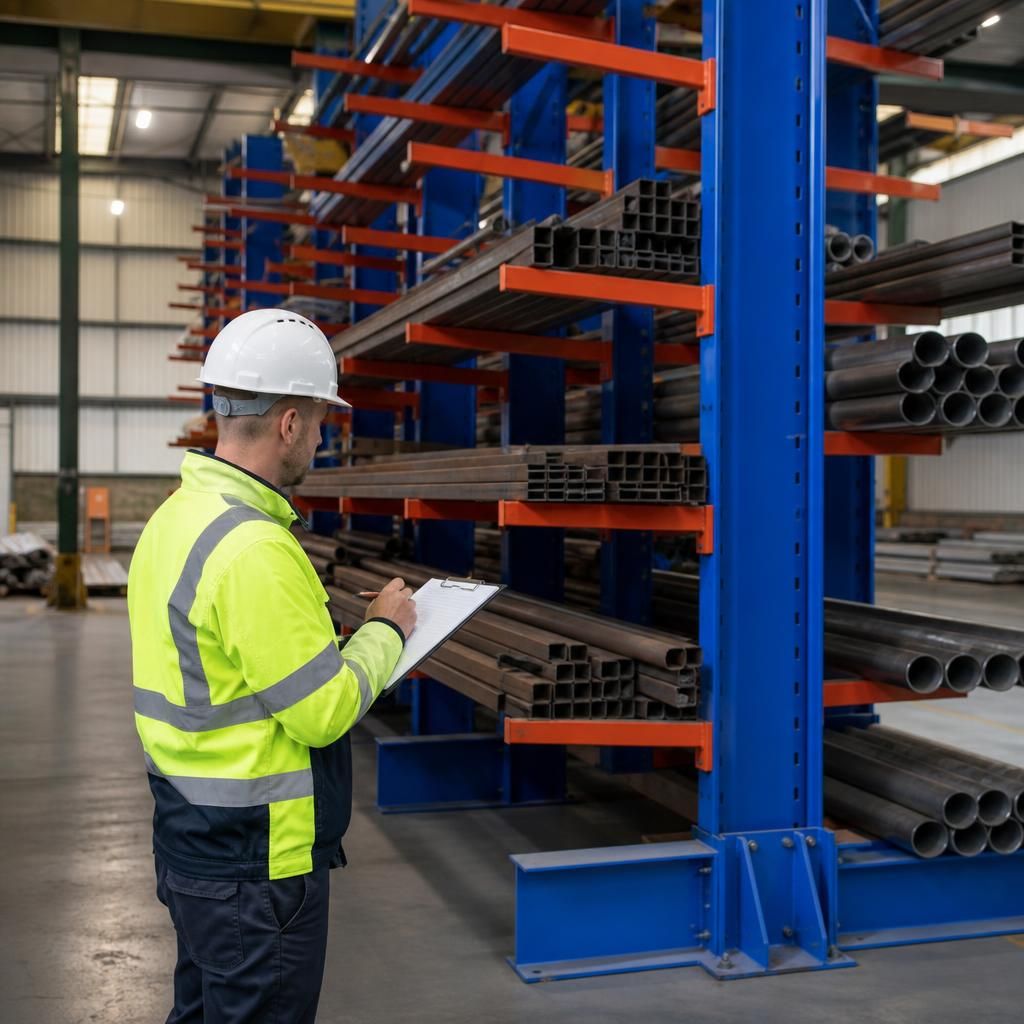
Checking load limits and load positioning is essential for cantilever warehouse racking safety. Confirm that the displayed safe working load information matches the current configuration, including the number and position of arms, and ensure stored materials remain within the stated weight and dimensional limits.
Loads should be supported evenly and positioned to prevent sliding, rolling or tipping. If the type, size or weight of stored goods changes, arrange a competent review before use, as a different load pattern or concentrated weight may exceed the original design assumptions.
Arrange a Cantilever Warehouse Racking Safety Inspection
Arrange a specialist cantilever warehouse racking safety inspection with Able Racking to identify defects, confirm load suitability and verify that your system remains safe and compliant.