
How does regular maintenance enhance the safety of cantilever warehouse racking?
Regular maintenance keeps cantilever warehouse racking safe by identifying damage, loosened components, corrosion and instability before they create a serious risk. Prompt repairs, correct loading and documented inspections help maintain structural performance, support compliance and protect warehouse personnel.
Regular maintenance enhances the safety of cantilever warehouse racking by identifying damage, loosened components, corrosion, overloading and other defects before they affect structural stability. A planned programme combines routine visual checks, competent inspections, prompt repairs and accurate records, helping the system continue to support its intended loads and reducing avoidable risks to warehouse personnel.
Maintenance is more than repairing visible damage. It is a preventative process that confirms the cantilever warehouse racking remains suitable for the loads, handling equipment and working conditions in the area. Maintenance should follow the manufacturer’s instructions, the original design requirements and the findings of previous inspections. Any changes to stored products, load dimensions, operating methods or vehicle movements should also be considered, as these can alter the risks associated with the installation.
Routine checks identify problems early
Warehouse employees should know how to recognise and report defects during normal operations. Routine checks can identify:
- Impact damage to uprights, bases, arms, bracing or connections.
- Loose, missing or incorrectly fitted bolts, pins, clips and other retaining components.
- Deformed arms, bent sections, cracked welds or displaced structural members.
- Corrosion, particularly where the system is exposed to moisture, chemicals or outdoor conditions.
- Unstable, leaning or visibly misaligned components.
- Damaged or missing load notices and identification labels.
- Loads that project too far, exceed the stated capacity or are not adequately supported.
Checks should be completed at a frequency appropriate to the working environment and level of risk. Busy areas with frequent forklift movements, harsh conditions or a history of impact damage may need more frequent monitoring. Staff should report defects immediately rather than waiting for a scheduled maintenance visit.
Competent inspections provide a more detailed assessment
Routine employee checks do not replace a formal inspection by a suitably competent person. A competent inspector assesses the condition of the whole installation, including structural members, connections, foundations, protection, load information and the surrounding operating area. They can distinguish cosmetic marks from damage that may reduce the load-bearing capacity or require the affected section to be taken out of service.
In the UK, recognised warehouse safety guidance generally expects an expert inspection of storage equipment at intervals no greater than twelve months, with shorter intervals where the risk assessment indicates they are necessary. This does not remove the need for regular in-house checks. The inspection frequency should reflect the site’s traffic levels, equipment, loads, environment and previous damage history.
Prompt action prevents minor defects becoming serious hazards
Maintenance findings should be categorised and acted on without delay. A damaged upright, arm or connection may require the affected bay or level to be unloaded and isolated until it has been assessed. A visible defect should not be ignored because the structure appears to remain standing, as damage can reduce its reserve capacity and make it less tolerant of further impact or incorrect loading.
Repairs should be carried out by a suitably qualified and experienced person using approved components and methods. Damaged parts should not be straightened, drilled, welded or modified on site unless the repair has been specifically designed and authorised by an appropriately competent engineer. Unapproved alterations can change the load capacity and invalidate the original design assumptions. Once work is complete, the repaired area should be checked before it is returned to service, with updated records where necessary.
Correct loading forms part of effective maintenance
A well-maintained structure can still become unsafe if it is loaded incorrectly. Load notices should remain clear and current, and operators should understand the permitted load per arm, bay and level. Loads should be positioned evenly and securely, with suitable support for their length and weight. Overhanging, unstable or poorly distributed materials can introduce forces that the system was not designed to withstand.
Supervisors should review loading arrangements when products or handling practices change. New materials may have different weights, dimensions or centres of gravity, and a change in forklift operation may increase the likelihood of impact. If the proposed use differs from the original design, obtain professional advice before making the change.
Housekeeping and the surrounding area also matter
Keeping access routes clear makes it easier for operators to position loads accurately and reduces the likelihood of collisions. Floors should be maintained so that the installation remains properly supported, while lighting should allow damage, labels and obstructions to be seen. Spillages, waste materials and loose packaging should be removed promptly. Where forklift traffic passes close to the structure, suitable protection and clearly managed traffic routes can reduce repeat damage.
Maintenance records support compliance and accountability
Keep records of routine checks, formal inspections, reported damage, isolation decisions, repairs and follow-up inspections. Records should identify the location of the affected section, the defect found, the action taken and the person responsible. Photographs can help track recurring impact points and confirm the condition before and after repair.
These records provide evidence that safety controls are being managed systematically. They also help identify patterns, such as repeated damage in a particular aisle or regular overloading of a specific area. This information can support improvements to operator training, traffic management, load planning or physical protection.
Maintenance protects both people and operational performance
Preventative maintenance reduces the likelihood of falling materials, structural failure and unplanned restrictions on storage capacity. It can also limit disruption by allowing defects to be addressed while they are manageable, rather than after a major incident. Most importantly, it gives warehouse managers a clear process for keeping cantilever warehouse racking safe, suitable for use and aligned with applicable guidance.
The most effective approach is a documented cycle of routine reporting, competent inspection, risk-based maintenance, authorised repair and verification before reuse. Where there is uncertainty about damage, capacity or a proposed alteration, isolate the affected area and obtain advice from a qualified warehouse safety professional before continuing to use it.
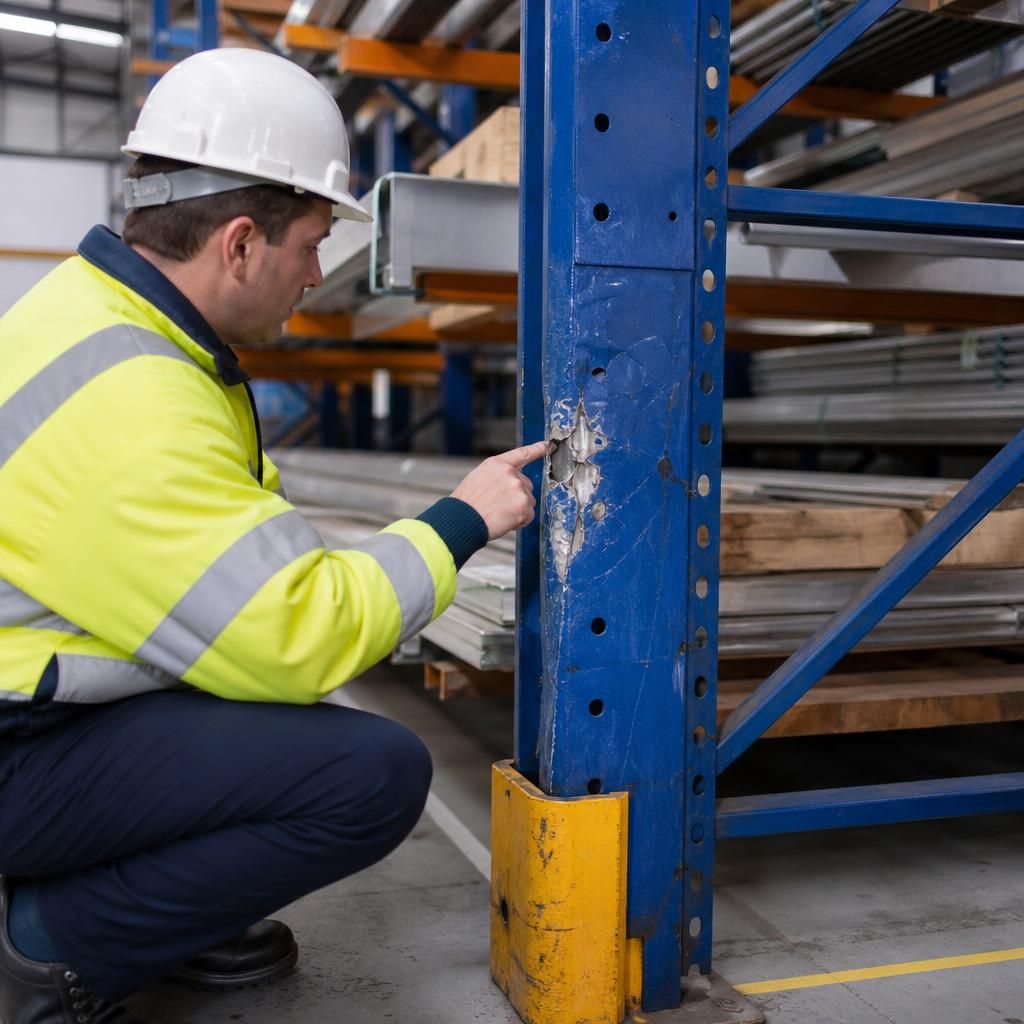
Promptly reporting and isolating damaged cantilever warehouse racking prevents a minor defect from developing into a serious safety hazard. Impact damage to an upright, arm, base or connection can reduce the system’s load-bearing capacity, even when the structure still appears stable.
Any suspected damage should be reported immediately, with the affected area unloaded and taken out of service where necessary. Repairs should be assessed and completed by a suitably competent person using approved components and methods. Do not straighten, weld, drill or modify damaged parts without specific professional authorisation, as unapproved work can alter the design capacity.
After repair, the affected section should be inspected before it is returned to use. Recording the defect, action taken and follow-up checks also helps identify recurring forklift impacts, loading problems or other conditions requiring further preventative measures.
Arrange a cantilever warehouse racking maintenance inspection
Arrange a professional maintenance inspection of your cantilever warehouse racking to identify damage, deterioration and loading issues before they affect safety or compliance. Contact Able Racking to discuss your inspection requirements and any concerns identified during routine checks.