
What maintenance practices are essential for cantilever warehouse racking systems?
Essential maintenance for cantilever warehouse racking systems includes scheduled inspections, prompt repair of damage, checks on anchors and connections, and verification that arms, columns and load supports remain correctly aligned and secure. Keep the system free from obstructions, report impacts immediately and maintain accurate inspection records so faults are addressed before they affect safety or performance.
Essential maintenance for cantilever warehouse racking systems combines planned inspections, prompt repair of damage, checks on structural connections and ongoing control of how the system is loaded and used. Columns, bases, arms, bracing, anchors, load supports and protective components should remain secure, correctly aligned and free from defects. A documented maintenance programme helps identify deterioration before it compromises stability, load capacity or safe warehouse operations.
Carry out routine visual checks. Trained warehouse staff should examine the system regularly as part of normal workplace checks. Look for bent or twisted columns, damaged arms, displaced components, missing pins, loose fixings, cracked welds, impact marks, leaning frames and movement at the base. Check that loads are not overhanging excessively, stored outside their intended position or resting unsafely on the arms. Any concern should be reported immediately rather than left until the next planned inspection.
Visual checks should also cover the surrounding operating area. Keep aisles, access routes and the space around the bases clear of waste, loose materials and obstructions. Ensure vehicles and handling equipment can approach the storage system without striking its structural members. Good housekeeping reduces the likelihood of impact damage and makes defects easier to identify.
Arrange competent inspections at suitable intervals. A competent person should complete a more detailed examination in line with the manufacturer’s instructions, the system’s risk assessment and the conditions of use. The inspection should consider the complete installation, including structural members, connections, floor fixings, bracing, arms, end stops and protection. The inspector should also review whether the system is being used within its specified design parameters.
Inspection frequency should reflect factors such as vehicle activity, the type and weight of stored goods, the condition of the building floor, previous damage, environmental conditions and any changes to the installation. A formal expert inspection should be included within the maintenance schedule, even where routine checks have not identified an obvious problem.
Examine columns, bases and bracing carefully. Uprights and base assemblies carry the principal structural loads, so even localised distortion can affect the performance of the whole bay. Inspect for impact damage, buckling, corrosion, damaged welds and movement between components. Check that diagonal and horizontal bracing remains fitted correctly and that no member has been removed, cut, altered or obstructed.
Base plates and floor anchors should be checked for looseness, displacement, cracking around the fixing points and signs that the floor is no longer providing adequate support. Anchor repairs or replacements must use suitable components and be completed in accordance with the system design. Do not simply tighten a fixing or add an improvised repair without establishing why it has moved or failed.
Check arms, connections and load supports. Cantilever arms should be straight, securely connected and correctly positioned. Retaining pins, locking devices and other connection components must be present and fully engaged. Inspect the arm-to-column connection for wear, deformation or gaps, particularly in areas where loads are frequently placed or removed.
Where the system uses supports, saddles, decking or end stops, check that these parts are secure and suitable for the materials being stored. Damaged or missing end stops can allow goods to move during handling. Components should not be drilled, welded, modified or substituted unless the alteration has been assessed and approved by a suitably qualified person.
Control impact damage immediately. Any collision involving a forklift truck, crane, lifting attachment or stored load should trigger a local inspection. Damage may not always be obvious, and a component that appears to have returned to position can still have reduced strength or altered alignment. Isolate the affected bay where necessary, prevent further loading and obtain a competent assessment before returning it to service.
Repairs should be prioritised according to the severity and location of the defect. A damaged structural member may require immediate unloading and isolation, while a minor issue may be monitored under a recorded action plan. In both cases, the repair decision should be made by someone with appropriate technical competence and knowledge of the installation.
Maintain correct loading practices. Maintenance is not limited to physical repairs. The system must continue to be loaded in accordance with its design and displayed load information. Confirm that the weight, length, shape and distribution of stored materials are suitable for the arms and bays. Place loads evenly, avoid concentrated point loading where it has not been designed for, and keep heavier materials within the positions specified by the system design.
Load notices and identification labels should remain visible and legible. Replace damaged notices and update them if the layout, arm configuration or capacity has changed. Do not increase capacities, reposition arms or alter bay arrangements without a competent design review. A change that appears minor can affect stability, clearances and the loads carried by individual components.
Check for corrosion and environmental deterioration. Moisture, chemicals, salt, dust and temperature variations can affect steelwork, fixings and floor connections. Inspect exposed surfaces for rust, flaking coatings, pitting and deterioration around joints or bases. Clean contamination using methods that will not damage protective finishes, then arrange an appropriate repair or treatment where corrosion is present.
Where the installation is used outside, in a washdown area or in a corrosive environment, the inspection and maintenance programme may need to be more frequent and more specific. The materials, coatings and replacement components should be suitable for the conditions in which the system operates.
Keep accurate maintenance records. Record routine checks, formal inspections, reported impacts, identified defects, isolation decisions, repairs and the date the affected area was returned to service. Inspection records should identify the location of the issue and describe the action taken, rather than simply stating that the system passed.
Use the records to identify recurring damage, repeated loading problems or areas where vehicle routes and handling procedures need improvement. Retain relevant design information, load notices, repair details and inspection reports so that the history of the installation is available to those responsible for warehouse safety.
Use a controlled repair process. Do not straighten, heat, drill, weld or replace structural components without technical approval. Repairs should follow the manufacturer’s guidance or a suitable engineered method, and replacement parts should match the original specification. After repair, check alignment, connections, anchors and load notices before the area is brought back into use.
Maintenance should also include a review after significant changes, such as relocating the installation, changing the stored materials, introducing different handling equipment, altering traffic routes or modifying the building floor. These changes can create new impact risks or affect the assumptions on which the original design was based.
A practical maintenance programme therefore combines daily housekeeping and reporting, regular visual checks, planned competent inspections, immediate action after impacts, controlled repairs and clear records. This approach helps preserve the structural condition of cantilever warehouse racking, supports compliance with workplace safety duties and extends the useful service life of the installation without compromising safe load handling.
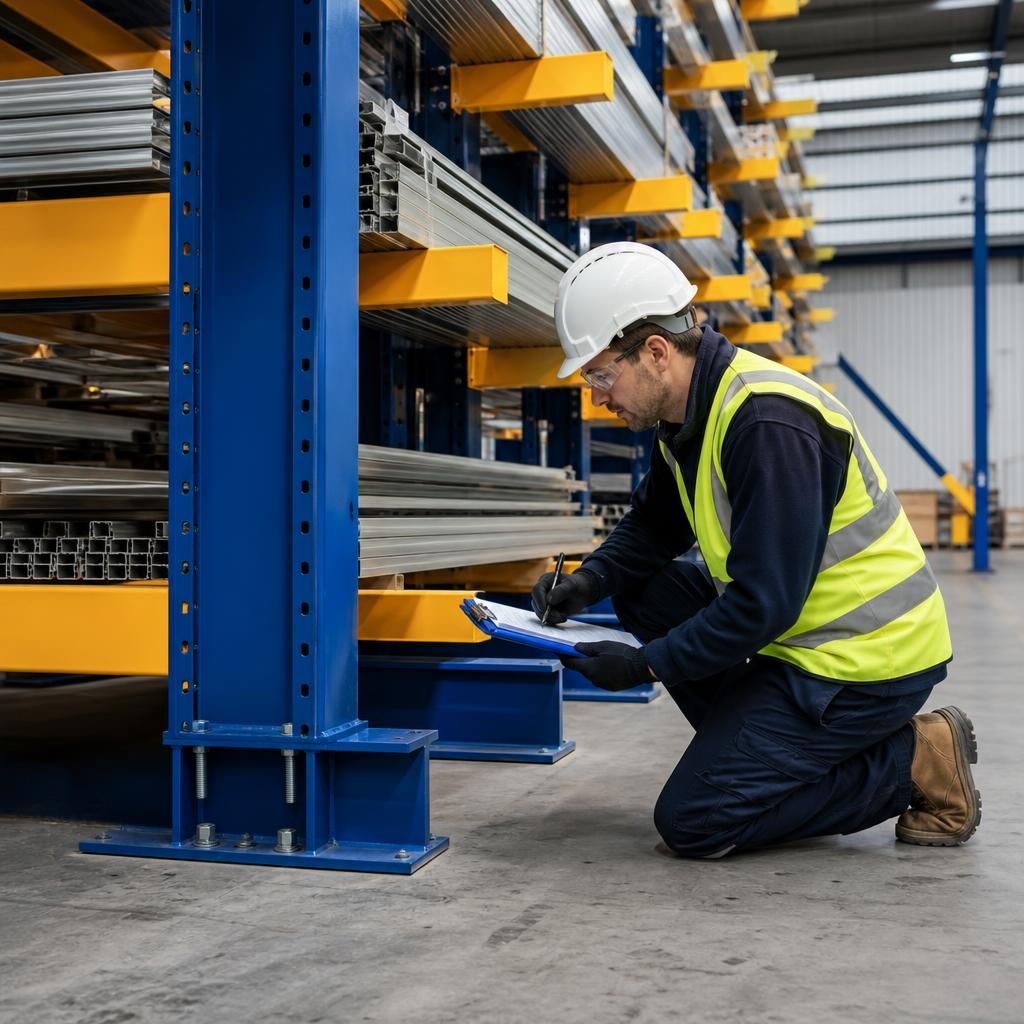
Prompt action after an impact is one of the most important maintenance practices for cantilever warehouse racking. A collision involving a forklift, lifting equipment or stored material can distort columns, arms, connections or floor anchors, even when damage is not immediately obvious.
Report the impact, prevent further loading and isolate the affected bay where necessary. A competent person should assess the installation before it returns to service. Do not straighten, weld, drill or replace damaged components without technical approval, as an improvised repair may affect the system’s structural performance and load capacity.
Arrange a professional cantilever warehouse racking inspection
Arrange a professional cantilever warehouse racking inspection with Able Racking to identify damage, confirm safe operation and support a properly documented maintenance programme.