
What are the key benefits of choosing cantilever warehouse racking?
Choosing cantilever warehouse racking provides flexible, accessible storage for long, bulky or irregularly shaped items that are difficult to store on conventional pallet systems. Its open-front design can improve stock visibility, handling efficiency and available floor space when the system is correctly designed, loaded and maintained.
Cantilever warehouse racking provides accessible, adaptable storage for long, bulky or irregularly shaped goods that are difficult to store safely on conventional pallet systems. Its vertical columns, projecting arms and open-front layout support items such as timber, tubes, pipes, sheet materials, profiles, furniture components and other lengthy products while keeping them visible and easy to reach.
Better suitability for awkward loads
The principal benefit is the absence of front columns or beams across the storage opening. This gives goods more usable length and makes it easier to accommodate products with varying dimensions. Arms can be selected and positioned to suit the characteristics of the stock, while different arm lengths, levels and load configurations can be incorporated into the design.
This flexibility is particularly useful where inventory includes products that cannot be placed securely on standard pallets. Properly designed support reduces the temptation to leave long items on the floor, lean them against walls or stack them in unsuitable ways.
Improved access and stock visibility
Open-front storage allows operatives to identify and retrieve goods without working around enclosed bays or front obstructions. Products can be positioned so that forklifts, side loaders or other handling equipment can approach them appropriately. Clear visibility can also make stock checks, picking and replenishment more straightforward.
Access should still be planned around the load type and handling method. Heavy, unstable or particularly long products may require controlled loading procedures, suitable lifting equipment and defined exclusion areas. The system must not be treated as a substitute for safe handling practices.
More effective use of warehouse space
Cantilever warehouse racking makes use of vertical space, helping businesses organise long products without relying solely on floor storage. A considered layout can create clearer aisles and reduce the amount of space lost to scattered or poorly grouped stock. It may also help separate different product categories, lengths or grades, making the storage area easier to manage.
Space efficiency depends on accurate measurements and realistic operating requirements. The design should account for building restrictions, aisle widths, load dimensions, vehicle manoeuvring, access routes, fire protection arrangements and any required working clearances. Increasing storage density without preserving safe access can create operational and safety problems.
Flexible storage as stock requirements change
Adjustable arms and configurable levels allow the system to respond to changes in product dimensions and stock profiles. This can be valuable for businesses handling a broad range of materials or experiencing seasonal changes in demand. Additional bays or extensions may also be possible where the building, floor and original design allow them, although any alteration should be assessed and approved by a competent specialist.
Flexibility does not mean that components can be moved or loads changed without review. Load notices, arm positions, base conditions and the overall stability of the installation must remain appropriate for the revised arrangement.
Support for more efficient handling
When products are stored by type, size and handling priority, operatives can spend less time searching, repositioning stock or clearing floor areas. The open layout can support more direct loading and retrieval, provided the selected handling equipment is compatible with the aisle design and the length and weight of the goods.
Good planning also reduces unnecessary double handling. For example, frequently picked products can be positioned where they are accessible without interfering with slower-moving stock. Clear labelling and agreed loading procedures further improve consistency between shifts.
Potential safety improvements through controlled storage
A purpose-designed cantilever warehouse racking system can provide a more controlled alternative to ad hoc floor stacking. Correctly rated arms, stable bases, suitable restraints where required and properly maintained components help keep loads supported and organised. Protecting aisles and keeping products within the intended storage envelope can also reduce the risk of collisions, falling materials and blocked routes.
Safety depends on the complete installation and how it is used. The system should be designed for the actual loads, installed by experienced operatives and inspected at appropriate intervals by a competent person. Operatives should understand load limits, loading sequences, damage reporting and the action to take when a defect is identified. Any damaged component or unsafe condition should be isolated and dealt with promptly rather than left in service.
Clearer stock control and workplace organisation
Separating long products into defined storage locations can improve housekeeping and make stock easier to count. It can also support a more consistent approach to product identification, picking and replenishment. Better organisation helps reduce misplaced materials and makes it easier to spot overhanging, damaged or incorrectly positioned loads during routine checks.
The best results come from combining the system with documented operating procedures, suitable training and regular housekeeping. Storage locations should remain identifiable, access routes should be kept clear and loads should be returned to their designated positions after use.
Long-term value when correctly specified
Cantilever warehouse racking can provide a durable storage solution for businesses that regularly handle long or non-standard products. Its value is greatest when the design reflects current and anticipated stock, the floor and building are suitable, and the installation is maintained throughout its working life. A professional assessment can confirm the required capacity, configuration, handling clearances and protection measures before installation or modification.
In summary, the key benefits are improved suitability for long loads, easier access, better stock visibility, more organised use of vertical space, adaptable storage levels and safer control of materials than improvised storage arrangements. These benefits depend on correct design, installation, loading and ongoing inspection; they should be considered alongside the specific products, equipment and working practices in the warehouse.
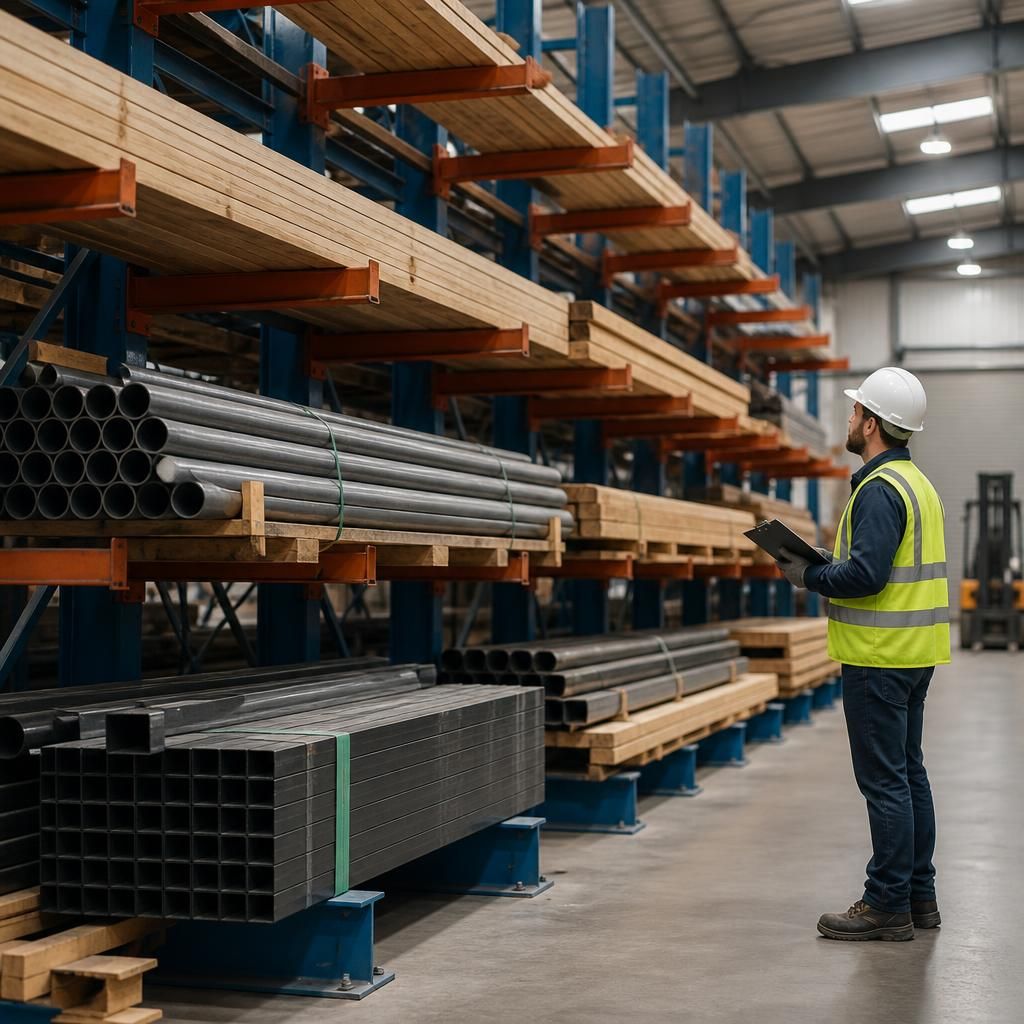
One of the main benefits of cantilever warehouse racking is improved access to long, bulky or irregularly shaped goods. Its open-front design avoids front columns and beams across the storage opening, allowing suitable handling equipment to approach the load more directly.
Products can be stored by type, size or length, making stock easier to identify, retrieve and return. This can reduce unnecessary movement and help prevent long materials being left on the floor, leaned against walls or stacked in unsuitable locations.
Access must still reflect the load dimensions, weight and handling method. A safe layout requires suitable aisle widths, clear operating routes, correctly rated arms and defined procedures for loading, unloading and reporting damage.
Discuss your cantilever warehouse racking requirements
Discuss your cantilever warehouse racking requirements with our experienced team to confirm the appropriate configuration, load capacity and handling clearances for your warehouse. We can help assess your current storage needs and identify a suitable, safe solution.