
What are the different materials used in cantilever warehouse racking systems?
Cantilever warehouse racking systems are typically manufactured from structural steel for the columns, bases and arms, with timber, steel or specialist supports selected to suit the stored loads. The right material combination depends on load weight, span, handling equipment, environment and the required level of durability and protection.
Cantilever warehouse racking systems are generally manufactured from structural steel for the columns, bases and arms, while timber, steel or purpose-made supports may be selected for the load-contact surfaces. The correct material combination depends on the weight, length and shape of the goods, the handling equipment used, the warehouse environment and the required level of durability.
Material selection is not simply a choice between the cheapest or strongest option. Each component must work as part of a designed system, with suitable load ratings, connections, tolerances and protection. The specified materials should reflect the intended loads and operating conditions, and any change to the stored goods or layout should be reviewed by a competent person.
Structural steel for columns and bases
The vertical columns and floor bases are normally produced from structural steel because it provides the strength and stiffness needed to support significant loads and resist forces created during loading, unloading and everyday operation. The columns transfer the weight of the stored goods through the arms and base into the warehouse floor, while the bases provide stability and help distribute the forces at floor level.
Structural steel components are usually fabricated to a specified design rather than selected solely by their appearance. The steel section, thickness, bracing arrangement, connection details and base dimensions all affect the system’s capacity. A competent designer will consider vertical loads as well as horizontal forces, including accidental contact from handling equipment and the effects of uneven loading.
Steel may be supplied in hot-rolled sections, cold-formed sections or a combination of both, depending on the system design. Hot-rolled steel is commonly used where substantial sections and high resistance to bending are required. Cold-formed steel can provide efficient, accurately shaped components where the design has been engineered for the relevant loads and connection requirements. Neither manufacturing method is automatically suitable for every application; the design specification is the important factor.
Steel arms for long or bulky goods
The projecting arms are also generally made from structural steel. Their design must resist bending and deflection while keeping the stored load securely supported. Arm length, spacing, profile, connection method and load distribution all affect performance.
Steel arms may be fitted with end stops or other retaining features where these are required to prevent goods from sliding off. The appropriate arrangement depends on the shape and stability of the products. Long items should be positioned so that their weight is distributed correctly across the available arms rather than concentrated at the tip.
Adjustable steel arms can provide flexibility when storing products of different heights, but adjustments must be made in accordance with the manufacturer’s instructions and the system’s design limitations. Unauthorised alterations, drilled connections or improvised extensions can affect the load capacity and structural integrity.
Timber supports and load bearers
Timber is often used where the stored goods need a wider, softer or more forgiving contact surface than bare steel provides. Timber bearers can help support products such as timber packs, boards, tubes and other materials that could be marked or damaged by narrow steel arms. They may also help spread a load across the supporting arms when correctly sized and positioned.
Timber must be suitable for the application and kept in good condition. Splitting, decay, excessive moisture, distortion and damage from handling equipment can reduce its reliability. Timber supports should not be treated as interchangeable with the steel components, and their dimensions, fixing method and permissible loading should be confirmed as part of the system design.
Where timber products vary considerably in size or weight, the support arrangement should be reviewed to ensure that loads remain stable. Small or uneven contact areas can create high point loads, while unsupported overhangs can increase the risk of movement or damage.
Steel and specialist support surfaces
Steel support surfaces are useful for robust loads that can tolerate metal contact. They can be formed, capped or fitted with additional protective material to suit the goods. In some applications, specialist supports such as cradles, saddles, channels or lined contact surfaces are used to hold cylindrical, delicate or unusually shaped products securely.
Specialist supports may incorporate rubber, polymer or other protective materials to increase grip and reduce scratching. The material must remain compatible with the stored product and the warehouse environment. For example, contact materials may need to resist oils, chemicals, moisture, temperature changes or abrasion, depending on the goods being stored.
These additions should be designed or approved for the system rather than improvised on site. A liner or cradle can change how a load bears on the arm, alter the centre of gravity or introduce a concentrated point load. Those effects need to be considered when confirming the safe working capacity.
Protective finishes and corrosion resistance
Painted or powder-coated steel is commonly used in indoor warehouse environments. The coating provides a finished surface and helps protect the steel from general atmospheric exposure, but it is not a substitute for inspections or careful operation. Scratches, impact damage and areas where the coating has been removed should be assessed, particularly where bare steel may be exposed to moisture.
Galvanised steel may be more appropriate in damp, humid or partially exposed environments because the zinc coating provides additional corrosion protection. The correct finish depends on the level and type of exposure, including condensation, washdown procedures, coastal conditions and contact with corrosive substances.
Stainless steel and other specialist materials may be considered for particularly demanding environments, although they are not normally necessary for standard dry warehouse use. Material selection should take account of the full life of the system, including cleaning, inspection, repair and the consequences of corrosion at connections and base areas.
Floor fixings and connection components
Anchors, bolts, pins and other connection components are small but critical parts of the system. They are normally manufactured from grades of steel selected for the forces they must transfer and the environment in which they will be used. The correct fixing type depends on the floor construction, concrete quality, base design and manufacturer’s requirements.
Connections should be installed to the specified arrangement and, where required, tightened to the correct torque. Substituting fixings, omitting washers or using damaged pins can compromise the performance of the columns and arms. Any missing, loose, bent or corroded connection component should be reported and assessed rather than replaced with an unapproved alternative.
How to choose the right material combination
When specifying materials for a cantilever warehouse racking system, assess:
- the maximum weight and dimensions of each load;
- whether the goods are rigid, flexible, cylindrical, fragile, abrasive or liable to roll;
- how the weight is distributed and where the load’s centre of gravity sits;
- the required clearances for forklifts and other handling equipment;
- the frequency of loading and unloading;
- the possibility of impact, abrasion or dropped loads;
- humidity, condensation, washdown, chemicals and other environmental conditions;
- the required corrosion protection and ease of cleaning;
- the condition and suitability of the warehouse floor; and
- future changes to product dimensions, storage density or operating methods.
Structural steel will usually provide the main load-bearing framework, but the supporting materials should be matched to the products rather than selected in isolation. For example, heavy steel sections may suit dense, robust goods, while lined cradles or timber bearers may be more appropriate for products that could be damaged by direct metal contact.
Inspection and maintenance considerations
All materials should be included in routine visual checks and formal warehouse racking inspections. Look for bent columns or arms, damaged coatings, corrosion, cracked or split timber, displaced supports, missing retaining features and loose or damaged connections. Pay particular attention to the base areas and contact points, where impact and moisture can cause problems that are easy to overlook.
Damaged components should be taken out of service or unloaded in accordance with the risk assessment until they have been examined by a competent person. Repairs and replacements should match the original design specification. Mixing components from different systems, welding on site or changing the arm arrangement without technical approval can invalidate the original capacity assessment.
With decades of practical experience completing warehouse racking inspections, installations, repairs and safety training, Able Racking can help assess whether the materials and protective finishes are appropriate for the intended use. A competent review is particularly important where loads, handling equipment or environmental conditions have changed.
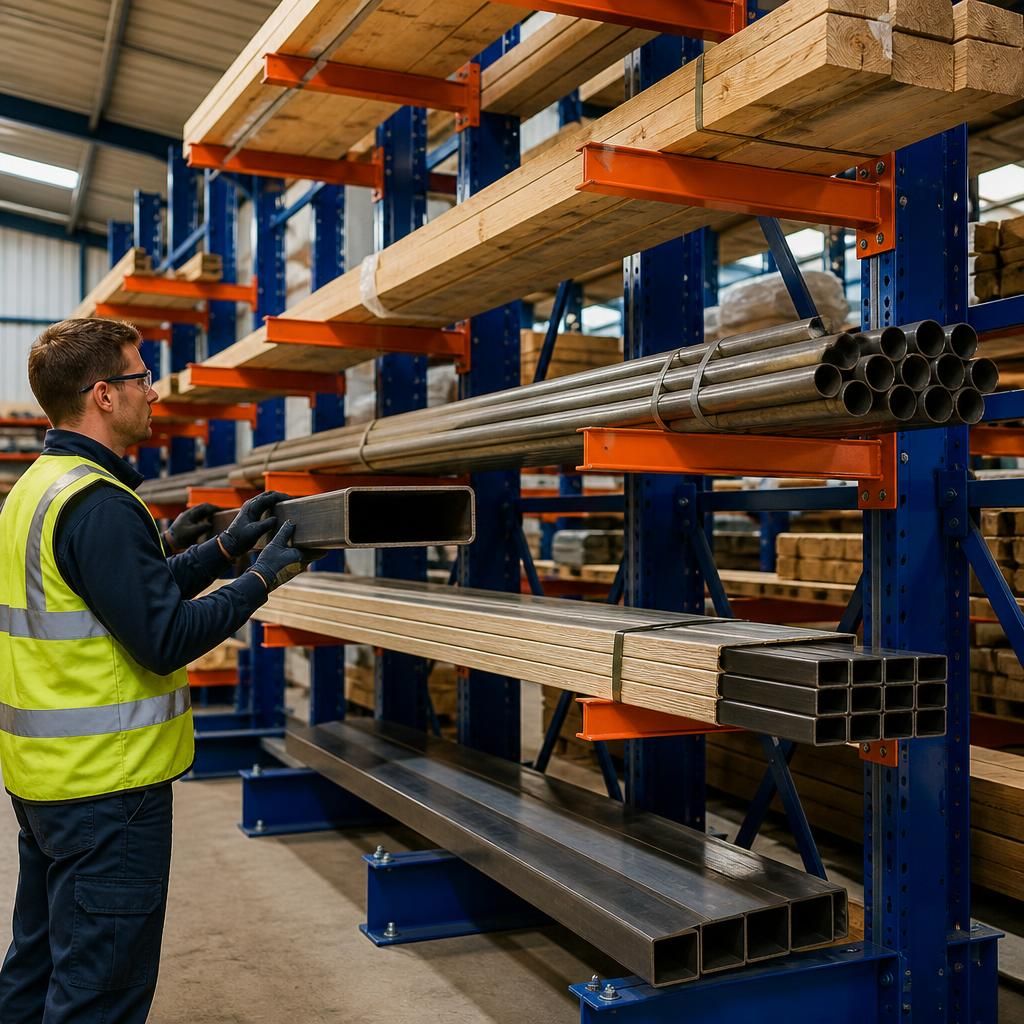
Structural steel usually forms the load-bearing framework of a cantilever warehouse racking system, but the support surface should be selected for the goods being stored. Timber bearers can provide wider, softer contact for boards, packs and other materials that may be marked by steel. For cylindrical, fragile or abrasive products, purpose-designed cradles, saddles or lined supports can improve stability and reduce damage.
These additions must be included in the design assessment. A timber bearer, rubber lining or cradle can change how the load is distributed and may introduce concentrated forces or alter the load’s centre of gravity. Confirm that every support is correctly sized, secured and compatible with the system’s stated capacity before use.
Discuss Your Cantilever Warehouse Racking Material Requirements
Speak to Able Racking about your cantilever warehouse racking material requirements so we can help confirm suitable load supports, finishes and protection for your stored goods.