
What maintenance practices are essential for ensuring the longevity of cantilever racking systems?
Essential maintenance for cantilever racking systems includes planned inspections, prompt repair of damage, load-control checks, secure component replacement and protection against impact and corrosion. Keeping accurate inspection records and ensuring only trained personnel make adjustments helps extend the system’s service life while maintaining safe, compliant warehouse operations.
Maintaining cantilever racking systems requires planned inspections, prompt control of damage, correct loading, secure component replacement and protection from impact and corrosion. These practices identify defects before they affect stability, preserve the designed load capacity and help keep warehouse operations safe and compliant.
Carry out routine visual checks
Warehouse staff should make regular visual checks of the cantilever racking as part of normal housekeeping and operational controls. Look for bent or twisted columns, arms or bracing; damaged welds; loose or missing bolts; displaced components; damaged baseplates; cracking in the supporting floor; and signs that the structure is leaning or no longer aligned.
Checks should also confirm that arms, end stops, pins and locking devices are correctly positioned and secure. Any defect that could affect stability or load support should be reported immediately, and the affected area should be isolated until it has been assessed by a competent person.
Arrange planned expert inspections
Routine staff checks do not replace a formal inspection. A competent inspector should assess the complete system at planned intervals determined by the operating environment, loading activity, impact risk and manufacturer’s instructions. The inspection should cover the structure, connections, foundations, floor condition, protection measures, load notices and the way the system is being used.
An inspection should also be arranged after a significant impact, alteration, relocation, unusual loading event or other incident that could have affected the structure. Inspection findings should be recorded clearly, including the location of each defect, its severity, the required action and the date by which it must be addressed.
Repair damage without delay
Damaged cantilever racking should not be straightened, welded or modified informally. Improvised repairs can change the strength, load path or stability of the system and may conceal further damage. Repairs and replacements should be specified and completed by suitably experienced personnel using compatible components and an appropriate method.
Where a repair cannot be completed immediately, remove the relevant load and prevent access to the affected location. After the work, the system should be checked before it is returned to service. If damage is recurring, investigate the cause rather than repeatedly repairing the same component. Vehicle routes, handling methods, clearances and operator training may need to be reviewed.
Control loads and loading practices
Loads must remain within the manufacturer’s stated capacity for the particular configuration. Do not assume that changing arm positions, adding components or storing different materials leaves the original capacity unchanged. Capacity can be affected by arm spacing, load distribution, unsupported length, column arrangement, base conditions and the way materials are placed or removed.
Load notices should be visible, accurate and relevant to the installed configuration. Operators should place materials evenly, keep loads stable and avoid dropping, dragging or projecting products in a way that could overload individual arms. Loads should not be stored where they obstruct access routes, create an impact hazard or interfere with structural bracing.
Check connections and components
Bolted connections, arm retainers, locking pins, baseplates and bracing should remain complete and secure. During inspections, check for movement, distortion, corrosion, missing fixings and signs of repeated impact. Replacement parts should match the original specification and should not be substituted solely because they appear similar.
Do not drill, cut, weld or alter the structure without suitable technical approval. Even a small unauthorised change can affect the system’s engineered performance. Any change to the arrangement, including additional arms, altered spacing or relocation, should be assessed before work begins and followed by an updated capacity assessment and inspection record.
Protect the system from impact
Impact is a common cause of damage to warehouse racking. Separate vehicles and handling equipment from the structure where practicable, maintain suitable operating clearances and use physical protection in exposed areas. Protection should be installed so that it does not obstruct access, create new collision points or interfere with the designed behaviour of the system.
Review near misses and repeated contact as well as visible damage. A system that appears undamaged may still require assessment after a substantial impact. Good traffic management, clear routes, suitable handling equipment and operator instruction all reduce the likelihood of recurring damage.
Manage corrosion and the warehouse environment
Keep the area around the cantilever racking clean and dry, and deal with leaks, condensation, standing water and aggressive substances promptly. Corrosion can reduce the cross-section and strength of steel components, particularly at bases, joints and areas where protective coatings have been damaged.
Do not simply paint over advanced corrosion or damaged steel. The affected component should be assessed to establish whether cleaning, coating, repair or replacement is appropriate. Cleaning methods should avoid removing protective finishes or forcing debris into connections.
Maintain a complete record
Keep inspection reports, repair records, component information, capacity details and evidence of any approved changes together. A location plan or marked-up report makes it easier to identify defects and confirm that corrective work has been completed. Records should show who carried out the inspection or repair, what was found, what action was taken and when the area was cleared for use.
Review records for recurring faults, repeated impacts or patterns linked to particular shifts, routes or storage activities. This turns maintenance from a reactive task into a preventative programme and helps identify where procedures, protection or training need to be improved.
Ensure people are trained and responsibilities are clear
Personnel who load, unload or inspect the system should understand the applicable capacity information, reporting process and restrictions on making adjustments. They should know how to recognise obvious damage and when to stop using an affected location. Only suitably competent personnel should inspect structural condition, approve repairs or alter the configuration.
A practical maintenance programme combines daily operational awareness, planned competent inspections, immediate defect reporting, controlled repairs and accurate records. Following the manufacturer’s instructions and obtaining specialist advice when damage, alteration or uncertainty arises will help preserve the safety and service life of the cantilever racking system.
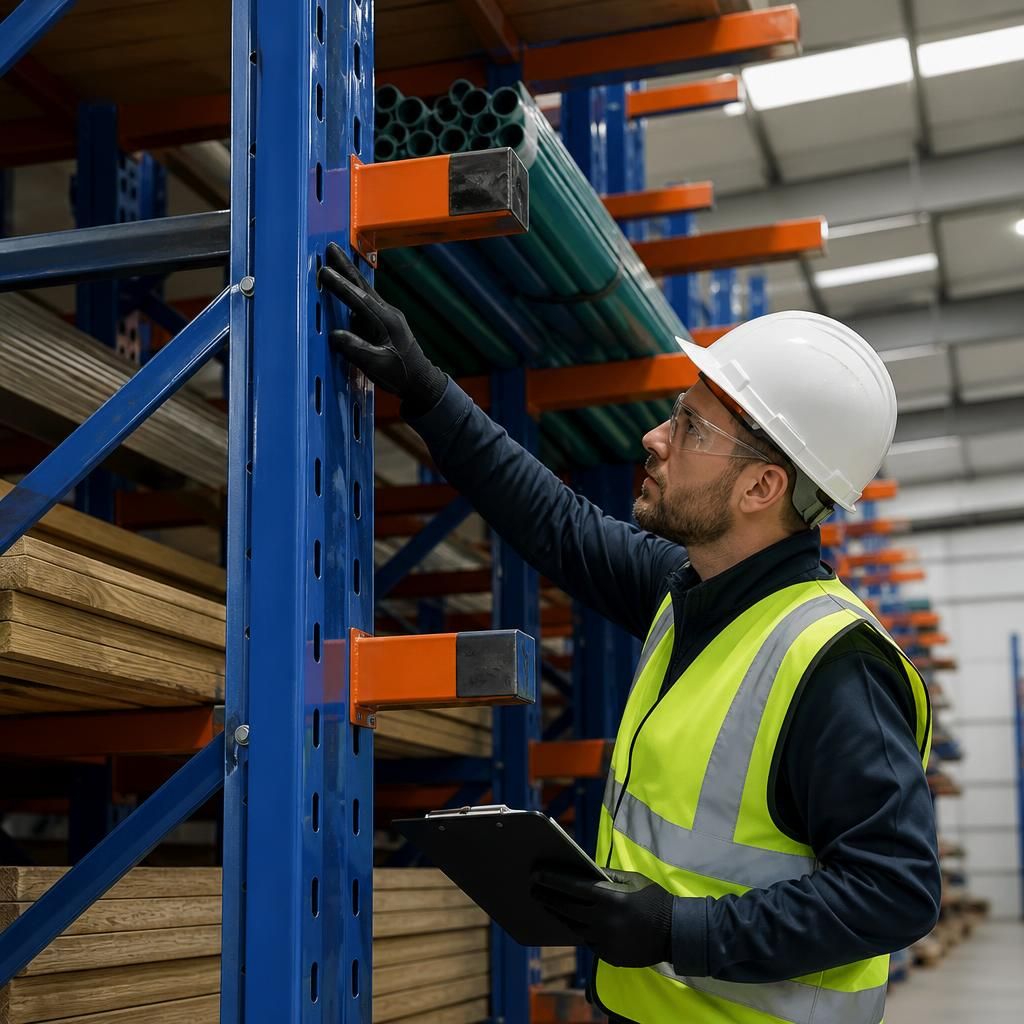
Routine visual checks are an essential maintenance practice for cantilever warehouse racking because they identify damage before it affects stability or load support. Check columns, arms, bracing, baseplates, connections, locking pins and end stops for bending, movement, corrosion, missing fixings or other defects.
Any damage following an impact, alteration or unusual loading event should be reported immediately. Isolate the affected location, remove its load and arrange assessment by a competent person. Do not straighten, weld or modify components informally, as an unauthorised repair can change the system’s strength and stability.
Arrange your cantilever racking inspection
Arrange your cantilever racking inspection with Able Racking to identify damage, confirm safe operation and keep your storage system maintained. Contact our experienced inspection team to discuss your requirements.