
What is the cost-effectiveness of investing in timber and portable mezzanines?
Timber and portable mezzanines can be cost-effective ways to create additional workspace or storage capacity without extending the building, particularly when the design, load requirements and expected service life are assessed carefully. Timber options can offer a straightforward, economical installation, while portable systems may provide greater flexibility if your layout or operational needs are likely to change.
Investing in timber and portable mezzanines can be cost-effective when the chosen system matches the intended use, load requirements and expected period of service. Timber systems may provide a lower-cost way to create a fixed platform, while portable systems can offer better long-term value where the layout, tenancy or operational requirements may change.
The most suitable option is not determined by the initial purchase price alone. A proper comparison should include design, structural assessment, installation, access equipment, flooring, guarding, fire precautions, maintenance, future alterations and eventual removal or relocation. A system that costs less to install may be less economical if it requires extensive modification later.
How timber mezzanines can be cost-effective
Timber is often considered where the platform has a straightforward layout, moderate loading requirements and a relatively stable purpose. It can be practical for offices, picking areas, light storage, welfare facilities and other applications where a robust industrial steel structure is not essential. The materials and construction method may support an economical installation, particularly where the design is uncomplicated and the platform can be built around the existing building arrangement.
Timber can also be suitable when the appearance of the platform matters, or where a quieter working environment is preferred. However, its value depends on the design being appropriate for the loads, traffic, environmental conditions and frequency of use. A timber platform should not be selected solely because its initial cost appears lower. The structure, floor, stairs, handrails and edge protection must all be designed as a complete system.
How portable mezzanines can be cost-effective
Portable mezzanines are generally most cost-effective when flexibility has a meaningful operational value. They can be useful for businesses that expect to alter their layout, expand a process, move to different premises or change the balance between workspace and storage. The ability to dismantle, relocate or reconfigure the platform may reduce the need to purchase a completely new structure when circumstances change.
A portable system can also help a business respond to seasonal demand or temporary projects. Its value is greater where the structure will be used for more than one purpose during its service life. The initial investment may be higher than a basic fixed timber solution, but that difference can be offset if the portable platform avoids future construction work, extended downtime or the cost of replacing an unsuitable fixed installation.
Costs to include in the comparison
- Survey and design: The existing building, floor, clear height, access routes and proposed loads must be assessed. Professional design work is an essential part of a safe and compliant installation, not an optional extra.
- Structure and flooring: Costs vary according to the required span, loading, floor finish, environment and layout. Heavy-duty use, concentrated loads and specialist floor finishes can increase the overall investment.
- Access and protection: Stairs, gates, loading points, handrails, kickboards and other edge protection are important cost items. They should be included from the outset rather than treated as later additions.
- Installation: Consider preparation, delivery, lifting equipment, installation time and any interruption to normal operations. A design that is difficult to access or install may increase the practical cost even if the materials are inexpensive.
- Building and safety requirements: Depending on the proposed use and location, the project may require building control input, fire precautions, lighting, emergency arrangements or other measures. These requirements should be established before committing to a design.
- Maintenance and inspection: Both timber and portable systems require regular checks for damage, loose components, deterioration, unauthorised alterations and changes in use. Any repair or replacement requirements should be considered over the expected service life.
- Future changes: Allow for possible changes to loading, access, workflow, machinery and building occupancy. A cheaper installation can become poor value if it cannot accommodate foreseeable changes.
Comparing whole-life value
Whole-life value is particularly important when choosing between a fixed timber platform and a portable system. Timber may be the sensible choice where the use is stable and the structure can remain in one position for the foreseeable future. Portable construction may be more economical over time where flexibility, relocation or resale potential is important.
Consider how long the platform is likely to be needed, whether the building is owned or leased, how often the layout may change and whether the business may need to increase capacity. For a short-term requirement, the cost of installation and later removal must be assessed alongside the cost of hiring or purchasing an alternative. For a long-term requirement, durability, maintenance access and the ability to adapt the platform may have greater importance than the initial saving.
When the cheapest option may not be the most economical
A low initial price can create additional costs if the platform is under-designed, difficult to access, unsuitable for the intended load or unable to accommodate safe working practices. Alterations made after installation can be disruptive and may require a fresh structural assessment. Overloading, unapproved changes and inadequate edge protection can also create serious safety and compliance issues.
Cost-effectiveness therefore depends on choosing the correct specification at the planning stage. The platform should be designed around its actual use, including people, materials, equipment, traffic routes and loading points. Any future increase in demand should be discussed before the design is finalised rather than assumed to be achievable later.
Practical decision process
- Define the purpose of the platform and whether it will provide workspace, storage, production capacity or a combination of uses.
- Record the required loads, dimensions, clearances, access arrangements and environmental conditions.
- Assess whether the layout is likely to remain stable or whether relocation and reconfiguration are realistic future requirements.
- Obtain a properly designed proposal that includes the structure, floor, access, edge protection and relevant safety measures.
- Compare the full installation and operating costs rather than the structure price alone.
- Plan inspections, maintenance and user training so the platform remains safe and suitable throughout its service life.
In practical terms, timber is often cost-effective for a straightforward, fixed application with predictable use. Portable mezzanines can provide stronger whole-life value where adaptability is central to the business case. A site-specific assessment is the most reliable way to compare the options, confirm the required specification and avoid false economies. Able Racking can help review the proposed use, existing layout and future requirements so the chosen solution is safe, suitable and financially justified.
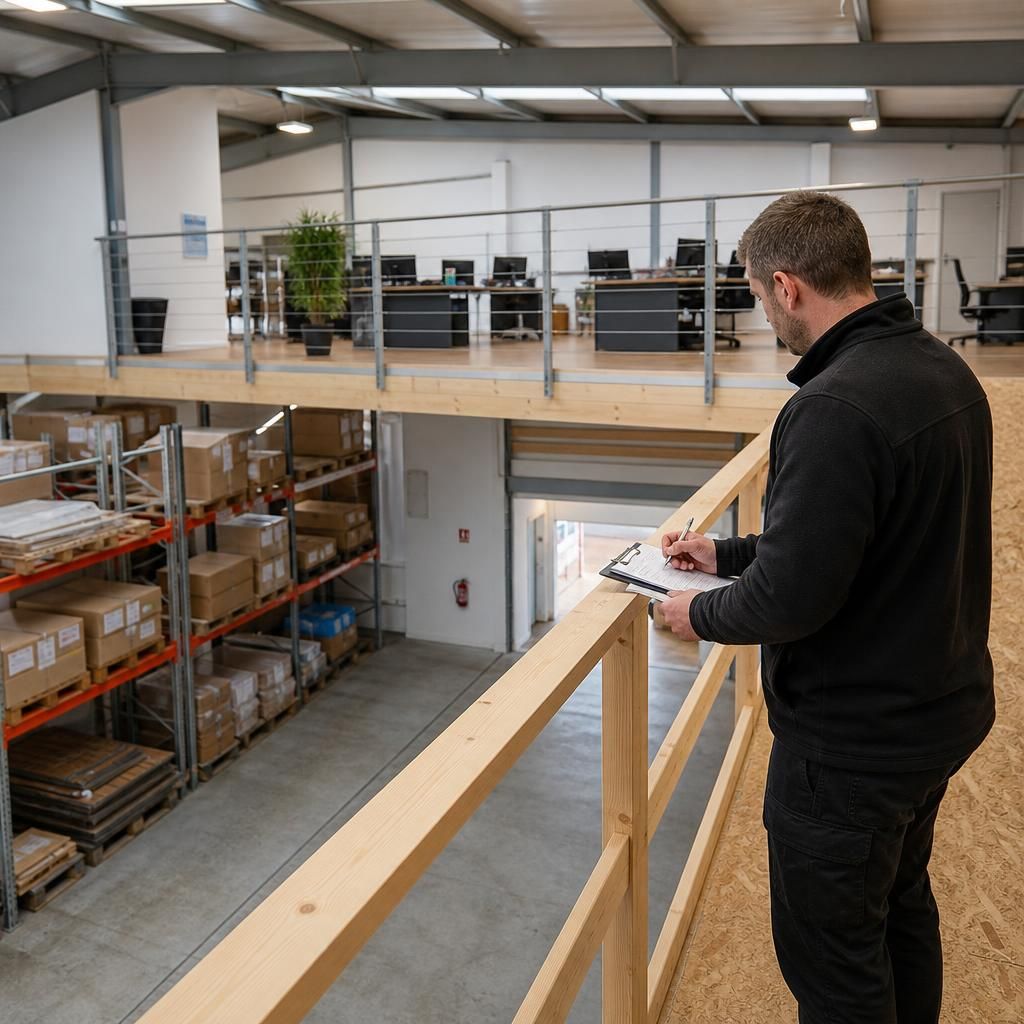
The cost-effectiveness of timber and portable mezzanines depends on whole-life value, not just the initial purchase price. A fixed timber platform may be economical where the layout and intended use are unlikely to change, while a portable system can provide better value if it may need to be relocated, reconfigured or reused.
When comparing options, include design, structural assessment, flooring, access, edge protection, installation, maintenance and eventual removal. Choosing a cheaper platform that cannot accommodate future changes may lead to alteration costs, operational disruption or replacement. Assessing the expected service life and likely changes in use at the planning stage helps ensure the selected system remains safe, suitable and financially justified.
Discuss the most cost-effective mezzanine option for your site
Discuss the most cost-effective mezzanine option for your site with our experienced team. We can review your intended use, layout and future requirements to help you select a safe, suitable and financially justified solution.