
What are the maintenance requirements for timber and portable mezzanines?
Timber and portable mezzanines require regular inspections, cleaning and checks of structural components, flooring, fixings, access equipment and safety barriers. Any damage, movement, wear or unauthorised alteration should be assessed promptly and repaired by a competent professional to keep the mezzanine safe, compliant and reliable.
Timber and portable mezzanines require planned inspections, routine cleaning and prompt repairs to remain safe, stable and suitable for their intended use. Maintenance should cover the supporting structure, timber or deck panels, fixings, access arrangements, edge protection and any moving or adjustable components. The required frequency depends on the design, loading, working environment, amount of use and manufacturer’s instructions.
Use a planned inspection programme
Inspections should be completed by a competent person who understands the type of structure and the conditions in which it is used. Visual checks should take place routinely, with a more detailed examination after an impact, alteration, relocation, unusual loading or any report of movement or damage.
Inspection findings should be recorded clearly, including the location of defects, their severity, any restrictions placed on use and the corrective action required. Records help demonstrate that maintenance is being managed properly and make it easier to identify recurring problems.
Checks should look for:
- movement, leaning, deflection or other changes in the structure;
- loose, missing, damaged or corroded bolts, screws, brackets, plates and other fixings;
- cracking, splitting, warping, swelling, delamination, decay or pest damage in timber components;
- damaged, uneven or insecure flooring and deck panels;
- gaps, damaged joints or areas where the floor no longer sits correctly;
- loose or damaged stairs, ladders, handrails, guardrails, gates and access barriers;
- signs of impact from vehicles, handling equipment or stored goods; and
- any unauthorised alteration, drilling, cutting, attachment or change of use.
Timber-specific maintenance
Timber should be kept dry and protected from conditions that could cause deterioration. Leaks, condensation, standing water and persistent high humidity should be investigated rather than simply cleaned away. Any timber showing softening, rot, splitting, excessive wear, distortion or separation between layers should be assessed before the area is used again.
Protective coatings should be maintained in line with the manufacturer’s guidance. Coating damage can expose timber to moisture and make defects harder to identify. Repairs should use suitable materials and methods; filling or covering a defect without addressing its cause may leave the structure unsafe.
Floor surfaces should be kept free from oil, water, dust and loose materials. Cleaning methods must not saturate timber or damage its surface. Abrasive cleaning, unapproved chemicals and excessive pressure can reduce the serviceability of timber components and should be avoided unless specifically approved.
Portable structure checks
Portable units need additional checks because they may be moved, adjusted or reassembled. Before use, confirm that the frame is correctly assembled, all locking devices and retaining pins are engaged, supports are positioned as intended and the unit is level and stable on a suitable surface.
Where the design includes castors, wheels, brakes, adjustable feet or other movable components, inspect these for wear, damage and secure operation. Brakes and locks must hold the structure firmly during use. A portable unit should not be moved while occupied or loaded unless its design and instructions specifically permit this.
After relocation, the structure should be checked before it is returned to service. This should include the position of supports, floor condition, fixings, access equipment, edge protection and any connections affected by dismantling and reassembly. Do not assume that a unit remains safe simply because it was previously inspected in another location.
Access and edge protection
Stairs, ladders, handrails, guardrails, toe boards, gates and loading barriers are safety-critical parts of the installation. They should be secure, correctly aligned and free from damage. Gates should close and latch properly, while barriers must not have gaps that allow people or materials to fall.
Access routes and the area beneath the structure should be kept clear. Goods, waste and equipment must not obstruct stairs, reduce headroom, interfere with barriers or create additional loading that was not included in the original design.
Loading and use controls
Keep the permitted load clearly communicated to users and do not exceed the designed capacity. Loads should be distributed as intended, with particular care around edges, access points and areas supported by individual beams or posts. Concentrated loads, new equipment, changes in storage arrangements and increased foot traffic should be reviewed before they are introduced.
Maintenance inspections do not replace the need to control how the structure is used. Staff should report impact damage, unusual movement, damaged flooring or missing components immediately. If there is doubt about stability or load capacity, restrict access until the issue has been assessed.
Repairs and alterations
Minor maintenance, such as replacing an approved fixing or renewing a protective finish, should follow the manufacturer’s instructions and the original design. Structural repairs, changes to access, new openings, additional supports, increased loads and alterations to guardrails should be assessed by a suitably competent specialist before work begins.
Do not weld, drill, cut, remove supports or substitute materials without approval. An apparently small alteration can change how loads are transferred through the structure or reduce the effectiveness of fall protection. Damaged components should normally be replaced with compatible parts rather than improvised repairs.
Cleaning, records and review
A maintenance schedule should combine routine housekeeping, user checks and formal inspections. It should identify responsible personnel, inspection points, cleaning requirements, defect reporting arrangements and the process for taking unsafe areas out of service.
Review the maintenance plan whenever the use, loading, environment or layout changes. A competent inspection is also appropriate after a collision, flooding, fire, significant water ingress, relocation or prolonged period out of service. Following these controls helps keep timber and portable mezzanines reliable while providing evidence that defects and safety risks are being managed promptly.
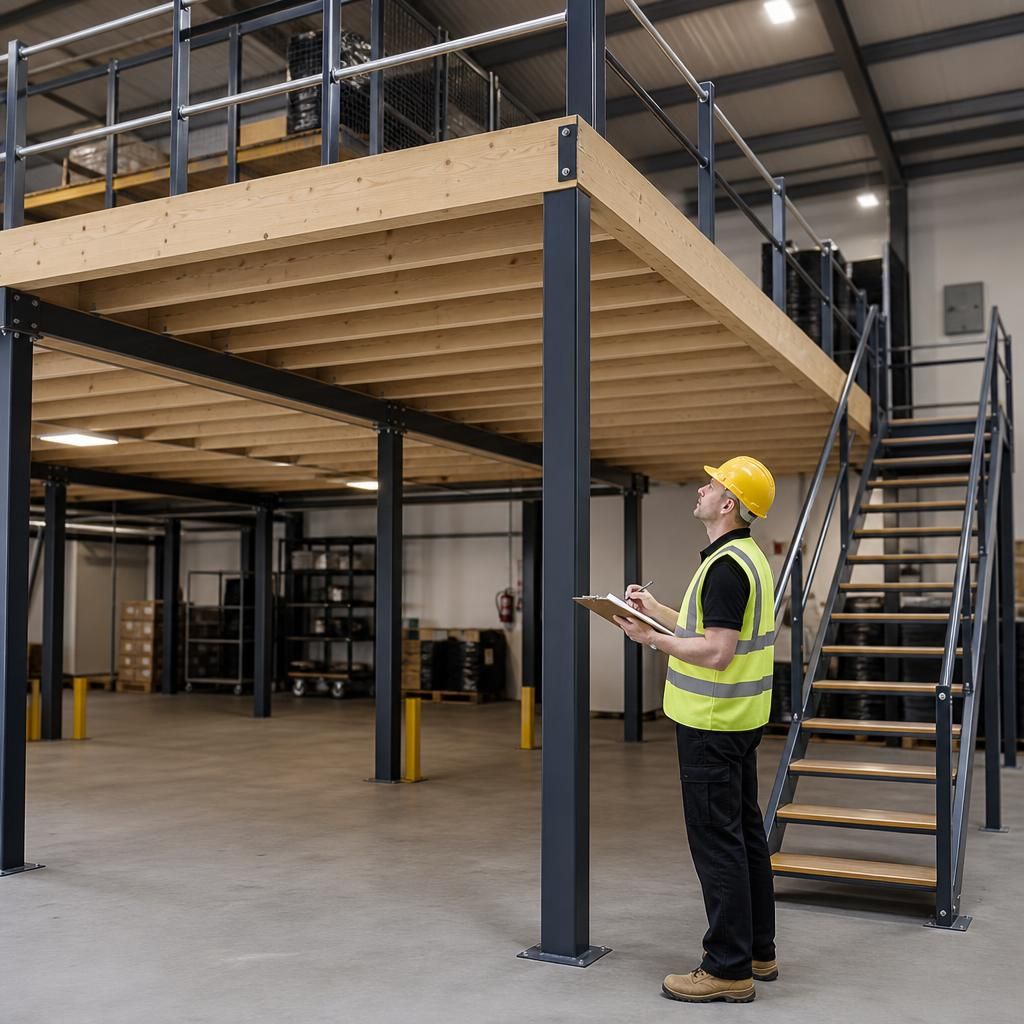
Regular inspections are essential for maintaining timber and portable mezzanines because they identify structural movement, damaged flooring, loose fixings, timber deterioration and faults in access or edge protection before these defects become more serious.
A competent person should also inspect a portable unit after it has been moved, adjusted or reassembled. Supports, locking devices, brakes, connections, stairs, guardrails and the surrounding floor should be checked before the structure is returned to service. Record each inspection, restrict access where safety is uncertain and arrange suitable repairs before normal use resumes.
Arrange a Professional Mezzanine Maintenance Inspection
Arrange a professional mezzanine maintenance inspection with Able Racking to identify defects, confirm the structure remains suitable for use and recommend any necessary repairs or remedial work.