
What are the environmental impacts of using portable mezzanine systems?
Portable mezzanine systems can reduce environmental impact by reusing adaptable steel components, avoiding some of the material waste, demolition and embodied carbon associated with permanent construction. Their impact still depends on manufacturing, transport, installation and eventual disposal, so selecting durable components, reconfiguring them for changing needs and recycling materials responsibly are important.
Portable mezzanine systems can reduce environmental impact compared with permanent construction because their steel components can be dismantled, reused, reconfigured and recycled. However, they still have an environmental cost from raw material extraction, manufacturing, transport, installation, lighting, heating, maintenance and eventual disposal. The overall impact depends on how long the system is used, how efficiently it is operated and whether its components remain suitable for future use.
Material use and embodied carbon
Most portable mezzanine systems use structural steel, decking, stairs, handrails and safety gates. Producing these components requires energy and raw materials, creating embodied carbon before the system reaches the site. Fabricated steel may also involve cutting, welding, finishing and protective treatments, each of which contributes to the system’s environmental footprint.
The environmental effect is generally lower when a system is designed accurately for its intended loading and layout. Avoiding unnecessary steel, oversized components and repeated alterations reduces material consumption. A competent design and installation process is therefore important not only for structural safety, but also for responsible use of resources.
Reuse and adaptability
Reusability is one of the main environmental advantages of a portable system. Unlike a permanent extension, a demountable structure can potentially be moved to another area, adapted to a revised layout or installed at another site. This can extend the useful life of the original components and reduce the need to manufacture replacement materials.
Adaptability is most effective when the system is maintained properly and changes are planned by a suitably qualified person. Loads, spans, access arrangements, guarding and supporting surfaces must be reassessed before components are reused or the layout is changed. Reconfiguration without an appropriate design review can create safety risks and may cause otherwise usable components to be discarded.
Reduced construction waste
Portable mezzanine systems can reduce the waste associated with permanent building work. They may require less demolition, fewer wet trades and less alteration to the existing building fabric. Their installation can also avoid some of the spoil, packaging and offcuts associated with more extensive construction projects.
This does not mean that installation is waste-free. Steel offcuts, timber or composite decking, packaging, fixings and damaged components still need to be managed. Waste should be separated where practical, with steel and other recyclable materials sent through appropriate recovery routes rather than mixed with general waste.
Transport and installation impacts
Transport contributes to the environmental impact of a portable system through the movement of materials, equipment and installation teams. Poorly planned deliveries, partial loads and unnecessary journeys can increase fuel use. Accurate surveys, coordinated delivery schedules and preparation of the installation area can help limit these impacts.
Installation methods also matter. A system that can be assembled efficiently with suitable equipment may reduce the duration of site activity and associated energy use. Reusing components locally, where they remain appropriate for the required loads and layout, can also avoid the environmental cost of moving materials over longer distances.
Operational energy use
Adding an upper work or storage level may alter how a building is lit, heated, ventilated or accessed. If the additional area requires extended lighting hours, extra heating or cooling, or more frequent movement of goods, operational energy consumption may rise.
These effects can be managed through practical design choices. Consider the position of lighting, the use of energy-efficient fittings, access to natural light, ventilation requirements and the way materials will be moved between levels. Keeping frequently accessed items close to efficient access routes may also reduce unnecessary travel by powered equipment and personnel.
Durability and maintenance
A durable system has a lower environmental impact over its useful life because it does not need to be replaced prematurely. Regular inspections should identify corrosion, damaged decking, loose fixings, impact damage, deterioration of finishes and changes that could affect stability or loading.
Prompt repairs can preserve components that would otherwise require replacement. Maintenance work should be proportionate and should use compatible materials and replacement parts. Keeping records of inspections, repairs, alterations and load information also helps future users make informed decisions about continued use or relocation.
End-of-life considerations
At the end of its service life, steel can generally enter established recycling streams. Reuse is normally preferable where components remain structurally sound and suitable for another application, because it preserves more of the value and energy already invested in them. Components that cannot be reused should be assessed for recycling or responsible disposal.
Decking, coatings, plastics, damaged fixings and mixed materials may require different waste routes. A decommissioning plan should identify which parts can be recovered, how they will be removed safely and how waste will be segregated. Dismantling should be carried out in a controlled manner rather than treating the system as general demolition waste.
How to reduce the environmental footprint
- Choose a system sized for the actual loads, access requirements and available space.
- Ask for durable, repairable components and information about material composition where this is available.
- Plan the layout carefully to reduce later alterations, unnecessary journeys and avoidable material waste.
- Confirm that future relocation or reconfiguration is technically feasible before purchasing the system.
- Maintain the structure and address damage promptly to extend its service life.
- Use efficient lighting and review heating and ventilation requirements for the additional level.
- Retain inspection, design, loading and maintenance records so components can be safely reused.
- Arrange responsible segregation, recycling or disposal when the system is dismantled.
The most sustainable option is not automatically the system with the lowest initial material content. A durable, correctly designed and adaptable portable mezzanine that remains in service, avoids unnecessary building work and can be reused may deliver a better whole-life outcome than a cheaper system that needs early replacement or extensive modification. Environmental decisions should therefore be considered alongside structural suitability, workplace safety, legal requirements, operational efficiency and the building’s future needs.
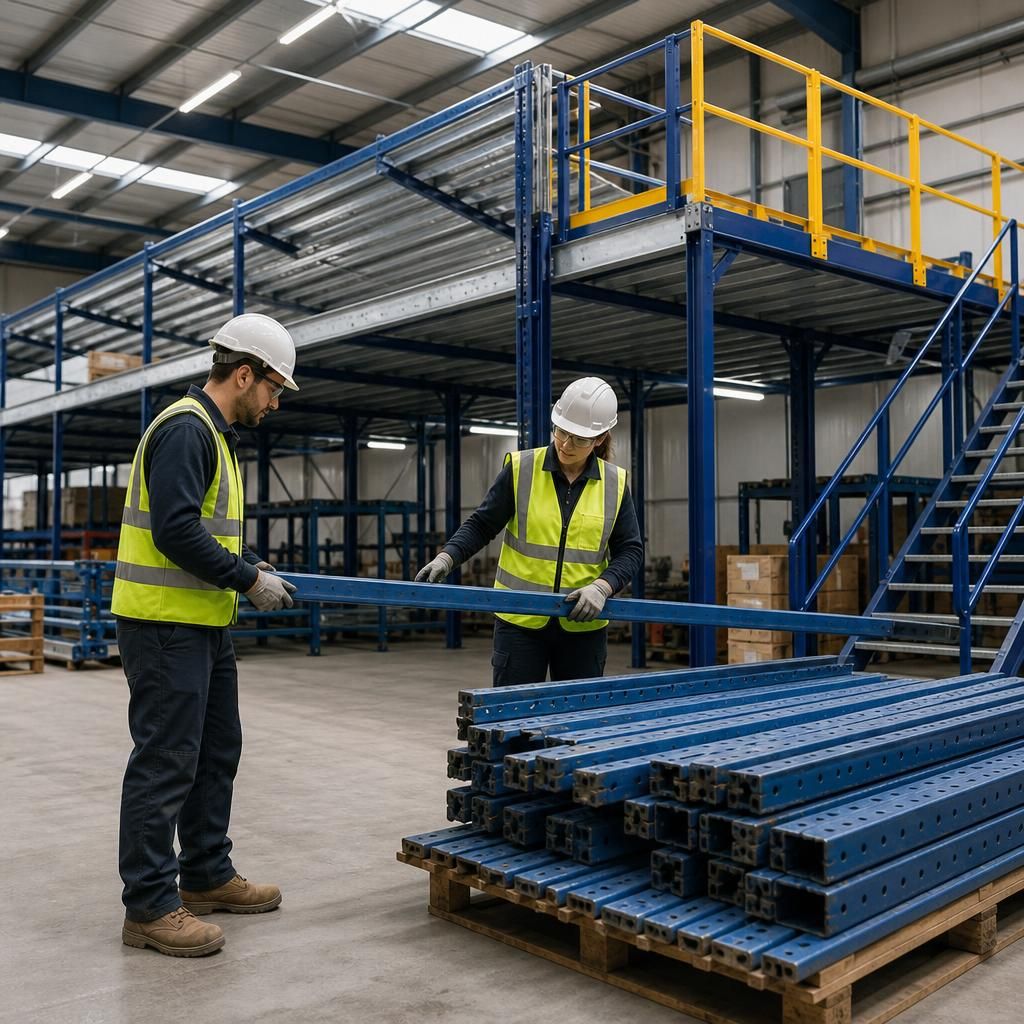
Reuse is a key environmental advantage of portable mezzanine systems. When the structure remains in good condition, its steel components, decking, stairs and guarding may be dismantled, reconfigured or relocated instead of being replaced or sent for disposal. This can reduce demand for new materials and avoid some of the construction waste associated with permanent alterations.
Reuse must be planned safely. Before changing the layout or moving the system, a competent person should reassess the loads, spans, access arrangements, edge protection and supporting surfaces. Keeping accurate design, inspection and maintenance records helps confirm which components remain suitable. Parts that are no longer fit for reuse should be separated and sent for appropriate recycling or responsible disposal.
Plan a Lower-Impact Portable Mezzanine System
Speak to Able Racking to review your portable mezzanine requirements, including reuse, maintenance and end-of-life considerations. Our experienced team can help you plan a safe, durable system with a lower whole-life environmental impact.