
What maintenance requirements should be considered for a steel mezzanine to ensure long-term durability and safety?
Steel mezzanine maintenance should include scheduled inspections of the structure, fixings, flooring, stairs, handrails, edge protection and loading areas, with prompt investigation of corrosion, impact damage, movement or unauthorised alterations. Keep the structure clean and dry, control loading and access, record inspection findings, and arrange repairs or specialist assessments whenever defects could affect long-term durability or safety.
Steel mezzanine maintenance should combine planned inspections, routine housekeeping, controlled loading and prompt repair of defects. The supporting frame, connections, floor, stairs, guarding, access points and any installed equipment must be kept in a condition that preserves structural stability and protects people working on or beneath the platform. A documented, risk-based maintenance plan is the most reliable way to support long-term durability and safe operation.
Inspection frequency should reflect the environment and how the platform is used. A competent person should establish an inspection regime based on factors such as loading intensity, vehicle movements, exposure to moisture or chemicals, impact risk, the age and condition of the structure, and any changes to the workplace. Routine visual checks by trained staff should be supported by more detailed inspections at planned intervals and whenever damage, unusual movement or an operational change is reported.
Every inspection should be recorded clearly. Records should identify the area inspected, the condition found, the person carrying out the check, the date, any photographs or measurements required, and the action taken. Defects should be assigned to a responsible person with a suitable completion priority. Keeping a consistent history helps identify recurring damage, deterioration or unauthorised changes before they develop into a serious concern.
The steel frame and its connections require particular attention. Inspect columns, beams, bracing, base plates, welds, bolts and other connections for:
- Corrosion, flaking coatings or moisture-related deterioration.
- Bending, distortion, cracking or other signs of structural damage.
- Loose, missing or damaged bolts, fixings and connection components.
- Movement, settlement, unusual deflection or changes in alignment.
- Damage caused by forklifts, pallet trucks, handling equipment or stored materials.
- Unauthorised drilling, cutting, welding, removal of bracing or attachment of additional equipment.
Do not straighten, weld, drill or modify a structural member without obtaining an assessment from the original designer, manufacturer or another suitably qualified structural specialist. A seemingly minor alteration can change load paths or reduce the capacity of the structure. Where impact damage is suspected, the affected area should be isolated as necessary and assessed before normal use resumes.
The platform surface and edge protection must also remain serviceable. Check deck panels, boards, grilles and supporting members for damage, movement, excessive wear, gaps, contamination and inadequate seating. Replace damaged sections with compatible components and make sure replacement materials provide the required strength, fire performance and slip resistance for the intended use. Handrails, midrails, toe boards, barriers, gates and loading points should be secure, correctly positioned and free from damage. Any opening created for materials, conveyors or access equipment should have suitable protection when it is not actively being used.
Stairs, landings and other access arrangements should be inspected for loose components, damaged treads, worn surfaces, inadequate guarding and obstructions. Keep access routes clear and make sure doors, gates and self-closing mechanisms operate correctly. Where a lift-out gate, pallet gate or similar arrangement is installed, its operation should prevent people from being exposed to an unprotected edge during normal handling activities.
Loading controls are an essential part of maintenance. The permissible load should be displayed clearly and understood by all relevant staff. Loads should be distributed in accordance with the design rather than concentrated in areas that were not intended to carry them. Review the arrangement if storage locations, handling methods or the type of goods change. Never exceed the designed capacity, use the platform for a different purpose without technical approval, or allow stored items to obstruct access, guarding, fire equipment or escape routes.
Housekeeping helps prevent both deterioration and accidents. Remove dust, waste, leaks and spilled materials promptly, particularly where they can retain moisture against steel or make the floor slippery. Investigate recurring leaks, condensation and aggressive substances rather than repeatedly cleaning the resulting damage. Maintain suitable ventilation and environmental controls where the platform is located in a damp, corrosive or temperature-sensitive area.
Protective coatings should be checked for scratches, exposed steel, blistering and peeling. Surface preparation and repainting should follow the coating manufacturer’s recommendations and any relevant fire-protection requirements. If the structure has intumescent or other specialist fire protection, do not abrade, coat over or repair it without advice from a competent specialist. Fire-resisting elements, compartmentation and protected service penetrations should be included in the maintenance plan where they form part of the installation.
Any change to the platform or the surrounding operation should trigger a review. This includes installing conveyors, lifts, partitions, machinery, sprinkler services, lighting, cable trays or new access equipment; changing the stored goods; altering floor layouts; or introducing vehicles near the structure. The change should be checked against the original design information and approved before implementation. Updated drawings, load information, operating instructions and inspection records should then be retained.
When a defect is found, assess its potential effect rather than treating every issue as cosmetic. Restrict access or reduce loading where stability, edge protection or floor integrity may be affected. Arrange repair or specialist examination promptly, use suitable replacement components, and verify the completed work before returning the affected area to service. Temporary measures should be clearly communicated and should not become a substitute for permanent repair.
Maintenance responsibilities should be clear between the building operator, landlord, installer, equipment suppliers and contractors. Staff should know how to report impact, corrosion, movement, damaged guarding and unsafe access. Contractors working on or around the structure should receive relevant site information and should not alter structural components without authorisation. This approach provides an auditable process for maintaining the platform, supporting workplace safety duties and preserving its intended service life.
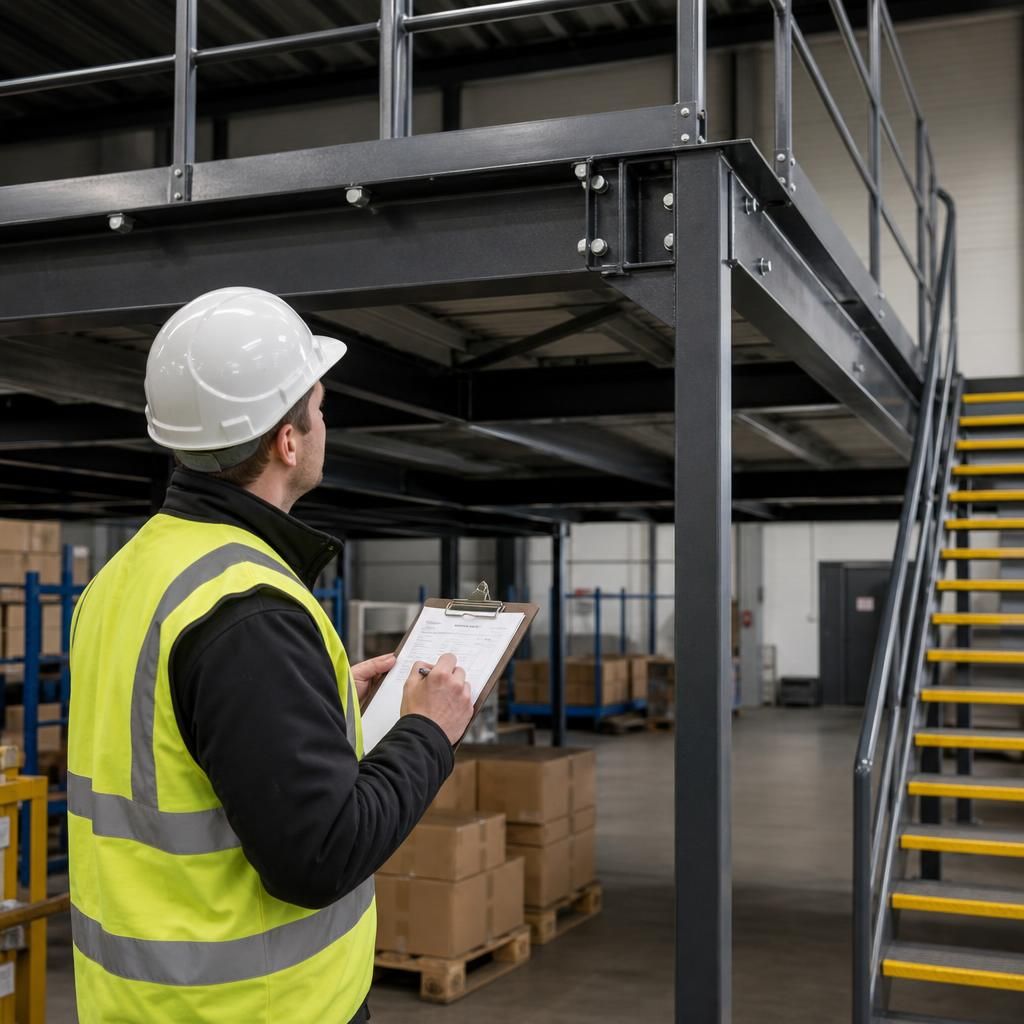
Regular, documented inspections are central to maintaining a steel mezzanine’s long-term durability and safety. Checks should cover the supporting frame, bolts, welds, flooring, stairs, handrails, edge protection and loading areas, with the inspection frequency based on the platform’s use, environment and exposure to impact or moisture.
Record the inspection date, areas checked, defects found, photographs or measurements where needed, and the action assigned. Look specifically for corrosion, loose fixings, distortion, damaged flooring, unusual movement, excessive deflection and unauthorised alterations. Any defect that could affect stability or fall protection should be reported immediately, with access or loading restricted until a competent person has assessed it.
Do not drill, cut, weld or modify structural components without suitable technical approval. Prompt repairs using compatible materials, followed by a check of the completed work, help prevent minor deterioration from becoming a significant safety or structural issue.
Arrange Expert Steel Mezzanine Maintenance Advice
Contact our experienced team for practical advice on inspecting, maintaining and repairing your steel mezzanine. We can help you review existing maintenance arrangements and identify any issues requiring competent assessment.