
What are the best practices for maintaining mezzanine loading and access systems?
Maintain mezzanine loading and access systems through scheduled inspections, prompt repair of defects, routine cleaning, and checks on gates, lifts, conveyors, flooring and protective barriers. Keep inspection records, follow manufacturer guidance, train operators in safe use, and take any damaged or unsafe equipment out of service until it has been assessed and repaired by a competent professional.
Best practice for maintaining mezzanine loading and access systems is to combine planned inspections, routine cleaning, competent servicing, operator training and prompt action on defects. The complete system should be assessed as one working arrangement, including loading gates, pallet gates, lifts, conveyors, stairs, flooring, edge protection, barriers, controls and any supporting equipment. If a component is damaged, defective or unsafe, stop using it until it has been assessed and, where necessary, repaired by a competent person.
Use a planned maintenance schedule
Maintenance should be planned according to the equipment manufacturer’s instructions, how frequently the system is used, the loads handled and the conditions in the workplace. A suitable schedule normally includes:
- Daily or pre-use checks by trained operators for visible damage, unusual noise, obstruction, contamination and obvious control faults.
- Routine workplace inspections to identify wear, impact damage, loose components, corrosion, damaged flooring and changes to the surrounding area.
- Planned servicing by suitably competent engineers for lifts, powered conveyors, hydraulic systems, electrical controls and other specialist equipment.
- Periodic thorough examinations where required by the equipment type and applicable health and safety legislation.
- A formal review after alterations, relocation, impact, overloading, a significant fault or any change in the way the system is used.
Manufacturer guidance should take priority where it sets a more demanding inspection or servicing interval. Maintenance records should identify the equipment, inspection date, findings, corrective action, person completing the work and the date the system was returned to service.
Inspect loading gates and access protection
Loading gates and pallet gates are safety-critical because they protect open edges when goods are being transferred. Check that gates open, close and secure correctly, and that interlocks, catches, hinges, counterbalance arrangements and protective surfaces are functioning as intended. Look for distortion, cracked welds, missing fixings, excessive play, damaged mesh or panels and signs that the gate has been struck by handling equipment.
The loading side should never be left unprotected while goods are being moved. Operators should follow the correct sequence for opening and closing the gate, and should not bypass interlocks or defeat safety features. Any gate that does not close fully, remain stable or provide the intended protection should be taken out of use and clearly identified until repaired.
Maintain lifts and conveyors correctly
Mezzanine lifts and conveyors need maintenance that reflects their particular design. For lifts, inspect doors, gates, landing controls, emergency stops, restraints, guide systems, cables or chains, hydraulic components and warning devices. Check that the rated capacity and operating instructions remain visible. Lifting equipment may also require examination under the Lifting Operations and Lifting Equipment Regulations, with the required reports retained and acted upon.
For conveyors, check belts, rollers, chains, drives, guards, transfer points, sensors, emergency stop systems and access panels. Remove accumulated packaging, dust and product from areas where it could cause a jam, overheating or loss of traction. Do not clear a blockage while the conveyor is live; isolate the equipment using the site’s lockout and isolation procedure before attempting any intervention.
Only authorised and suitably trained personnel should reset faults, adjust components or carry out maintenance. Repeated breakdowns should be investigated rather than resolved through repeated temporary resets, as they may indicate misalignment, overloading, worn components or an unsuitable operating method.
Keep floors, stairs and barriers in sound condition
Inspect mezzanine flooring for loose or damaged panels, gaps, raised edges, excessive deflection, contamination and deterioration around loading points. The surface should remain suitable for the loads, traffic and equipment in use. Spilt liquids, loose packaging and debris should be removed promptly to reduce slip and trip risks.
Stairs, handrails, kickboards, edge barriers and access doors should be secure, unobstructed and free from damage. Check that handrails and guarding have not been loosened by impact or unauthorised alterations. Do not store goods against barriers or use protective rails as supports for materials, cables or temporary equipment.
Control loads and prevent impact damage
Safe maintenance also depends on controlling the loads placed on the system. Keep load notices visible and ensure they reflect the current arrangement and method of use. Operators should understand any restrictions relating to distributed loads, point loads, pallet positions, lift capacity, conveyor capacity and the use of handling equipment.
Investigate any impact involving a lift, gate, barrier, column, floor or other structural component. Damage may not be immediately obvious, so the affected equipment should be isolated and assessed by a competent person before use resumes. Do not straighten, weld, drill or modify structural components without an appropriate technical assessment and approval.
Maintain a clean and controlled working area
Good housekeeping is part of preventative maintenance. Keep access routes, landings, lift approaches, emergency exits and control points clear. Remove waste and damaged packaging, manage trailing cables and prevent materials from falling through open edges or accumulating beneath moving equipment.
Cleaning methods should be compatible with the flooring, electrical equipment, belts, sensors and protective coatings. Water or cleaning chemicals should not be used around electrical components unless the equipment is designed for that method and has been safely isolated.
Train operators and review working methods
Operators should receive practical instruction on normal use, pre-use checks, loading limits, gate operation, emergency stops, isolation procedures and reporting defects. Training should be refreshed when equipment, layout, loads or working practices change, or when inspection findings show that procedures are not being followed.
Written procedures should explain what operators may check themselves and which faults require an engineer or other competent person. Staff should know how to report damage and should never be encouraged to continue using equipment to avoid disruption.
Manage defects and repairs promptly
Defects should be assessed according to their potential consequence. Safety-critical faults require immediate isolation, while less urgent issues should still be recorded, assigned to a responsible person and tracked through to completion. Temporary measures must not become a substitute for a permanent repair.
After repair, the equipment should be inspected and function-tested before it is returned to service. Where a repair changes the design, capacity or operating method, update the risk assessment, instructions, training and inspection arrangements. Keep evidence of the work, including photographs or engineer reports where useful.
Review the whole arrangement regularly
Maintenance is most effective when inspection findings are reviewed for recurring problems. Look for patterns such as repeated impacts at one transfer point, frequent conveyor jams, damaged gate components or contamination in a particular area. These may require changes to traffic routes, operator training, guarding, signage, equipment settings or the layout itself.
A competent inspection should also be arranged after installation, alteration, relocation or a significant change in use. Combining routine operator checks with documented inspections and specialist examinations provides a clearer basis for keeping mezzanine loading and access systems safe, compliant and reliable.
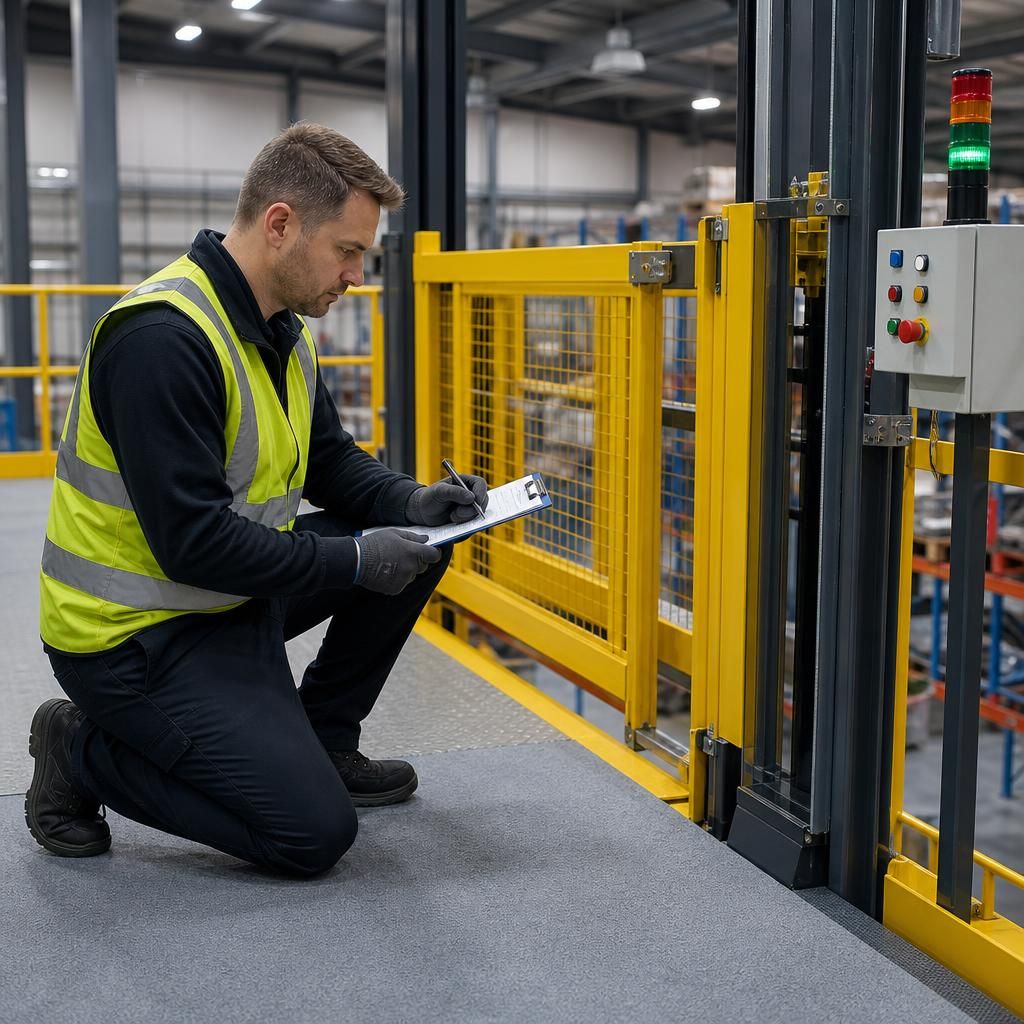
Regular inspection of loading gates and edge protection is one of the most important maintenance practices for mezzanine loading and access systems. Check that gates close fully, secure correctly and protect the open edge throughout the loading process. Hinges, catches, interlocks, panels, fixings and counterbalance components should be examined for wear, distortion, impact damage or looseness.
Any gate or barrier that does not provide reliable protection should be taken out of service immediately and clearly identified until a competent person has assessed and repaired it. Keep inspection findings and repair records, and review repeated damage to identify changes needed to traffic routes, loading procedures or operator training.
Arrange Expert Maintenance for Your Mezzanine Loading and Access Systems
Arrange a professional inspection and maintenance review of your mezzanine loading and access systems with Able Racking. Our experienced team can identify defects, assess servicing requirements and help keep your equipment safe, compliant and reliable.