
How do mezzanine lift systems affect warehouse operational efficiency and productivity?
Mezzanine lift systems improve warehouse operational efficiency by moving goods between levels quickly and reducing reliance on manual handling or stairs. They can streamline stock movement, support better use of vertical space and help teams maintain more consistent workflows when correctly specified, installed and maintained.
Mezzanine lift systems can improve warehouse operational efficiency and productivity by moving goods between levels in a controlled, repeatable way. They reduce the need for employees to carry loads or use stairs, support more efficient use of vertical space and help create a consistent flow between receiving, storage, picking, production and dispatch areas.
The effect on productivity depends on selecting a lift that suits the goods, operating process, available space and required movement frequency. A correctly specified system should reduce unnecessary travel, make material handling more predictable and integrate safely with the working practices already used in the warehouse.
How lift systems improve material movement
A lift provides a dedicated route between ground-level and elevated working areas. Instead of employees repeatedly transporting items by hand, goods can be transferred using a platform, cage or enclosed carrier, depending on the equipment design and application. This is particularly useful for bulky, heavy or awkward loads that are unsuitable for manual carrying.
More consistent vertical movement can help to:
- Reduce the time spent walking between levels or waiting for alternative handling equipment.
- Limit unnecessary manual handling and the associated physical strain.
- Improve the movement of stock, components, packaging and finished goods between work areas.
- Make transfer points easier to plan, supervise and keep clear.
- Support more predictable replenishment and order fulfilment activities.
These benefits are most noticeable where goods regularly need to move between floors or platforms. A lift does not automatically improve performance simply because it is installed; its position, capacity, controls and operating procedure must match the actual workflow.
Better use of vertical space
Where floor space is limited, a mezzanine can create an additional working or storage level without requiring the building footprint to be extended. A lift makes that upper level more practical by providing a defined method for transferring goods. This can allow different activities to be separated by level, such as stock holding above and picking, packing or production below.
Using levels in this way may reduce congestion on the warehouse floor and preserve valuable space for vehicle access, workstations or dispatch operations. It can also help the business adapt its layout as volumes or processes change, provided the structure, access arrangements and lifting equipment remain suitable for the revised use.
Improved workflow and reduced congestion
Manual movement between levels can create bottlenecks, particularly when employees must share stairways, wait for other handling activities to finish or take indirect routes around the building. A dedicated lift route helps separate vertical goods movement from pedestrian movement and can make the overall process easier to coordinate.
Efficiency gains may come from a combination of small improvements rather than one isolated feature. For example, positioning the lift close to the main transfer point can reduce travel distances, while clearly defined loading and unloading areas can prevent goods being left in circulation routes. Suitable controls and operating instructions also help employees use the equipment consistently.
Effect on employee productivity
When employees spend less time carrying goods, climbing stairs or dealing with awkward transfers, more of their working time can be directed towards picking, checking, packing, replenishment or production tasks. A lift can also reduce disruption caused by irregular or physically demanding movements.
This does not remove the need for safe manual handling. Employees still need to load and unload goods correctly, observe the equipment limits and follow the site procedure. Training should cover the permitted loads, safe positioning, access controls, emergency arrangements and what to do if the lift stops operating.
Factors that determine the productivity benefit
The operational result depends on several design and management decisions:
- Lift type: Goods-only lifts, platform lifts and other designs have different capacities, access arrangements, travel speeds and suitability for particular loads.
- Load characteristics: The size, weight, shape and stability of the goods affect platform dimensions, enclosure requirements and loading methods.
- Location: The lift should be positioned where it supports the natural flow of goods without creating conflict with pedestrians, vehicles, fire exits or other work activities.
- Capacity and demand: The equipment should accommodate the expected load and movement pattern without becoming a restriction during busy periods.
- Loading and unloading: Clear transfer areas and suitable access protection help prevent delays and unsafe workarounds.
- Controls and access: Simple, clearly understood controls and appropriate user permissions can reduce operating errors and unauthorised use.
- Integration with other equipment: The lift should work effectively with trolleys, containers, conveyors and other handling methods used on site.
- Maintenance access: Planned servicing and prompt attention to faults help preserve availability and prevent avoidable interruptions.
Reliability and downtime
A lift that is frequently unavailable can create a new bottleneck rather than remove an existing one. Preventative maintenance is therefore an important part of operational efficiency. Inspections should identify wear, damaged guarding, unreliable controls, door or gate problems and other defects before they affect normal operations.
Maintenance planning should reflect the equipment design, operating environment and frequency of use. Keeping service records, reporting faults promptly and ensuring that only authorised people carry out adjustments or repairs all support reliable performance. Any defect affecting safe operation should be dealt with before the lift is returned to service.
Businesses should also have a contingency procedure for periods when the lift is unavailable. This may include temporarily changing the workflow, restricting access to the upper level or using an alternative handling method that has been assessed as suitable. Planning for downtime helps avoid unsafe improvisation and protects continuity.
Safety and productivity are connected
Safe operation is not separate from efficiency. Clear guarding, interlocked gates, suitable landing protection, visible capacity information and effective controls help employees use the lift without hesitation or unsafe shortcuts. Conversely, damaged protection, unclear procedures or unsuitable loading practices can cause delays as well as expose people to risk.
The system should be assessed as part of the wider workplace, including the structure supporting it, access points, pedestrian routes, vehicle movements, emergency arrangements and the way goods are presented for transfer. A lift installation that is technically suitable but poorly integrated into the surrounding operation may still reduce productivity.
How to assess the operational impact
Before installation or alteration, review the current movement process and identify where time, effort or congestion is being lost. Consider the routes goods take, the frequency of transfers, the people involved and the points where work is delayed. After implementation, compare the revised process with the original arrangement by observing transfer times, queuing, manual handling demands, interruptions and near misses.
Operational feedback from employees is valuable because they can identify practical issues such as difficult loading positions, inconvenient controls or conflicting traffic routes. Any proposed change should be checked against the manufacturer’s instructions, the design requirements and applicable UK workplace safety duties.
In practice, the strongest results come from treating the lift as part of a complete material-handling process rather than as a standalone item of equipment. Correct design, suitable installation, clear procedures, user training and planned maintenance allow the system to improve goods flow while maintaining safe and compliant warehouse operations.
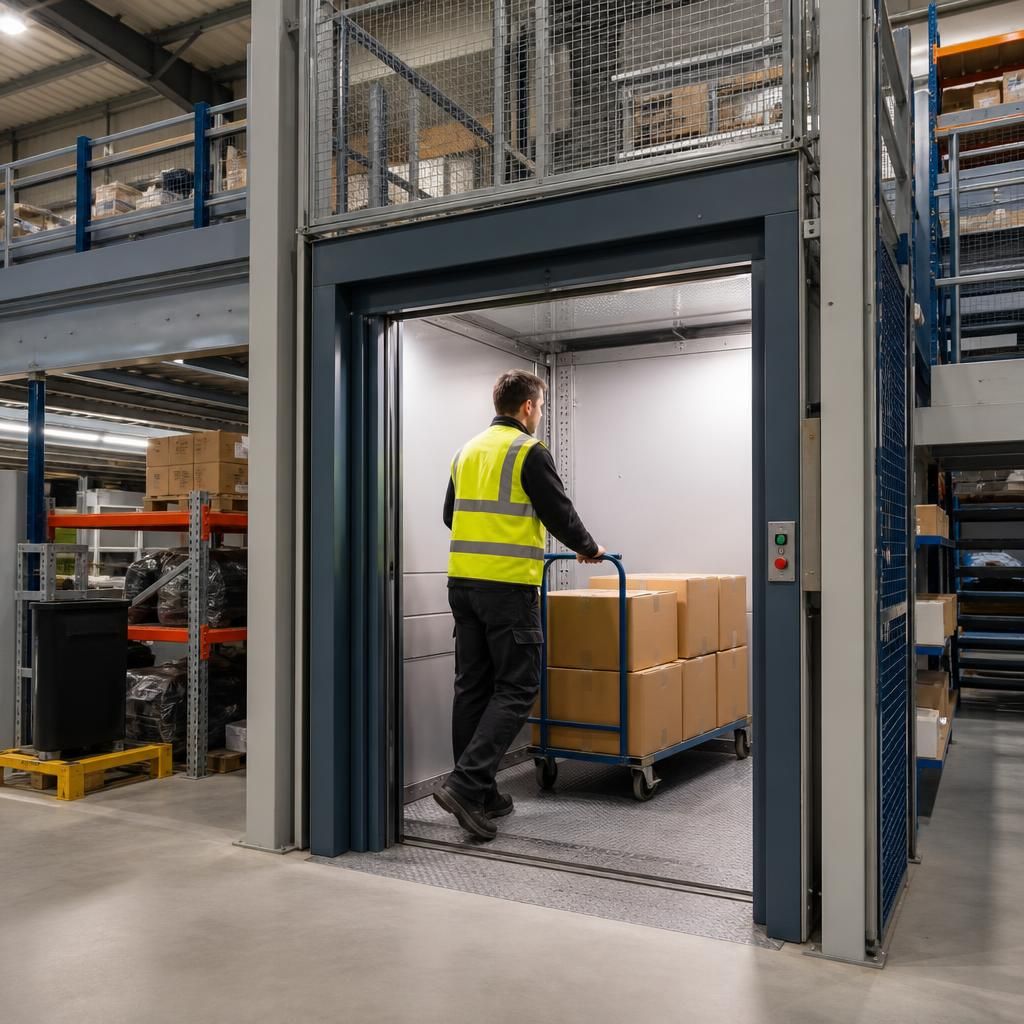
A mezzanine lift system improves productivity when it is positioned and operated as part of the warehouse’s normal goods flow. Placing the lift close to the main transfer points can reduce unnecessary travel, limit congestion and make movement between levels more predictable.
The benefit depends on more than the lift itself. Suitable capacity, clear loading areas, compatible handling equipment, trained users and planned maintenance all help prevent delays. Regular checks of gates, guarding, controls and other safety features can identify faults before they interrupt operations. If the lift becomes unavailable, a documented contingency process helps teams avoid unsafe manual handling or improvised workarounds.
Assess Your Mezzanine Lift System’s Efficiency
Ask Able Racking to assess whether your mezzanine lift system is supporting efficient goods movement, safe loading and reliable day-to-day operation. We can identify practical improvements in layout, procedures, maintenance and user training to help reduce avoidable delays.