
What materials are commonly used for mezzanine edge protection systems, and how do they affect durability?
Mezzanine edge protection systems are commonly made from painted or galvanised steel, with stainless steel, aluminium and wire mesh used where specific corrosion resistance, weight or visibility requirements apply. Steel provides high impact resistance, galvanised and stainless finishes improve protection against moisture and corrosion, while aluminium reduces weight but may be less suitable for severe impact conditions.
Mezzanine edge protection systems are most commonly manufactured from painted or galvanised steel, with stainless steel, aluminium and wire mesh used where corrosion resistance, reduced weight, visibility or containment requirements make them more suitable. Material selection affects impact resistance, service life, maintenance needs and the system’s ability to remain secure in the conditions where it is installed.
The correct specification depends on more than the material alone. The operating environment, likely loading and impact, exposure to moisture or chemicals, fixing method, inspection arrangements and the way goods are transferred at the edge should all be considered. A well-designed system must provide a continuous, secure barrier and remain suitable for the foreseeable use of the mezzanine floor.
Painted mild steel
Painted mild steel is widely used for posts, rails, frames and protective barriers because it provides a strong and relatively economical solution. Steel has good resistance to knocks and distortion, making it suitable for busy industrial areas where equipment, goods or handling activities may come close to the edge.
Its durability depends heavily on the quality and condition of the coating. Powder coating or another suitable industrial paint finish helps isolate the steel from moisture and everyday contamination. If the coating is scratched or damaged, exposed steel can begin to corrode. Regular inspections should therefore check for chipped paint, rust staining, bent sections, loose components and deterioration around connections. Minor coating damage should be dealt with promptly so corrosion does not spread beneath the finish.
Galvanised steel
Galvanised steel has a zinc coating that protects the underlying steel from corrosion. It is often preferred in warehouses, loading areas and other locations where humidity, condensation or occasional exposure to water could affect unprotected steel. The galvanised finish generally requires less routine attention than painted steel, although it is not maintenance-free.
Durability can be reduced if the zinc coating is heavily abraded, cut or damaged during installation or use. Cut edges, drilled areas and impact points need particular attention. White surface deposits can occur on newly galvanised components in damp conditions; these do not necessarily indicate structural failure, but the components should still be assessed as part of a proper inspection. Where the environment is especially aggressive, the specification may require additional protection or a different material.
Stainless steel
Stainless steel offers strong corrosion resistance and is useful in damp, hygienically controlled or chemically demanding environments. It can provide a long service life with comparatively limited coating maintenance because its protection comes from the material itself rather than a painted surface.
Not all stainless steel has the same performance. The grade should be selected for the environment, particularly where cleaning chemicals, salt, industrial pollutants or persistent moisture are present. Contamination from ordinary carbon steel during fabrication or installation can also create localised staining and corrosion. Correct material selection, clean installation and suitable inspection remain important even when stainless steel is specified.
Aluminium
Aluminium is lighter than steel and can be advantageous where manual handling, installation access or overall dead load is a consideration. It has good natural corrosion resistance and does not require the same type of protective coating as mild steel in many indoor applications.
Its lower weight does not mean it is suitable for every duty. Aluminium is generally more vulnerable to denting, bending and surface damage than a comparable steel component, particularly under severe impact. Connections must also be designed carefully because contact between dissimilar metals can cause galvanic corrosion in damp conditions. Aluminium should therefore be selected where its weight and corrosion benefits are relevant and where the expected impact conditions are properly understood.
Wire mesh and infill panels
Wire mesh is commonly used as an infill within steel or aluminium edge protection. It helps prevent materials, tools or other items from passing through the barrier while maintaining visibility and allowing light and air to pass through. Mesh can be particularly useful where the edge is close to a working area or where the contents of the floor need to remain visible.
Mesh durability depends on wire thickness, panel construction, protective finish and the strength of the surrounding frame. Galvanised or powder-coated mesh can resist ordinary indoor corrosion, but damaged areas should be monitored. Fine mesh may collect dust or debris more readily, while larger openings may not provide the level of containment required for the task. The infill should be selected according to the items handled near the edge, not simply for appearance.
Fixings, joints and protective finishes
The weakest part of an edge protection system is not always the main material. Bolts, brackets, welds, base plates and floor connections must be compatible with the barrier and capable of transferring expected forces into the supporting structure. Corrosion-resistant fixings are important in damp or chemically exposed areas, and dissimilar materials should be assessed to avoid corrosion at interfaces.
Weld quality, accurate alignment and suitable installation practice also affect service life. A strong steel post will not provide reliable protection if its base connection is loose, the supporting floor is damaged or the barrier has been modified without an engineering assessment. Repairs should use compatible components and finishes rather than concealing damage with paint.
How to choose the most durable option
- Use painted or galvanised steel where high impact resistance and robust general-purpose protection are required.
- Consider stainless steel for persistently damp, hygienic or chemically demanding environments.
- Consider aluminium where reduced weight is important and impact exposure is controlled.
- Use mesh or solid infill where dropped-item containment, visibility or separation from working areas is required.
- Specify compatible fixings and finishes, particularly where different metals meet.
- Confirm that the complete system, including gates, hinges, latches, posts and floor connections, is suitable for the intended operation.
Whatever material is selected, durability relies on inspection and controlled use. The system should be checked for corrosion, impact damage, deformation, missing fixings, loose connections and unauthorised alterations. Any defect that could reduce the barrier’s effectiveness should be assessed and repaired by a competent person before the area is returned to normal use. Material choice provides the foundation for a long service life, but correct design, installation and preventative maintenance determine how well the complete mezzanine edge protection system continues to perform.
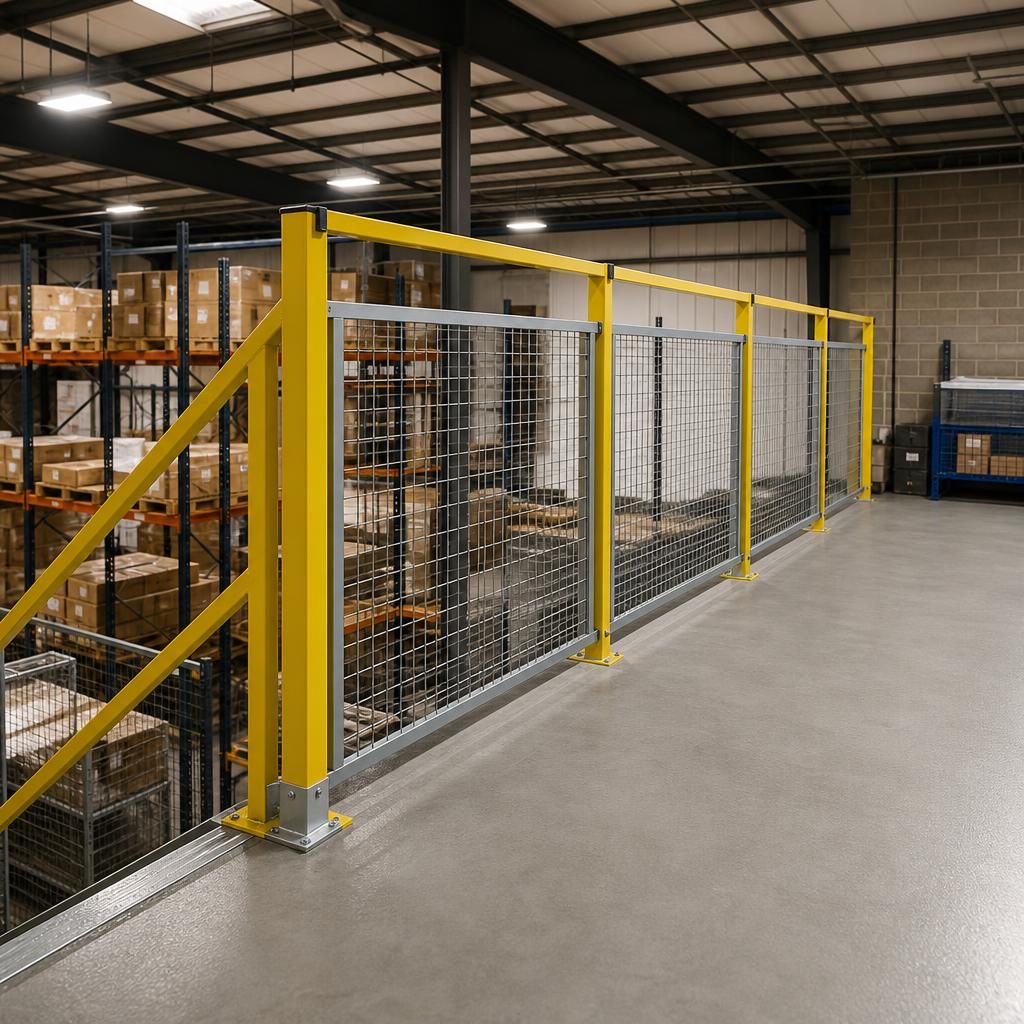
The protective finish is a major factor in how long a mezzanine edge protection system remains serviceable. Galvanised steel provides corrosion resistance in humid or occasionally wet areas, while painted steel can offer durable protection in controlled indoor environments when its coating remains intact.
Inspections should identify chipped paint, exposed steel, damaged galvanising, rust staining and impact marks. Promptly repairing damaged finishes helps prevent local corrosion from weakening posts, rails, mesh panels or their connections. The finish should always be considered alongside the expected impact, moisture and cleaning conditions.
Discuss the Right Materials for Your Mezzanine Edge Protection
Speak to Able Racking about the most suitable materials, finishes and fixings for your mezzanine edge protection system. Our experienced team can help assess the operating environment, impact risks and maintenance requirements before you proceed.