
What are the essential maintenance practices for mezzanine edge protection systems?
Essential maintenance for mezzanine edge protection systems includes routine visual inspections, checks of posts, rails, gates, fixings and protective finishes, plus prompt repair or replacement of damaged components. Keep inspection records, maintain clear access and arrange competent professional assessments whenever the system has been altered, impacted or shows signs of wear.
Essential maintenance for mezzanine edge protection systems consists of planned visual inspections, checks of structural components and gates, cleaning, prompt repair of defects and accurate record-keeping. The system should remain secure, correctly configured and capable of preventing people, materials and equipment from falling from the platform edge.
Carry out routine visual inspections. Inspect the edge protection before use where conditions or the working environment could affect its safety, and include it within the site’s planned inspection programme. Look for bent or displaced posts, loose rails, damaged gates, missing components, open gaps, corrosion, cracked welds and signs that the system has been struck by vehicles, handling equipment or stored materials.
Pay particular attention to areas around access points, loading positions, corners and locations where goods are transferred. These areas are more likely to experience impact, repeated movement or changes in use.
Check posts, rails and protective barriers. Confirm that posts remain upright and securely attached to the supporting structure. Rails should be continuous, correctly positioned and free from distortion. Check that protective barriers have not been removed, bypassed or altered to accommodate equipment, stock or building services. Any unauthorised modification can reduce the system’s ability to prevent falls and should be investigated promptly.
Examine fixings and connections. Inspect bolts, brackets, welds, base plates and other connection points for looseness, movement, cracking or corrosion. Do not simply tighten a fixing if the surrounding steel, concrete, flooring or bracket is damaged. The underlying cause must be assessed, and replacement components should match the original design or be approved by the system manufacturer or a suitably competent engineer.
Maintain gates and moving parts. Safety gates should open, close and secure smoothly without excessive force. Check hinges, pivots, latches, counterbalance arrangements, interlocks and stops for wear or damage. A gate must return to its intended safe position and should not be capable of being left open unintentionally. Remove dirt and debris from moving parts, then lubricate only where the manufacturer’s instructions permit it. Never defeat an interlock or tie a gate open during normal operations.
Inspect loading gates for correct operation. Where the system includes a pallet or loading gate, confirm that it provides protection when the loading area is not in use and that its operating sequence is understood by employees. Check for uneven movement, impact damage and worn components. Loading gates should not be used to support goods, lifting equipment or other loads unless they have been specifically designed and assessed for that purpose.
Control corrosion and surface damage. Keep steelwork clean and dry where practicable, particularly in areas exposed to moisture, chemicals or aggressive industrial conditions. Remove contamination using methods that will not damage protective coatings. Treat localised coating damage in accordance with the manufacturer’s guidance, but obtain professional advice where corrosion has reduced the section, affected a weld or spread around a connection.
Keep the surrounding area clear. Do not allow pallets, packaging, waste or stored products to obstruct gates, restrict inspection access or create a climbing opportunity. The platform surface should also be kept in a condition that prevents slips, trips and uncontrolled movement near the edge. Any changes to walkways, storage arrangements, machinery or access routes should trigger a review of the existing protection.
Respond immediately to impact or damage. If a barrier, post, gate or fixing has been hit, do not rely on a visual check alone if there is any doubt about its condition. Restrict access to the affected area, prevent use of the damaged section and arrange an assessment by a competent person. Temporary measures should not replace a permanent, properly specified repair.
Use suitable replacement parts and repair methods. Repairs should preserve the original height, spacing, strength, clearances and operating function of the system. Avoid improvised welding, drilling, cutting or the use of unrelated components. Where damage is extensive, the complete affected section may need to be replaced rather than repaired locally.
Arrange competent professional inspections. A detailed assessment is appropriate where there has been an impact, alteration, unusual loading, persistent corrosion, repeated component failure or uncertainty about the system’s condition. The inspection should consider the barriers, gates, fixings, supporting structure and the way the platform is being used. Follow the manufacturer’s maintenance instructions and the site’s risk assessment, while ensuring that inspections are carried out by someone with suitable knowledge, training and experience.
Keep clear maintenance records. Record inspection dates, areas checked, defects found, photographs where useful, corrective actions, responsible persons and completion dates. Records should also show when damaged equipment was taken out of service and when it was returned to use. This provides an auditable history and helps identify recurring problems, such as repeated vehicle impacts or unsuitable operating practices.
Maintenance should be reviewed whenever the platform layout, access arrangements, loading activity or work equipment changes. A planned approach, supported by prompt defect reporting and competent assessment, helps keep mezzanine edge protection effective and supports continued compliance with workplace safety duties, including the requirements relevant to work at height.
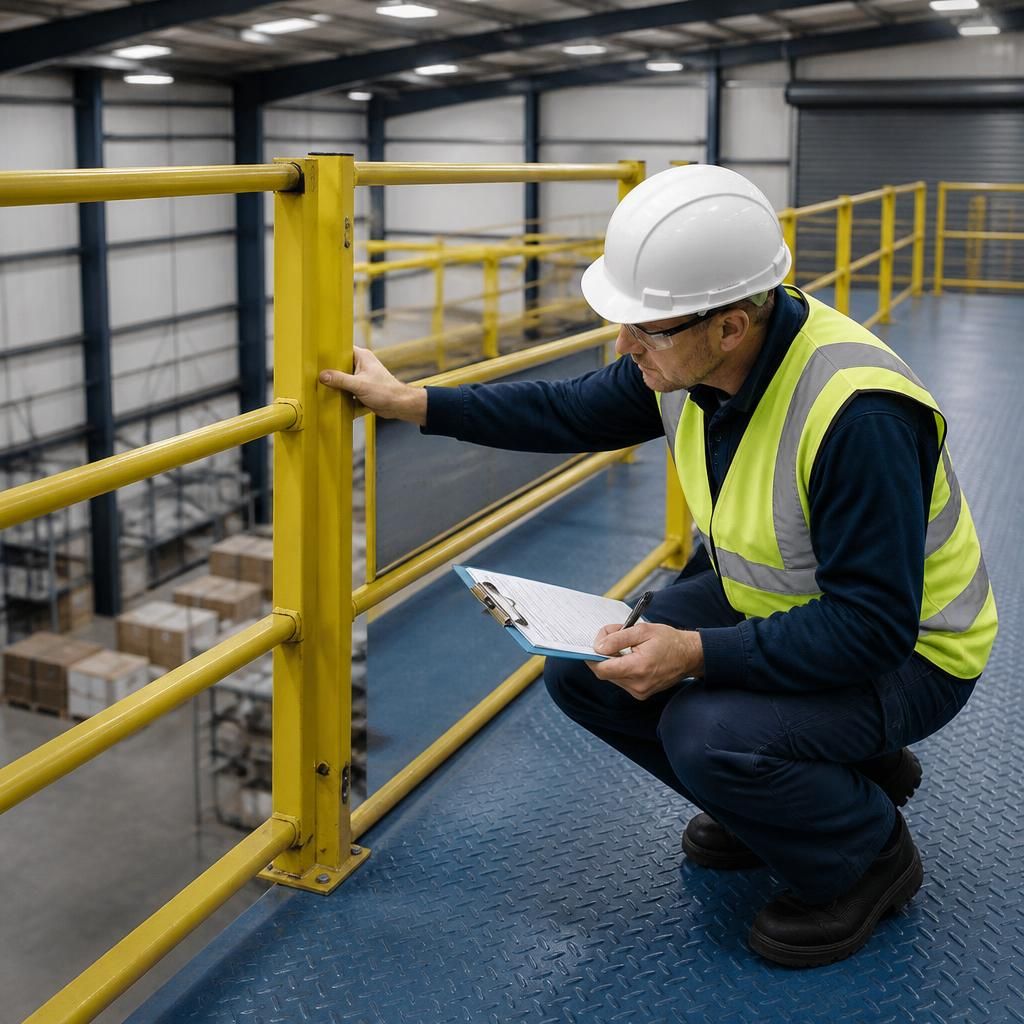
Maintenance of mezzanine edge protection systems includes an immediate safety assessment after any impact, alteration or suspected damage. A barrier, post, gate or fixing that has been struck by handling equipment should not be returned to service based on a visual check alone.
Restrict access to the affected area and arrange assessment by a competent person. Check for bent posts, displaced rails, cracked welds, loose fixings, damaged gates and movement at the supporting structure. Repairs should use correctly specified components and preserve the system’s original height, spacing, strength and operating function. Improvised welding, drilling or temporary ties can reduce protection and should not replace a permanent repair.
Arrange a professional mezzanine edge protection assessment
If your mezzanine edge protection has been impacted, altered or shows signs of damage, arrange a professional assessment before returning the affected area to use. Our competent team can inspect the system, identify defects and advise on correctly specified repairs.