
How do mezzanine sliding gates enhance safety features in industrial settings?
Mezzanine sliding gates enhance industrial safety by providing a controlled barrier at loading areas, helping prevent people, materials and pallets from falling while access is open. Their interlocked or counterbalanced operation can also streamline loading activities and reduce the risks associated with manually handling swing gates.
Mezzanine sliding gates enhance industrial safety by creating a controlled barrier at exposed loading edges. They help prevent people, pallets and materials from falling while goods are being transferred between the floor and the mezzanine, while allowing authorised loading activity to take place in a defined and repeatable way.
Unlike an unprotected opening, a properly designed sliding gate maintains edge protection when the loading area is not in use. The gate is closed before people are permitted to work near the edge, reducing the likelihood of a person stepping or reversing into an open transfer point. This is particularly important where forklifts, pallet trucks or other handling equipment operate nearby.
The main safety benefits include:
- Fall prevention: the gate forms a physical barrier at the exposed edge and helps prevent people or loads passing beyond the platform.
- Controlled access: operators can open the loading side only when the transfer activity is ready to take place.
- Improved load containment: the design helps keep pallets and materials within the intended loading area during handling.
- Reduced manual handling risks: a sliding or counterbalanced arrangement can be easier to operate than a heavy swing gate, particularly where space is restricted.
- Clearer working procedures: a defined gate position makes it easier to establish when loading, unloading and access are permitted.
Many industrial gates use a counterbalanced mechanism, guided sliding movement or an interlocked arrangement. These features can reduce the effort required to operate the gate and help prevent the barrier from being left in an unsafe position. The precise mechanism should be selected according to the load type, opening size, available headroom, handling equipment and frequency of use.
Interlocking is especially valuable where the gate has two sections or where the design must ensure that one side remains protected while the other is open. A suitable system should prevent the loading opening and access opening from being exposed at the same time, unless the design has been specifically assessed and protected for that method of operation. Interlocks should be robust, accessible and included in routine inspections rather than treated as maintenance-free components.
Sliding gates also improve safety by making the loading process more predictable. Operators can follow a clear sequence: secure the area, position the load, open the gate only when required, complete the transfer, and close the gate before leaving the opening. Written procedures, suitable signage and staff training should support this sequence. The gate itself is a physical safeguard, but it cannot replace competent supervision, safe systems of work or suitable handling equipment.
The gate must be compatible with the surrounding mezzanine structure and edge protection. Its posts, guides, hinges or sliding components need to be securely fixed, and the completed installation should not create gaps, projections or trapping points. The opening must be large enough for the intended loads without encouraging operators to overreach, climb on the gate or position themselves beneath suspended materials.
Safe design also depends on the goods being transferred. Pallets should be stable, suitable for the equipment in use and positioned so that they cannot catch on the gate or roll towards the edge. Loads should not exceed the designed capacity of the platform, gate or handling equipment. Where unusually large, unstable or awkward loads are involved, the transfer method should be reviewed before work begins.
Regular checks help preserve these safety features. Operators should look for damaged frames, loose fixings, worn rollers, restricted movement, failed latches, missing guards and signs that the gate is no longer closing or interlocking correctly. Any defect affecting the barrier or its operating mechanism should be reported immediately, with the area made safe until a competent person has assessed it.
A thorough inspection should also consider changes to the working environment. Alterations to the platform, nearby machinery, traffic routes, load types or operating frequency can introduce risks that were not present when the gate was first installed. A competent assessment can confirm whether the existing gate remains suitable and whether additional guarding, signage, training or procedural controls are needed.
In practice, the best safety results come from combining an appropriately specified sliding gate with sound installation, documented operating procedures, staff training and preventative maintenance. Able Racking can provide practical guidance on the suitability, condition and safe use of mezzanine sliding gates, helping existing customers identify defects early and keep loading operations controlled.
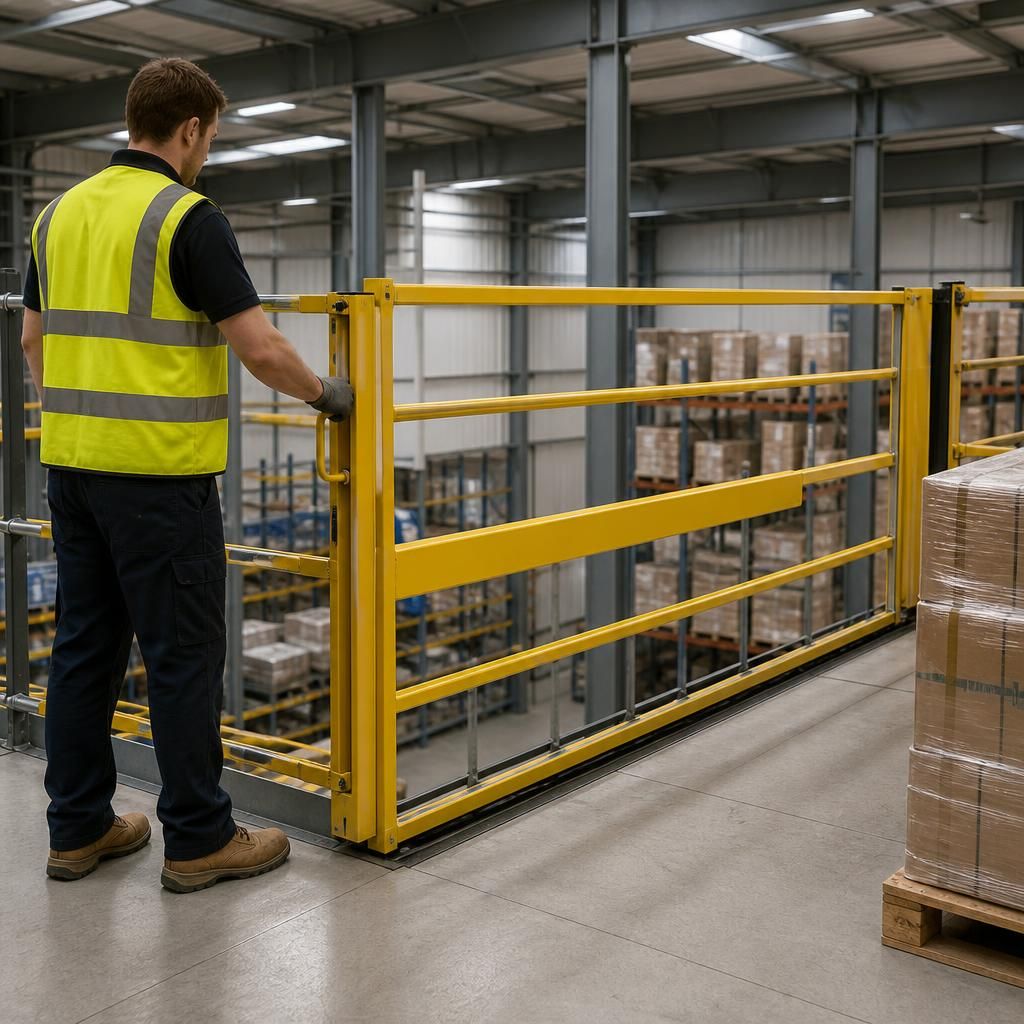
A mezzanine sliding gate enhances safety by maintaining a physical barrier at the loading edge when goods are not being transferred. Its sliding or counterbalanced action allows authorised operators to open the loading point when required, then restore edge protection promptly after the task is complete.
Where appropriate, an interlocked design can help prevent the loading opening and adjacent access opening being exposed at the same time. The gate should be securely fixed, move smoothly, close fully and have no gaps or trapping points that could endanger operators. Clear procedures, suitable training and regular checks of the frame, guides, rollers, latches and interlock are essential to ensure the safety features continue to work as intended.
Discuss mezzanine sliding gate safety with our experts
Speak to our experts about the suitability, condition or safe operation of your mezzanine sliding gate, and receive practical guidance tailored to your site.