
What is the cost of installing mezzanine floor loading gates and what factors influence the price?
The cost of installing mezzanine floor loading gates depends on the gate type, opening size, load requirements, site conditions and the complexity of installation. A suitable quotation should account for the equipment, access arrangements, safety measures, any alterations required and compliance checks.
The cost of installing mezzanine floor loading gates is determined by the gate design, opening dimensions, required load capacity and the conditions of the installation site. A reliable quotation should cover the gate itself, delivery, fitting, connection to the existing mezzanine structure, edge protection, access arrangements, testing and any work needed to make the installation safe and compliant. There is no single standard price because each loading point must be assessed against the way goods are moved and the structure it serves.
Loading gates are installed at the edge of a mezzanine floor to allow pallets, materials or equipment to be transferred between floor levels while preventing people or loads from falling when the loading position is not in use. The design must provide a safe barrier during loading and unloading without creating unnecessary handling delays.
The main factors that influence the installation price include:
- Gate type: Pallet gates, swing gates, lift-out gates and other protected loading solutions differ in construction, operation and installation requirements. A manually operated gate may have a lower initial cost than a powered or specially engineered system, but the most suitable option depends on the working process and the frequency of use.
- Opening size: A wider or higher opening generally requires a larger and heavier gate, stronger support arrangements and additional guarding. The dimensions of the goods and handling equipment must be considered rather than selecting a gate based only on the available opening.
- Load requirements: The gate and its supporting components must be suitable for the loads being transferred. This includes the weight and dimensions of pallets, stillages, materials or equipment, as well as the possibility of impact during loading. Higher or unusual load requirements can require additional design work and reinforced supports.
- Existing structure: The condition, configuration and construction of the mezzanine affect how the gate can be fixed. Installation may be more straightforward where suitable structural members are already available. Modifications, additional steelwork or strengthening can increase the overall cost and must be assessed by a competent person.
- Guarding and edge protection: The loading opening needs suitable protection on all accessible sides. This may include guardrails, kickboards, mesh panels, toe boards or other arrangements that prevent people, pallets and loose items from falling. The amount of surrounding protection required affects both materials and fitting time.
- Site access: Restricted access, limited working space, high-level work and difficult delivery routes can make installation more labour intensive. The quotation should take account of lifting equipment, temporary access platforms, isolation arrangements and the safe movement of installers around the work area.
- Operational constraints: Work carried out in a live warehouse or production area may need to be planned around shifts, vehicle movements and pedestrian routes. Additional segregation, out-of-hours working or phased installation may be necessary to prevent disruption and protect employees.
- Special features: Interlocks, self-closing mechanisms, powered operation, access control, protective mesh and bespoke finishes can increase the price. These features may nevertheless be appropriate where the loading process is frequent, automated or exposed to higher operational risks.
Gate selection has a direct effect on value. The least expensive option is not necessarily the most economical over its working life. A gate that is difficult to operate, poorly matched to the pallet handling process or vulnerable to impact may cause delays, damage and repeated repairs. The assessment should therefore consider the expected frequency of use, the people operating the gate, the loads handled and the consequences of a failure.
Installation work should include more than fixing the gate in position. Before fitting, the installer should confirm the opening dimensions, inspect the supporting structure, review the loading method and identify hazards such as vehicle movements, falling objects and unauthorised access. The gate should then be installed in accordance with its design, with moving parts aligned and all fixings, guards and safety mechanisms checked.
Where the existing structure is unsuitable, the required alterations should be identified before work begins. Cutting, drilling or welding structural components without proper assessment can compromise the mezzanine. Any strengthening or changes to the floor, guardrail system or supporting steelwork should be designed and approved by an appropriately competent structural professional.
Compliance checks are an important part of the total cost. The completed installation should be inspected to confirm that it is stable, secure and suitable for its intended use. The assessment should consider safe separation from open edges, the prevention of access beneath or around the gate, the control of moving parts, visibility for operators and the safe positioning of loads. Operating instructions and appropriate training may also be required, particularly where the gate has a specific sequence of use.
A quotation should clearly separate the cost of the gate, installation, structural alterations, access equipment, guarding, testing and any follow-up documentation. It should also state whether delivery, removal of existing equipment, out-of-hours work, certification and future maintenance are included. Comparing quotations on the headline equipment price alone can result in important safety or installation requirements being overlooked.
A site survey is the most reliable way to establish the actual cost. During the survey, the installer can record the opening dimensions, floor and guardrail arrangement, available fixing points, access restrictions, loading equipment, operating method and condition of the surrounding structure. Photographs, drawings and details of the goods being handled can help identify bespoke requirements before a quotation is prepared.
Once installed, the loading gate should be kept in good working order through routine visual checks, planned maintenance and prompt attention to damage. Operators should report bent components, loose fixings, damaged mesh, faulty closing mechanisms or changes in the structure immediately. Repairs should not be improvised or carried out in a way that reduces the protection provided by the original design.
For an accurate price, provide the installer with the proposed opening dimensions, the type and weight of loads, the equipment used for transfer, photographs of the mezzanine and details of any restricted access or working-time requirements. A competent assessment can then recommend a loading gate that balances installation cost, safe operation, durability and the practical needs of the site.
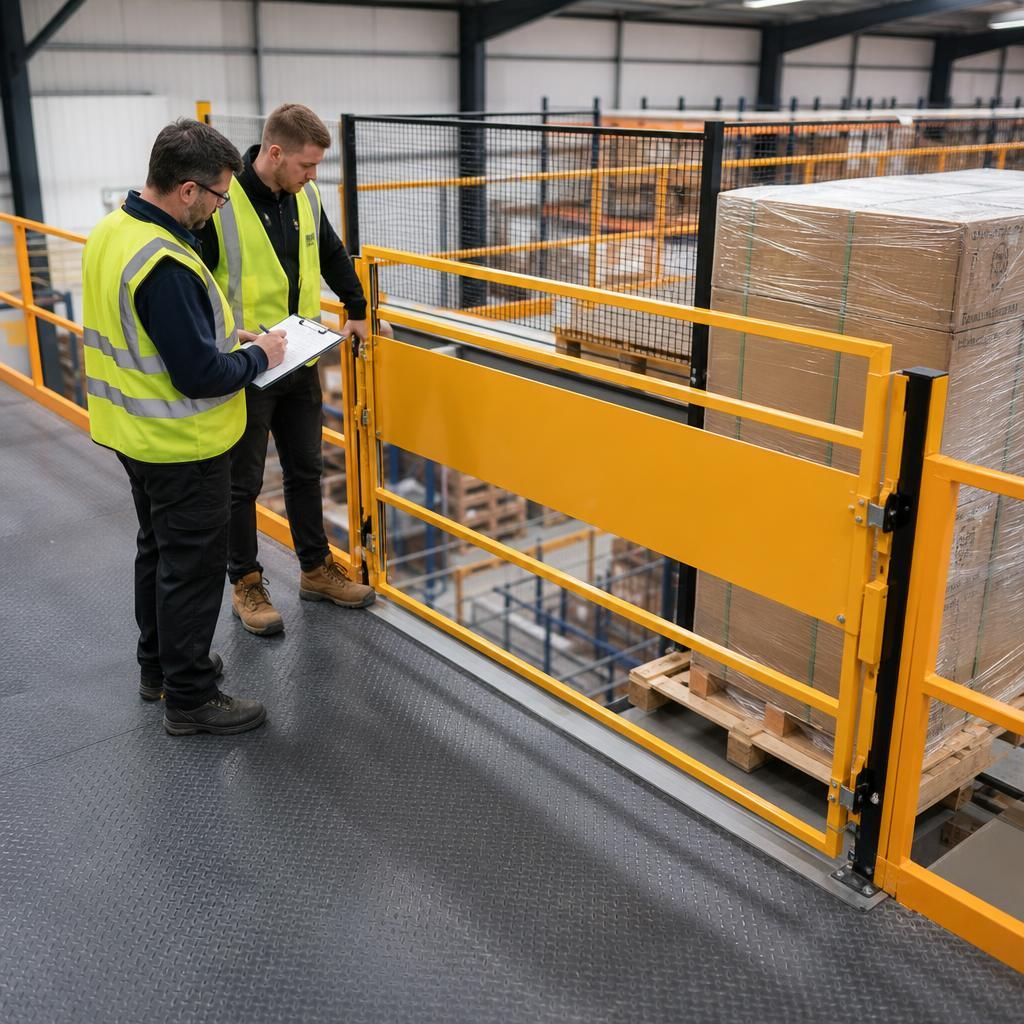
The most reliable way to establish the installation cost of a mezzanine floor loading gate is through a site survey. This allows the installer to check the opening dimensions, supporting structure, load requirements, transfer equipment, surrounding edge protection and access conditions before recommending a suitable gate.
A detailed quotation should separate the costs of the gate, fitting, structural alterations, access equipment, guarding, testing and documentation. It should also confirm whether delivery, removal of existing equipment, restricted-hours working and future maintenance are included. This makes it easier to compare quotations accurately and prevents essential safety work from being overlooked.
Request a Mezzanine Loading Gate Site Survey
Request a site survey to assess your mezzanine floor loading gate requirements and obtain an accurate installation quotation. We will review the opening, supporting structure, load requirements and access conditions before recommending a suitable solution.