
What are the main safety features of mezzanine loading gates?
The main safety features of mezzanine loading gates include interlocked gates, fixed guardrails, toe boards and controlled access systems that prevent people from entering an open edge while goods are being loaded or removed. Self-closing mechanisms, clear operating procedures and regular inspections further help protect warehouse teams and maintain safe, compliant use.
The main safety features of mezzanine loading gates are interlocked gate mechanisms, fixed edge protection, toe boards, controlled access and a design that prevents people being exposed to an unprotected edge while goods are transferred. Effective systems also include self-closing or self-securing gates, suitable guarding on the loading side, clear operating procedures, appropriate signage and regular inspection.
Interlocked operation
An interlock is a key safety control. It should ensure that the loading opening cannot be exposed without the protective gate or barrier being correctly positioned. With a pallet gate, this commonly means one side is closed before the other side can be opened, preventing a person from passing through an unprotected opening. The interlock should be robust, difficult to defeat and suitable for the way goods are handled.
Interlocks are not a substitute for safe working practices. Operators should not bypass, wedge open or modify the mechanism, and any stiffness, damage or misalignment should be reported and dealt with before the gate is used.
Guardrails and edge protection
Fixed guardrails should protect the exposed edges around the loading area and connect securely with the gate arrangement. They help prevent people from walking or falling into the opening when loading is not taking place. The design should avoid gaps that could allow a person, pallet or loose item to pass through, while still allowing the gate to operate without obstruction.
Where the loading arrangement creates unusual access points or side exposures, additional guarding may be necessary. The protection should be considered as a complete system rather than assessing the gate in isolation.
Toe boards and dropped-object protection
Toe boards help prevent feet, pallets and loose materials from sliding or being pushed over the edge. They are particularly important where items may be placed close to the loading opening or where people work below. The toe board should be continuous where required, securely fixed and compatible with the movement of the gate and the loads being transferred.
Further protection may be needed if the assessment identifies a risk from small objects falling through gaps. Housekeeping remains important because packaging, tools and loose materials should not be left where they can become falling objects.
Self-closing and secure positioning
A gate should return to a safe position after the load has passed, or provide a clear and reliable method of securing it. Self-closing mechanisms reduce the risk of an operator leaving the opening unprotected. The gate must still be easy to use and should not create a trapping, striking or manual-handling hazard.
Operators should be able to confirm visually or by touch that the gate is fully closed and engaged. A gate that appears closed but has not latched correctly should be treated as unsafe until it has been adjusted or repaired.
Suitable loading-side protection
The gate must prevent access to the open edge while allowing goods to be placed and removed safely. The most suitable arrangement depends on the load, handling equipment, available space and frequency of use. Designs may include pallet gates, vertical lifting gates or other engineered arrangements, but the operating sequence must always keep people protected.
There should be enough clearance for the load without forcing operators to lean through the opening or stand in a position where they could be struck. The arrangement should also prevent loads from being pushed against the gate or used to hold it open.
Safe access and controlled use
Access to the loading area should be controlled so that only trained and authorised personnel operate the gate. The working area should provide a stable, unobstructed standing position, suitable lighting and enough space to handle goods without unnecessary reaching or twisting.
Where people need to access the upper level, the access route should be separate from the loading opening wherever practicable. Doors, stairs and other access points should not allow someone to approach the exposed edge without suitable protection. The loading process should also prevent people from working beneath suspended or unstable loads.
Visible identification and instructions
Clear signs should identify the safe operating sequence, the permitted load or use restrictions and any requirement to keep the area clear. Instructions should reflect the equipment actually installed rather than relying on generic guidance. Warning signs should be positioned where operators can read them before opening or using the gate.
Information about the gate should be available to those responsible for daily checks, maintenance and supervision. Any changes to the handling process or equipment should trigger a review of the instructions and risk assessment.
Load capacity and structural suitability
The gate and its supporting structure must be designed for the loads and forces generated during normal use. This includes the weight and dimensions of goods, contact from handling equipment and any foreseeable impact identified by the assessment. The safe working load should be clearly established and must not be exceeded.
Loading gates should not be altered, repositioned or attached to the supporting structure without approval from a competent person. Unauthorised drilling, welding or modification can affect the strength and operation of the system.
Protection against trapping and impact
Moving parts should be designed and installed to reduce trapping points, shear points and the risk of the gate striking an operator. Handles and controls should be positioned so they can be used from a safe stance. The gate should move predictably and should not drop, swing unexpectedly or require excessive force.
Where powered operation is used, the system may require additional controls such as guarded moving parts, emergency stopping arrangements and protection against unintended movement. These controls should be checked as part of the maintenance regime.
Inspection and maintenance provisions
Daily or pre-use checks should look for damage, loose fixings, worn hinges, defective latches, missing toe boards, distorted guardrails and changes in alignment. Operators should stop using the gate if a defect could affect protection or reliable closing.
More detailed examinations should be completed at suitable intervals by a competent person, taking account of the intensity of use, the environment and the manufacturer’s instructions. Findings should be recorded, defects prioritised and repairs completed using suitable components. A repair is not complete until the gate has been tested through its normal operating sequence.
Safe procedures and training
Even well-designed equipment depends on consistent use. Operators should be trained to load and unload goods without entering the unprotected opening, defeating the interlock or placing themselves beneath a suspended load. They should understand how to report defects and what to do if the gate cannot be closed or secured.
Overall, the safest mezzanine loading gate is one that combines physical edge protection with dependable interlocking, controlled access, suitable structural design and effective supervision. A site-specific risk assessment should confirm that the selected arrangement protects people during every stage of loading, unloading, access and maintenance.
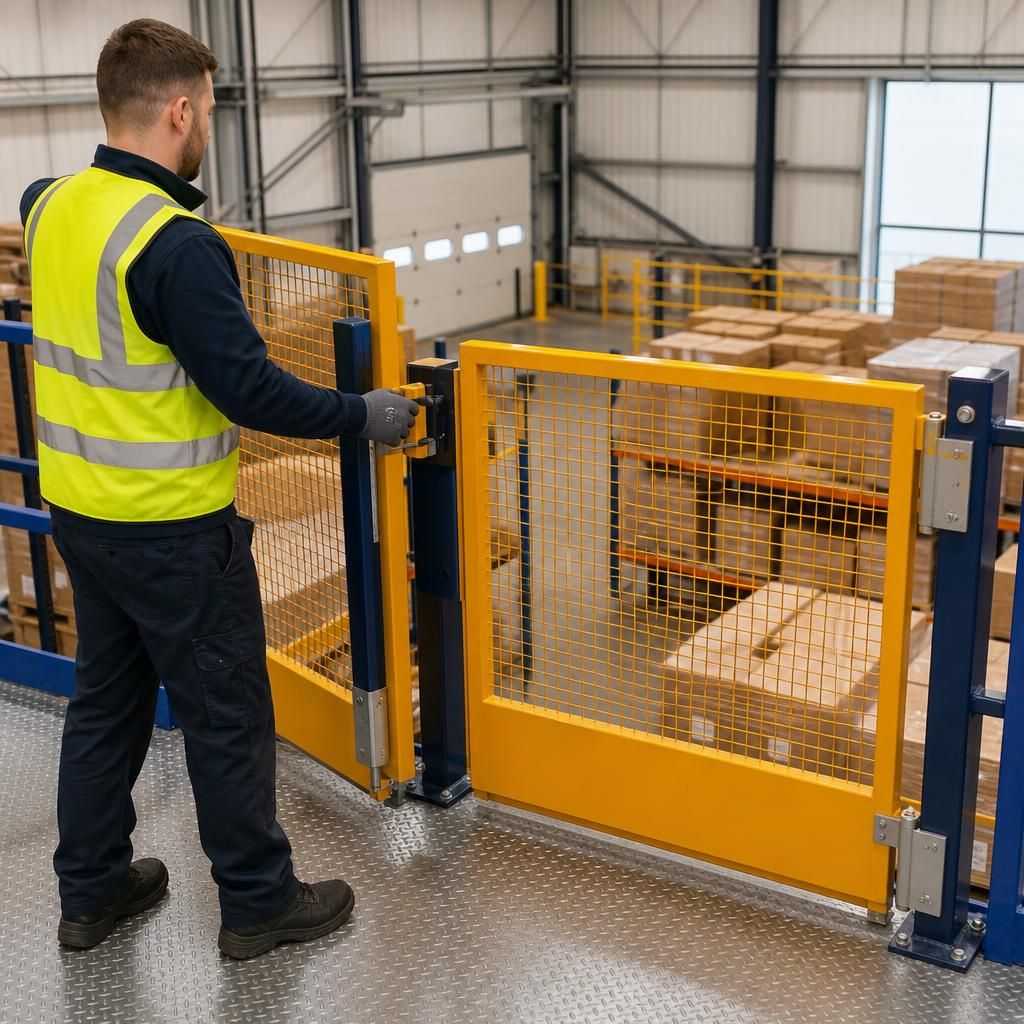
An interlocked mezzanine loading gate links the movement of the barrier so the loading opening cannot be left unprotected during goods transfer. The arrangement should allow the load to be placed or removed only when the person operating the gate remains separated from the exposed edge.
The interlock must be robust, correctly aligned and difficult to bypass. Operators should never wedge the gate open or override the mechanism. Any stiffness, damage or failure to latch should be reported immediately, with the gate taken out of use until it has been inspected and repaired by a competent person.
Arrange a mezzanine loading gate safety assessment
Arrange a mezzanine loading gate safety assessment with our experienced team to check the gate, guarding, interlocks and operating procedures. Contact us to discuss your site requirements and any safety concerns.