
What are the different types of mezzanine floor gates available?
The main types of mezzanine floor gates include pallet gates, double-leaf gates, sliding gates and lift-out gates. Each is designed to control access at an open edge while allowing goods to be transferred safely, so the best option depends on the load-handling method, available space and operational requirements.
Mezzanine floor gates are physical barriers installed at open platform edges to prevent people or goods falling while allowing materials to pass between floor levels. The main types available are pallet gates, double-leaf gates, sliding gates and lift-out gates. The most suitable design depends on the goods being transferred, the handling equipment used, available space, loading frequency and the level of protection required.
Pallet gates
Pallet gates are designed specifically for transferring palletised goods to and from a mezzanine floor. They typically use a counterbalanced arrangement, with one side opening towards the platform while the opposite side remains closed. This means the edge is protected during loading and unloading, rather than leaving an unguarded opening.
When correctly specified, a pallet gate can accommodate regular goods movement without requiring a worker to stand at the exposed edge. The design must suit the pallet dimensions, load weight, lifting equipment and available headroom. Clear operating instructions are also essential, particularly where a forklift or other handling equipment is used near the gate.
Double-leaf gates
Double-leaf gates have two hinged sections that open from the centre or operate together to create a wider access point. They are useful where the opening must accommodate large or awkwardly shaped items, or where a broad transfer area is needed for frequent manual handling.
The leaves should close securely and provide continuous protection when the opening is not in use. Adequate clearance is needed for the gate to open without striking stored goods, building features or nearby equipment. The hinges, catches and locking arrangements should also be selected for the expected operating frequency and load environment.
Sliding gates
Sliding gates move horizontally along a track instead of swinging into the working area. This makes them suitable where there is limited space in front of the opening or where a hinged gate could interfere with walkways, handling equipment or stored materials.
They can be configured as single or paired sliding sections, depending on the required opening width. The track needs to remain clear of debris and obstructions, while the gate should run smoothly and close fully without excessive force. Sliding gates are often appropriate for controlled access points that are used regularly but do not require the counterbalanced action of a pallet gate.
Lift-out gates
Lift-out gates are removable sections that can be taken out when goods need to pass through and replaced afterwards. They provide a straightforward solution for occasional access, particularly where a permanent hinged or sliding mechanism is not suitable.
This type of gate requires careful handling because the barrier is manually removed. The section should be manageable for the intended users, have secure locating points and be stored safely when not in position. It should never be left out while the edge is accessible, and the operating procedure should make clear who is authorised to remove and replace it.
Hinged access gates
Hinged gates may be used for pedestrian access or smaller transfer points. They can open in one direction and may include a self-closing mechanism, latch or interlock to help prevent the opening being left unprotected. Their suitability depends on the direction of opening, the available clearance and whether the gate could be opened towards a fall hazard.
A hinged gate is not automatically suitable for pallet transfer. Where substantial goods are moved, a design intended for that specific handling method is generally more appropriate. The gate must also prevent people from walking through the opening unintentionally when goods are being moved.
How the different types compare
- Pallet gates: best suited to frequent transfer of palletised goods and locations where edge protection must remain in place during loading.
- Double-leaf gates: useful where a wider opening is needed for large items or regular manual movement.
- Sliding gates: suitable where floor space is restricted and a swinging gate would obstruct operations.
- Lift-out gates: appropriate for occasional access where a removable barrier can be safely managed.
- Hinged gates: generally suited to controlled pedestrian access or smaller openings, subject to the layout and risk assessment.
Factors to consider before choosing a gate
The gate should be selected as part of the overall edge-protection arrangement, not as an isolated component. Consider the size and weight of the goods, the method of transfer, the frequency of use and whether access is for people, equipment or both. The available headroom, floor space and position of nearby columns, stairs, doors and lighting can determine whether a hinged, sliding or counterbalanced design is practical.
It is also important to consider how the gate will behave during normal use. It should be possible to operate it without placing a person at the unprotected edge, and it should return to a safe closed position or have a clear procedure for securing it. The gate must not create additional trapping, striking or manual-handling hazards.
Installation and safe use
Installation should be based on the structure, opening dimensions and intended loads. Fixings, supports and clearances must be suitable for the design, and the completed installation should be checked before use. A competent person should verify that the gate closes correctly, remains stable, does not leave an unsafe gap and works as intended with the associated handling equipment.
Users should receive practical instructions covering opening and closing, load positioning, pedestrian access and what to do if the gate becomes damaged or fails to close. The operating area should be kept clear, and goods should not be placed against the gate or used as a substitute for a barrier.
Which type is right for your operation?
For frequent pallet movement, a properly specified pallet gate is usually the most suitable option. A sliding gate can solve space restrictions, while a double-leaf design may be preferable where a wider opening is required. Lift-out and hinged gates can work well for less demanding access points, provided their use is controlled and the barrier is reinstated immediately after access.
A site assessment is the safest way to confirm the correct arrangement. It should review the platform layout, goods-handling process, user movements, structural constraints and foreseeable misuse. This ensures the selected gate provides effective fall protection while remaining practical for the operation.
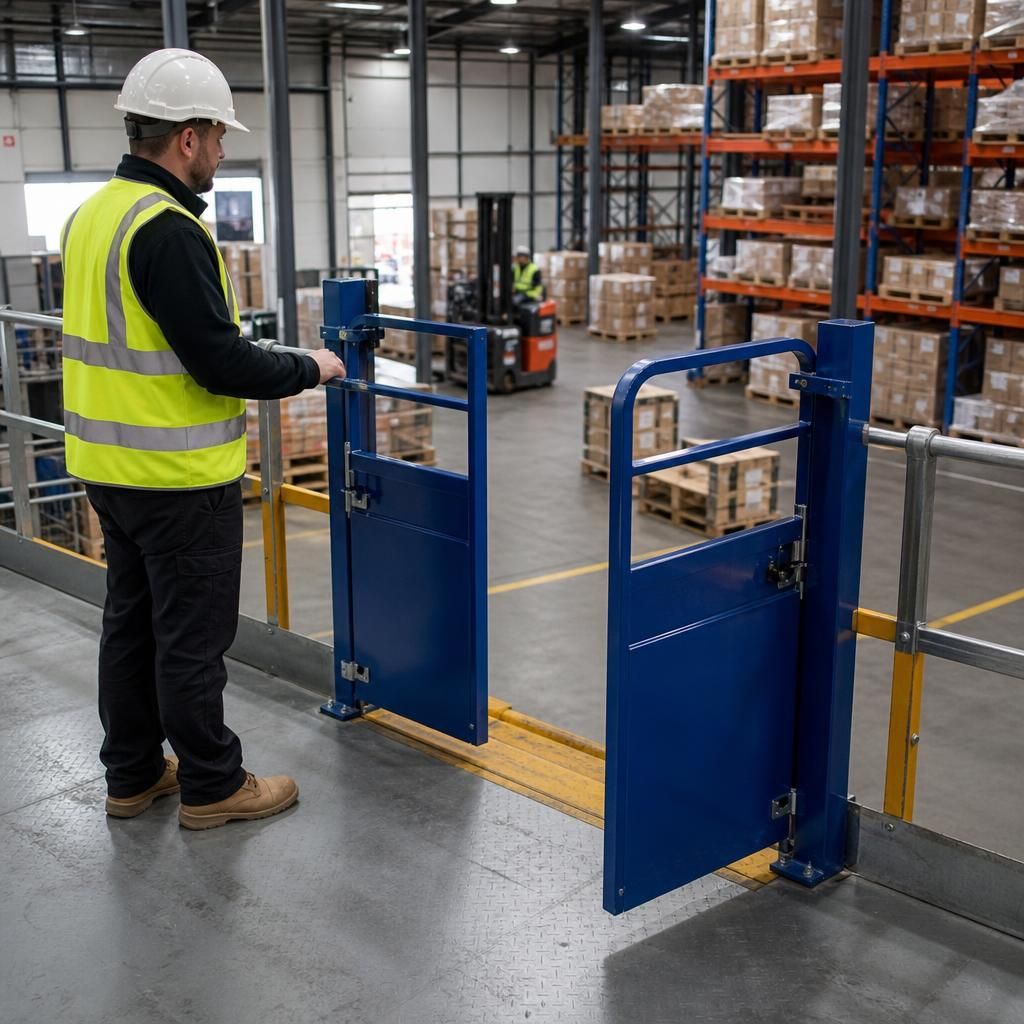
The correct mezzanine floor gate depends on how goods and people use the opening. Pallet gates are generally suited to frequent pallet transfers, while sliding gates work where swinging clearance is limited. Double-leaf gates provide a wider opening for larger items, and lift-out gates may suit occasional, controlled access.
Selection should also account for the platform layout, load dimensions, handling equipment, operating frequency and available headroom. The gate must allow goods to be moved without exposing people to an unprotected edge, and it should close securely after each transfer. A site assessment helps confirm that the chosen design is practical, stable and compatible with the working process.
Discuss the right mezzanine floor gate for your operation
Discuss your mezzanine floor gate requirements with Able Racking to identify a suitable design for your layout, goods-handling process and access needs. Our experienced team can assess the opening and recommend a practical, safe solution.