
What materials are commonly used in mezzanine platform construction, and how do they impact performance and safety?
Mezzanine platforms are commonly constructed from structural steel, with steel beams and columns supporting decking made from materials such as composite panels, steel plate or timber. The chosen materials affect load capacity, stiffness, fire performance, durability, noise and walking-surface safety, so they must be matched to the intended use and assessed as part of the overall compliant design.
Mezzanine platforms are most commonly built from structural steel, with the supporting frame carrying a deck made from composite panels, profiled steel, steel plate, timber or engineered wood products. The material combination affects load capacity, stiffness, durability, fire performance, noise, cleaning requirements and the safety of people using the platform, so it must be selected for the building, the imposed loads and the intended operation.
Structural steel frames
Structural steel is widely used for primary beams, secondary beams, columns, bracing and connection components because it provides high strength, predictable performance and efficient use of space. A properly designed steel frame can support substantial imposed loads while maintaining clear areas below and minimising the number of columns that interfere with movement or equipment.
The grade, section sizes, connection details and protective finish all influence performance. Steel members must be designed for the specified dead loads, imposed loads, point loads, impact risks and any dynamic effects caused by operational equipment. Deflection is also important: a platform may remain structurally adequate but feel uncomfortable or cause problems with doors, partitions, conveyors or other equipment if it moves excessively under load.
Steel is non-combustible, but it can lose strength when exposed to high temperatures. Where the building use or fire strategy requires additional protection, the frame may need an appropriate fire-resistant coating, encasement or other verified treatment. This should be determined through the project’s fire assessment rather than assumed from the use of steel alone.
Composite and profiled steel decking
Composite decking often combines a steel supporting sheet with a bonded or mechanically fixed board surface. It is popular because it provides a relatively smooth, durable deck and can offer useful acoustic and fire-performance properties when the complete system has been assessed. The board type, thickness, fixing method and joint treatment must match the design loads and the manufacturer’s tested details.
Profiled steel decking can be used as a robust structural or load-distribution layer, sometimes with a separate walking surface. It offers good durability and resistance to damage, but an exposed steel surface may be noisy, slippery when contaminated and uncomfortable for prolonged foot traffic. Surface treatments, insulation or a secondary deck may therefore be needed according to the working environment.
Timber and engineered wood decking
Timber boards and engineered wood panels can provide a practical, economical walking surface with lower noise than bare steel. They are available in forms suitable for dry internal environments and can be finished to create a relatively comfortable surface for regular pedestrian use. However, their performance depends on moisture control, support spacing, panel thickness, fixing details and protection from impact or abrasion.
Wood-based materials can be vulnerable to water ingress, swelling, wear and local damage if the platform is exposed to leaks, washdown processes or heavy handling. Their reaction to fire must also be established for the specific product and build-up. Gaps, unsupported edges and damaged panels can create trip or dropped-object hazards, so inspections and prompt replacement are important.
Steel plate and chequer plate surfaces
Steel plate, including textured or chequer plate, is selected where a hard-wearing surface is needed. It can resist impact, abrasion and local damage better than some board products and is suitable for demanding industrial environments. A textured finish may improve grip, but it does not make the surface safe in every condition. Oil, water, dust and other contaminants can still reduce slip resistance, while raised patterns can increase fatigue and make wheeled equipment harder to manoeuvre.
Steel plate can also transmit considerable noise and vibration. Its weight may increase the permanent load on the supporting frame, and exposed edges, joints and fixings need careful detailing to prevent sharp projections or snagging points.
Concrete and cementitious finishes
Concrete or lightweight cementitious systems may be specified where high mass, impact resistance, acoustic separation or a particularly robust floor finish is required. These materials can provide a stable surface, but they add significant permanent load and may require a frame designed specifically for that construction method. Shrinkage, cracking, curing, moisture and fire detailing must be addressed during design and installation.
In many buildings, a full concrete solution is less suitable than a lighter steel and board arrangement because the additional weight affects columns, foundations and the existing building structure. The choice should therefore be based on the complete structural assessment rather than the deck surface alone.
Materials used for edge protection and access
Guardrails are commonly manufactured from steel or aluminium, with the choice influenced by strength, corrosion exposure, weight and the required finish. Steel is generally robust and resistant to impact, while aluminium can reduce weight and may be useful where corrosion resistance is important. Guardrails, gates and loading barriers must be designed as a coordinated system, with suitable posts, rails, toe protection and secure fixings.
Staircases are typically formed from steel, with steps made from open mesh, perforated plate, chequer plate or other slip-resistant materials. Open mesh allows light through and can reduce the accumulation of debris, while solid or textured treads may be preferred where small items could fall through. The selected tread must provide reliable footing in the actual environment and should not create unnecessary trip hazards.
Where goods are transferred to or from the platform, pallet gates or loading gates are often formed from steel. These need interlocking or controlled operation so that an open edge is not created while a person could access it. The gate design, toe protection and surrounding guardrails must account for the size, weight and handling method of the goods.
How material choice affects safety
Material selection affects more than the platform’s ability to carry weight. It influences slip resistance, fire behaviour, noise, vibration, visibility, dropped-object control, hygiene and the likelihood of damage during everyday work. A smooth board may be suitable for pedestrian traffic but unsuitable for an area exposed to liquids. Open mesh may improve visibility and drainage but may not be appropriate where small components could fall to the level below. A heavy-duty plate may resist impact but increase noise and fatigue.
Compatibility between materials is also important. Fixings must be suitable for the steel grade, deck type and environmental conditions. Dissimilar metals may require separation or protective treatment to limit galvanic corrosion. Coatings must be compatible with cleaning products, moisture and any chemicals present. Interfaces between the platform, building structure, stairs, partitions and edge protection should be detailed so that movement, fire stopping and maintenance can be managed safely.
Durability, corrosion and maintenance
Internal dry environments may only require a suitable factory coating, whereas humid, corrosive or temperature-controlled areas may need a more resistant paint system, galvanised finish or stainless components in selected locations. The required protection depends on exposure, ventilation, condensation, cleaning regimes and any chemicals used nearby.
All materials should remain accessible for inspection wherever practical. Look for corrosion, coating breakdown, loose fixings, cracked or swollen boards, impact damage, distorted guardrails and deterioration around joints. Damage should be assessed by a competent person, particularly where it affects a primary member, a connection, a deck support or an edge-protection component. Repairs should use materials and details that restore the original design performance rather than creating an unassessed alteration.
Selecting the right material combination
The appropriate specification starts with the intended use. Consider the goods stored or handled, the distribution of loads, pedestrian traffic, equipment movement, fire requirements, environmental exposure, cleaning methods, acoustic needs and the level of future flexibility required. The existing building and foundations must also be checked to confirm that they can support the proposed structure and its loads.
Material choices should be confirmed through structural calculations, relevant product information, installation instructions and the project’s fire and building-control requirements. Avoid substituting a deck panel, coating, fixing or barrier component without checking its effect on the complete system. A competent design and installation team can balance strength, durability, usability and compliance so that the finished platform remains safe and serviceable throughout its working life.
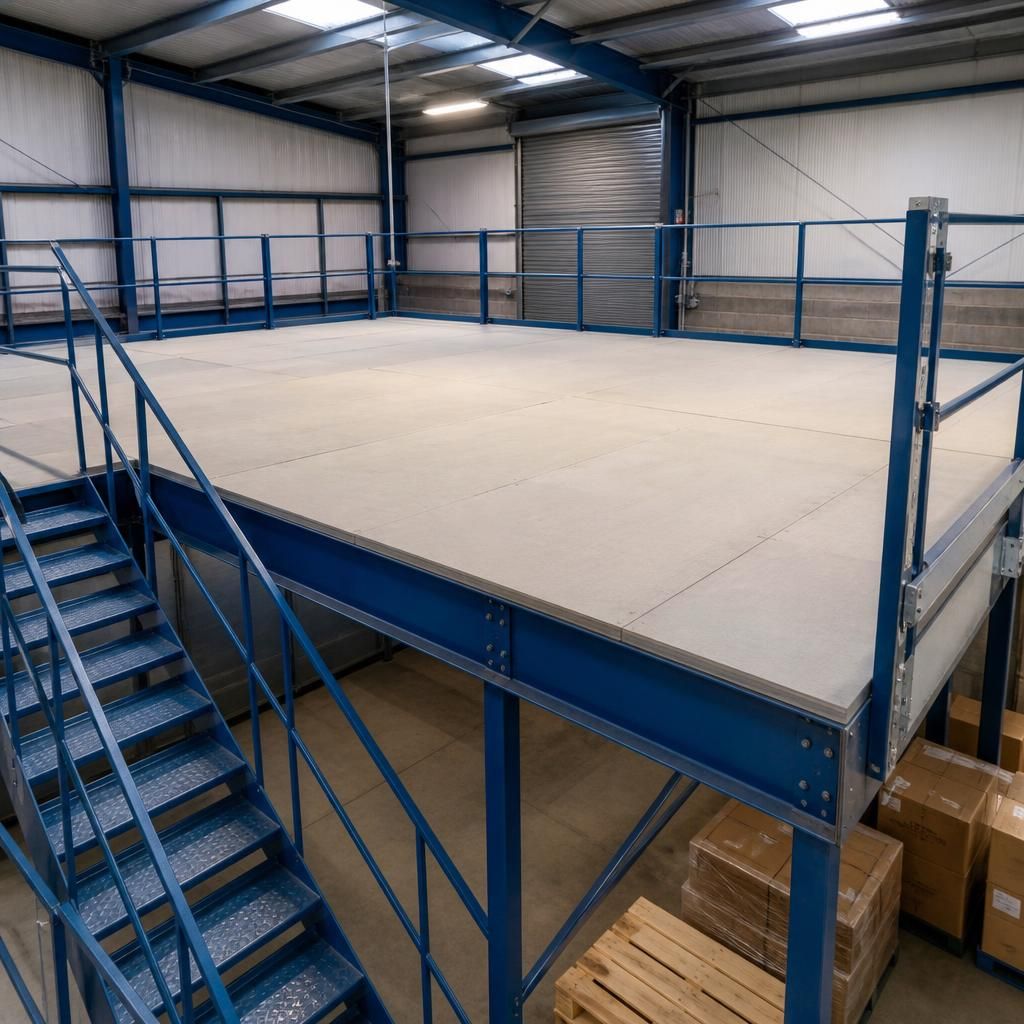
Decking material directly affects a platform’s load capacity, durability, slip resistance, noise levels and fire performance. Steel plate provides a hard-wearing surface for demanding use, while composite or timber-based panels can offer lower noise and a more comfortable walking surface. The correct choice depends on the loads, traffic, working environment and required fire performance.
Material selection should also account for moisture, cleaning chemicals, impact and the risk of small items falling through gaps. Every panel, fixing and joint must be compatible with the supporting steel frame and installed to the manufacturer’s tested specification. Damaged, swollen, loose or corroded components should be assessed by a competent person and replaced with approved materials rather than improvised alternatives.
Discuss your mezzanine platform material requirements
Discuss your mezzanine platform material requirements with our experienced team to ensure the chosen frame, decking and safety components are suitable for the intended loads, environment and compliance requirements.