
What qualifications should a warehouse racking inspector possess?
A warehouse racking inspector should have recognised inspection training, practical experience with storage systems, and a sound understanding of relevant safety standards and manufacturers’ guidance. They must also be competent to identify damage, instability and other hazards, assess risk accurately, and provide clear inspection reports and remedial recommendations.
A warehouse racking inspector should have recognised inspection training, practical experience with storage systems and a sound understanding of relevant UK safety requirements and manufacturer guidance. They must be competent to identify damage, instability and other hazards, assess the associated risk, and produce clear inspection reports with appropriate remedial recommendations.
There is no single statutory qualification that every warehouse racking inspector must hold. Instead, competence is assessed through a combination of suitable training, relevant experience, technical understanding and the ability to carry out inspections safely and consistently. The inspector should be able to demonstrate that their knowledge and skills are appropriate for the type and complexity of warehouse racking being inspected.
Key qualifications and competencies include:
- Recognised warehouse racking inspection training: The inspector should have completed a relevant course covering warehouse racking safety, common damage mechanisms, inspection methods, risk classification and reporting. Training should be current and appropriate to the systems being assessed.
- Practical experience: Classroom knowledge should be supported by hands-on experience with pallet warehouse racking, adjustable pallet systems, cantilever systems or other storage equipment relevant to the inspection. Experience helps an inspector distinguish minor cosmetic defects from damage that could affect structural performance.
- Knowledge of UK guidance: The inspector should understand the principles in HSE guidance, including the responsibilities placed on employers and users to maintain safe work equipment. They should also be familiar with relevant British and European standards where these apply, together with the storage system manufacturer’s instructions.
- Understanding of structural components: A competent inspector should recognise the purpose of frames, beams, bracing, baseplates, anchors, guards, locking devices, decking and other components. They should understand how impact, overloading, missing components, poor installation or unauthorised alterations may affect stability.
- Risk assessment skills: The inspector must be able to assess the seriousness of defects and determine what action is needed. This includes identifying situations that require immediate unloading or isolation, as well as issues that can be monitored or scheduled for repair.
- Accurate reporting: Reports should identify the location and nature of each defect, include suitable photographs or references where useful, record the recommended action and make clear which issues require urgent attention. A report should be understandable to managers, maintenance teams and warehouse operatives.
- Safe inspection practice: Inspectors need to understand site traffic arrangements, pedestrian safety, forklift activity, access restrictions and the risks associated with inspecting warehouse racking in an operational environment. They should follow the site’s safety procedures and use suitable personal protective equipment.
Industry-recognised schemes can provide useful evidence of competence. For example, SEMA training and inspection-related certification may demonstrate that an inspector has studied established warehouse racking safety principles. However, certification alone does not replace practical experience, ongoing learning or the need to understand the particular storage system and site conditions.
The inspector should also be able to work from the available warehouse racking documentation. This may include layout drawings, load notices, installation records, previous inspection reports, repair records and manufacturer information. Comparing the installed system with its design information can help identify unauthorised changes, missing components or loading arrangements that are not suitable.
A suitable inspector will understand the difference between a routine visual check by trained warehouse staff and a formal expert inspection. Operatives may be expected to report obvious damage or unsafe conditions during daily use. A formal inspection is more detailed and should be carried out by a person with the knowledge, training and experience to assess the system objectively and recommend proportionate action.
Inspectors should not present themselves as qualified to undertake work outside their competence. For example, a visual warehouse racking inspection does not automatically qualify someone to redesign a damaged structure, approve a change in configuration or calculate a revised load capacity. Those tasks may require input from the original manufacturer or a suitably qualified structural or design professional.
When selecting an inspector, ask for evidence of relevant training, previous experience and insurance, and confirm that their inspection process covers the type of warehouse racking installed at your premises. It is also sensible to check whether they provide a clear risk classification system, written reports, photographs, repair recommendations and guidance on follow-up actions.
Competence should be maintained after the initial qualification. Good inspectors keep their knowledge up to date, learn from changes in guidance and equipment, review previous findings and remain familiar with current manufacturer recommendations. They should also communicate clearly with the responsible person on site so that identified defects are not simply recorded but properly controlled and resolved.
In practical terms, the strongest qualification profile combines recognised training, substantial hands-on inspection experience, knowledge of UK warehouse safety requirements and a disciplined reporting process. Able Racking uses experienced operatives who understand the condition, use and maintenance of storage systems, helping customers make informed decisions about warehouse racking safety, repairs and ongoing inspection requirements.
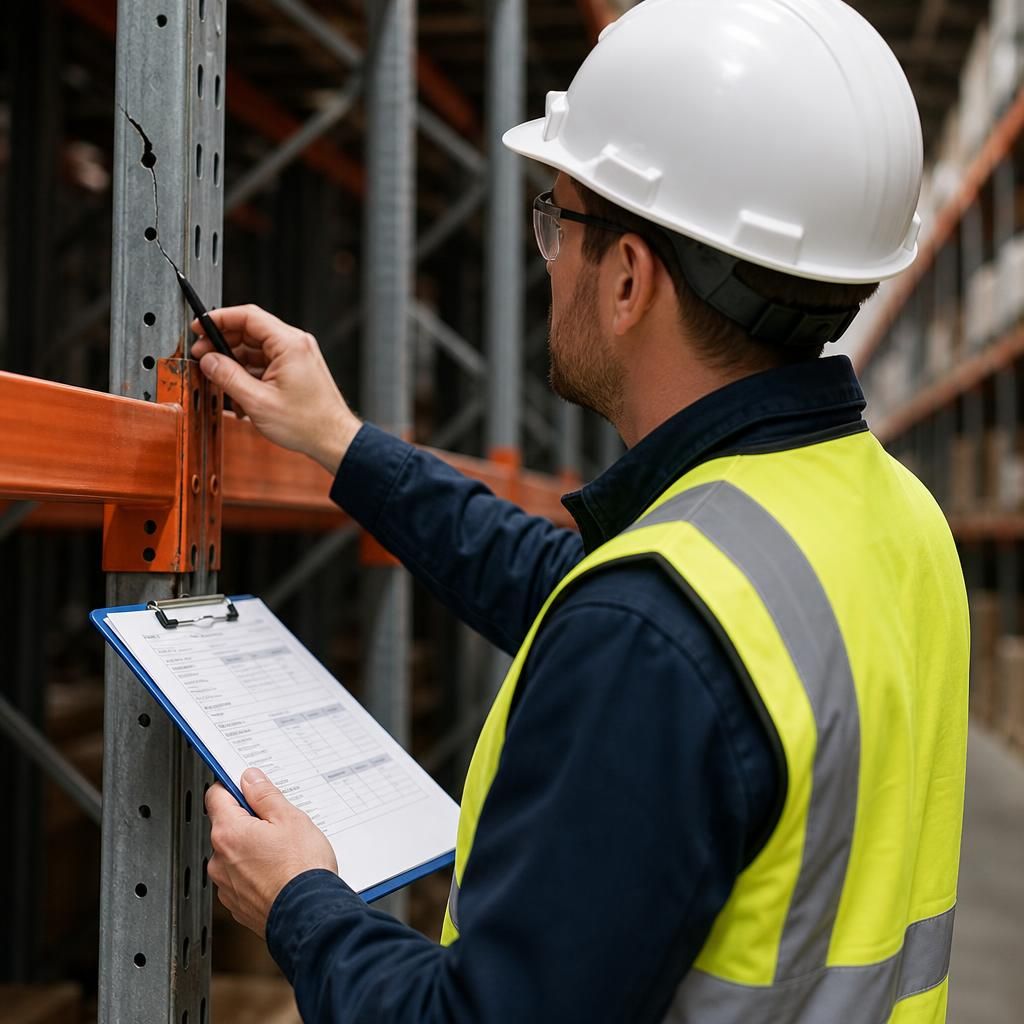
The most important qualification for a warehouse racking inspector is proven competence, combining recognised inspection training with practical experience and knowledge of relevant UK safety guidance. A certificate can support this evidence, but it does not replace the ability to assess real storage systems, identify damage and recommend suitable action.
A competent inspector should understand the function of frames, beams, bracing, baseplates, anchors and safety devices, as well as how impact, overloading, missing components or unauthorised alterations can affect stability. They should also produce clear reports that identify defects, explain their risk and state whether immediate action, repair or continued monitoring is required.
When reviewing an inspector’s credentials, check that their training is current, their experience matches the type of warehouse racking on site, and their inspection process includes accurate records and practical remedial guidance. Ongoing learning is also important because safe inspection depends on keeping up to date with guidance, manufacturer information and changing site conditions.
Arrange a Competent Warehouse Racking Inspection
Arrange a competent warehouse racking inspection with Able Racking and receive a clear assessment from experienced inspectors. Contact our team to discuss your storage system and inspection requirements.