
Why are regular warehouse racking inspections essential for businesses?
Regular warehouse racking inspections identify damage, defects and unsafe changes before they cause injury, stock loss or operational disruption. They help businesses maintain compliant storage systems, arrange timely repairs and keep warehouse operations safe and efficient.
Regular warehouse racking inspections are essential because they identify damage, instability and unsafe alterations before they lead to injury, stock loss or disruption. A structured inspection helps businesses maintain safe storage systems, meet their duties under UK health and safety legislation, arrange appropriate repairs and keep warehouse operations efficient.
Warehouse racking is exposed to continual operational risks. Forklift impacts, loading errors, overloading, missing components and gradual deterioration can affect the structural performance of an installation. Some defects are obvious, such as a bent upright or damaged safety barrier, while others may be less visible, including displaced beams, loose fixings or changes that have reduced the system’s capacity. Regular inspections provide a controlled way to detect these issues rather than relying on staff to notice them during routine work.
Inspections also support the employer’s general duty to provide and maintain a safe workplace and safe work equipment. The inspection itself does not replace a suitable risk assessment, correct installation or planned maintenance, but it provides important evidence that the condition of the storage system is being monitored. A competent inspector can assess whether defects require immediate action, prompt repair or continued monitoring under controlled conditions.
They help prevent workplace accidents
Damaged warehouse racking can collapse or shed components, creating risks to employees, visiting drivers, contractors and anyone working near the installation. Even where a complete failure is unlikely, damaged frames or beams may reduce clearances, obstruct access routes or cause loads to become unstable. Identifying problems early allows unsafe areas to be isolated, unloaded or taken out of use before people are exposed to avoidable hazards.
Inspections should consider the condition of the structure, the way it is being used and the surrounding working environment. This includes looking for impact damage, signs of overloading, unauthorised changes, inadequate protection and poor housekeeping that could increase the likelihood or consequences of an incident.
They identify damage before it becomes more serious
Small defects can worsen when the affected component continues to carry loads or is struck again. For example, a damaged upright may become less resilient to further impact, while a displaced beam or missing locking device may affect the stability of stored goods. Prompt identification allows a business to take proportionate action, such as unloading a section, installing temporary controls or arranging a permanent repair.
Early intervention can also reduce the extent of repair work. Addressing an isolated damaged component is generally more straightforward than dealing with widespread damage, fallen stock or a chain of related failures. An inspection report should make clear which defects require urgent attention and what restrictions apply until corrective work is completed.
They help protect stock, equipment and the building
Warehouse racking failures can damage stored products, handling equipment, floors, doors, services and other parts of the building. The resulting costs may include replacement stock, clean-up, equipment downtime, emergency contractor work and delays to customer orders. Inspections cannot eliminate every incident, but they reduce the likelihood that known defects will remain unaddressed.
Maintaining the system in good condition also helps protect the original design performance. A storage installation is intended to work within defined load limits and operating conditions. Damage, incorrect loading or unapproved modifications can change those conditions, so inspections are important for confirming that the installation remains suitable for the way the warehouse is operating.
They support compliance and accountable management
A clear inspection process demonstrates that warehouse racking safety is being actively managed. Inspection records, reports, photographs, repair documentation and evidence of follow-up actions can help show how defects were identified and controlled. This information is particularly useful during internal reviews, audits, insurer enquiries or visits from enforcing authorities.
Businesses should retain inspection documents in an organised format and ensure that relevant managers understand the findings. A report has limited value if no one is responsible for reviewing it, communicating restrictions or confirming that remedial work has been completed. Effective management connects the inspection outcome with the site’s maintenance, training and health and safety procedures.
They reveal unsafe changes in warehouse operations
Storage requirements often change as stock profiles, handling methods and layouts develop. New pallets, different load weights, altered beam levels, changes to vehicle routes or additional equipment may create risks that were not present when the system was first installed. Inspections can highlight where the current use no longer matches the original design or operating instructions.
They can also identify practical problems such as missing load notices, inadequate aisle clearance, damaged protection, unsuitable pallets or goods projecting into traffic routes. These findings help businesses correct both physical defects and the working practices that may be contributing to repeated damage.
They support preventative maintenance
Routine visual checks by trained warehouse staff are an important first line of defence, particularly after an impact or when a defect is noticed. However, these checks should be supported by more detailed inspections carried out by a suitably competent person at an appropriate frequency. The required frequency depends on factors such as usage, traffic levels, risk, previous damage, the environment and the manufacturer’s guidance.
A competent inspection should be impartial and sufficiently detailed to assess the condition and use of the installation. It should not be treated as a simple tick-box exercise. The inspector should record relevant findings, classify defects appropriately and explain the action needed. Where the inspection identifies recurring damage, the business should investigate the underlying cause rather than repeatedly repairing the same component without changing the working arrangement.
They help keep operations efficient
Unsafe areas may need to be closed, stock moved and access routes restricted. These controls are necessary when defects present a significant risk, but they can interrupt picking, replenishment and dispatch activity. Regular inspections help businesses identify issues earlier, making it easier to plan repairs around operational requirements and reduce avoidable disruption.
Safe, well-maintained warehouse racking also supports consistent pallet placement, clear access routes and reliable use of handling equipment. This reduces the likelihood of delays caused by blocked aisles, fallen goods, emergency unloading or unexpected repairs.
What should happen after an inspection?
The inspection report should be reviewed promptly by the person responsible for the warehouse or safety arrangements. Defects should be prioritised according to their risk, and any required restrictions should be communicated to affected employees. Where necessary, the area should be unloaded or isolated until a competent person confirms that it is safe to use.
Repairs should be completed by appropriately qualified or experienced personnel using suitable components and methods. Substituting parts, straightening damaged structural members or making unapproved alterations can create further risks and may invalidate the original design assumptions. Following repair, the affected area should be checked and the completed action recorded.
Regular warehouse racking inspections are therefore a core part of responsible warehouse management. They provide an informed view of condition, usage and risk; help businesses act before defects escalate; and create a clear link between inspection findings, repairs and ongoing safe operation.
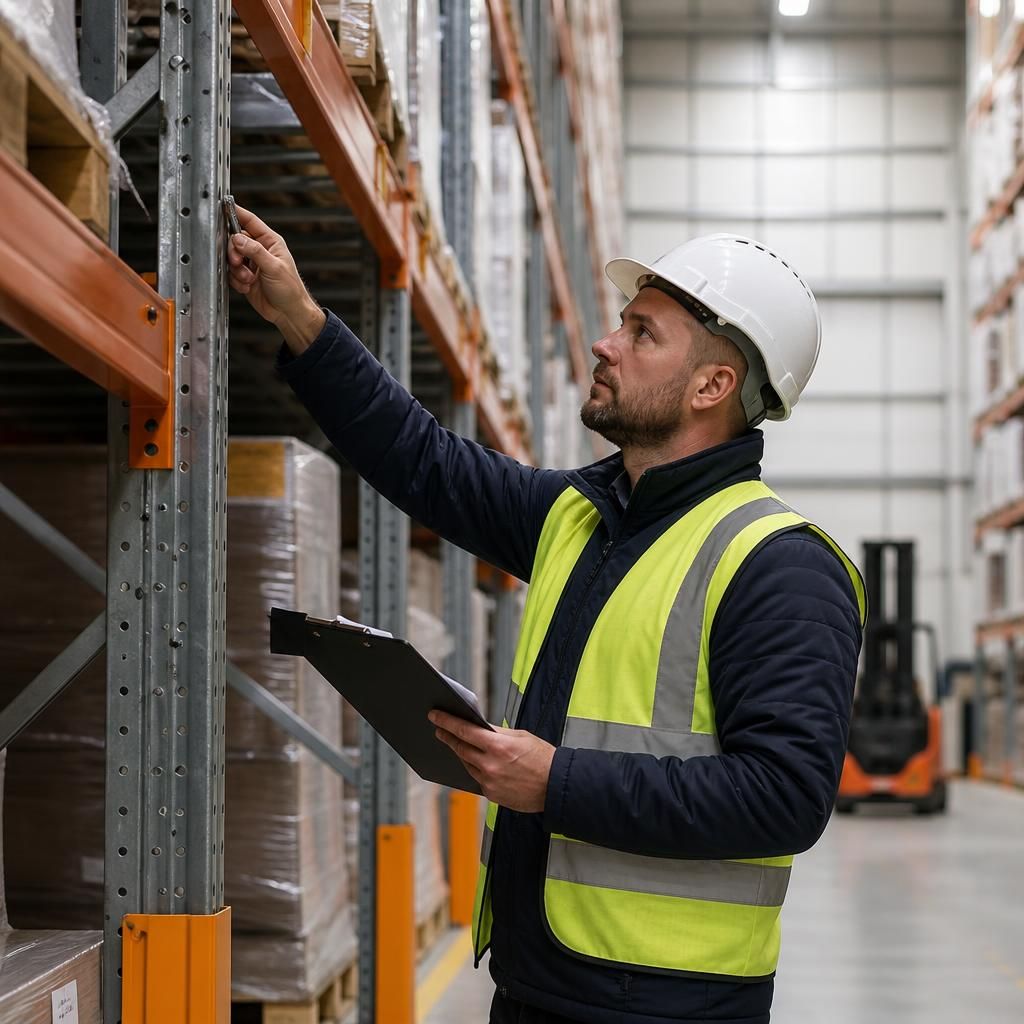
Regular warehouse racking inspections identify damage and unsafe conditions before they develop into serious hazards. Checking uprights, beams, fixings, load notices, protection and stored loads helps confirm that the installation remains suitable for its intended use.
Early detection allows the responsible person to isolate an affected area, unload it or arrange a suitable repair before the defect causes injury, stock damage or operational disruption. This is particularly important where warehouse racking is exposed to forklift impacts, changing loads or unauthorised alterations.
Inspection findings should be recorded clearly and followed through to completion. Reviewing the report, communicating any restrictions and confirming that repairs have been completed turns an inspection into an effective preventative safety measure.
Arrange Your Warehouse Racking Inspection
Arrange a competent warehouse racking inspection with Able Racking to identify defects, assess risks and confirm whether your storage system remains safe to use. Contact our team to discuss your inspection requirements and any follow-up repairs.