
What qualifications should a warehouse racking inspector possess?
A warehouse racking inspector should have recognised SEMA training, such as SEMA Approved Racking Inspector (SARI) certification, together with practical experience of inspecting warehouse storage systems. They should understand relevant safety standards, identify damage and unsafe alterations, assess risks accurately, and produce clear inspection reports with appropriate remedial recommendations.
A competent warehouse racking inspector should hold recognised industry training, understand the relevant UK safety guidance and have sufficient practical experience to assess storage systems accurately. In the UK, the most relevant qualification is typically SEMA Approved Racking Inspector (SARI) training, supported by practical knowledge of warehouse racking, risk assessment, damage classification and inspection reporting.
SEMA-approved inspection training
SEMA training is widely recognised within the UK warehouse storage industry. A SARI-qualified inspector has been trained to examine warehouse racking systematically, identify common and less obvious defects, and assess whether damage could affect the stability or safe use of the system.
Training should cover the principles set out in the relevant SEMA guidance and BS EN 15635, the European standard for the use and maintenance of static steel storage systems. It should also include the inspection of frames, beams, bracing, baseplates, anchors, protection equipment, load notices and other components that may affect performance.
A qualification alone is not enough. The inspector should be able to apply the training to the particular warehouse environment and racking configuration being assessed.
Relevant practical experience
Warehouse racking inspectors should have hands-on experience of storage systems, warehouse operations and the types of damage that occur during normal use. This helps them distinguish between cosmetic marks, defects requiring monitoring and damage requiring immediate action.
Practical experience should include the ability to:
- Recognise impact damage to uprights, beams, bracing and protective equipment.
- Identify missing, loose or incorrectly fitted components.
- Spot unauthorised alterations, overloading risks and unsuitable repairs.
- Check that load notices and system information are present and appropriate.
- Understand how forklift movements, loading practices and housekeeping can contribute to recurring damage.
- Recommend proportionate remedial action based on the severity and location of each defect.
Experience across different warehouse racking layouts is particularly valuable because inspection methods and risks can vary between pallet storage, narrow-aisle systems, drive-in systems and other specialist arrangements.
Knowledge of safety standards and guidance
An inspector should understand the standards and guidance relevant to the system being inspected. This commonly includes BS EN 15635 and the Health and Safety Executive’s guidance on the safe use of warehouse racking, including HSG76. They should understand the responsibilities of the warehouse operator, the supplier or installer and the person responsible for ongoing inspection and maintenance.
This knowledge enables the inspector to assess more than visible damage. They should also consider whether the warehouse racking is being used as intended, whether the stated load limits are clear, and whether changes to the layout or operating conditions may have introduced additional risk.
Ability to assess risk objectively
A qualified inspector must be able to make consistent, evidence-based decisions. This includes classifying defects according to their potential effect on safety, explaining the urgency of action and identifying situations where affected areas should be unloaded or taken out of use until repairs are completed.
The assessment should be impartial and based on the condition and use of the warehouse racking rather than on assumptions. Where the cause of a defect is unclear, the inspector should record that limitation and recommend further investigation by a suitably competent person, such as the original supplier, designer or repair specialist.
Clear inspection and reporting skills
A professional warehouse racking inspector should produce a report that is accurate, understandable and useful to the person responsible for workplace safety. A suitable report normally records the areas inspected, defects identified, their locations, the level of risk and recommended corrective action.
Photographs, rack references or location descriptions should make each finding easy to identify. Recommendations should be specific rather than simply stating that repairs are required. The report should help the customer decide what needs immediate attention, what should be monitored and what information may be needed before a safe repair can be specified.
Understanding of inspection limitations
Competent inspectors know the difference between a visual safety inspection and a structural assessment, design check or load test. A routine inspection may identify signs of damage or unsafe use, but it does not automatically confirm the original design capacity or the suitability of a modified system.
Where the inspection reveals significant damage, unusual loading, missing design information or alterations that cannot be verified, the inspector should explain what additional assessment is required. This prevents the report from giving false assurance and ensures that repairs or changes are completed on a properly informed basis.
Current and maintained competence
Qualifications should be supported by continuing professional development and regular inspection experience. Guidance, equipment, warehouse processes and industry practices can change, so inspectors should keep their knowledge current and continue to undertake relevant work.
It is also reasonable to ask for evidence of the inspector’s relevant training, experience and insurance before an inspection takes place. A reputable provider should be able to explain who will carry out the inspection, what the inspection covers and how urgent findings will be communicated.
In practical terms, the strongest combination is recognised SEMA inspection training, sound knowledge of UK warehouse safety requirements, substantial experience with warehouse racking and the ability to produce clear, prioritised reports. Checking these points helps ensure that an inspection provides a reliable basis for repairs, maintenance and safer day-to-day warehouse operations.
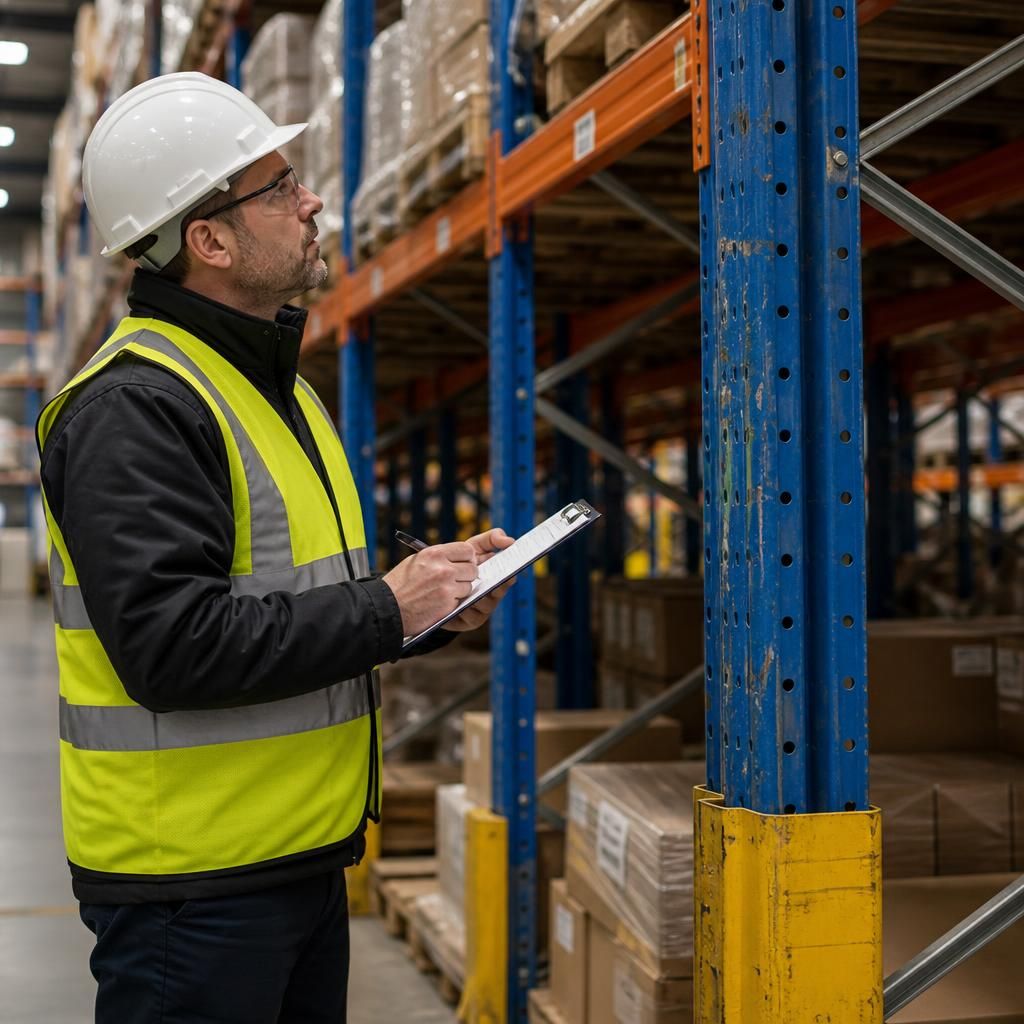
The most relevant qualification for a warehouse racking inspector in the UK is recognised SEMA Approved Racking Inspector (SARI) training. This demonstrates that the inspector has been trained to examine storage systems systematically, identify damage and assess whether defects may affect safe use.
Training should be supported by practical experience. An effective inspector must understand how warehouse racking is used, recognise impact damage and unsafe alterations, assess risks objectively and produce a clear report with prioritised recommendations. Checking both the inspector’s qualification and their relevant inspection experience helps ensure the findings provide a reliable basis for maintenance and repairs.
Arrange an inspection with a qualified warehouse racking inspector
Contact Able Racking to arrange an inspection with a qualified warehouse racking inspector. Our experienced team can assess your system, identify risks and provide clear recommendations for any required remedial work.