
What are the consequences of neglecting regular warehouse racking inspections?
Neglecting regular warehouse racking inspections can allow damage, overloading and instability to go unnoticed, increasing the risk of falling goods, structural failure, injuries and costly operational disruption. Routine inspections identify defects early so repairs, load controls and other corrective actions can be completed before a minor issue becomes a serious safety or compliance problem.
Neglecting regular warehouse racking inspections allows damage, overloading, instability and unsuitable modifications to remain unidentified. The consequences can include falling loads, progressive structural failure, injuries, enforcement action, damaged stock, operational disruption and significantly higher repair costs. Routine inspections provide an opportunity to identify defects early and take proportionate corrective action before a minor problem becomes a serious safety or compliance issue.
Increased risk of falling goods
Impact damage to uprights, beams, bracing and safety equipment can reduce the stability of a storage system. Damage may be caused by forklift contact, incorrect loading, dropped items or changes to the surrounding working area. Without an inspection, defects can be overlooked, particularly where components are positioned at height or concealed behind stored goods.
A damaged beam may no longer support its intended load safely, while bent or displaced components can affect the alignment of the entire bay. Inadequate pallet positioning, missing load notices or unsuitable pallets can create additional risks, increasing the likelihood of goods falling into aisles or onto people working nearby.
Potential for structural failure
Warehouse racking is designed to work as a complete system. Its capacity depends on factors such as the condition of its components, the design configuration, floor conditions, anchorage, load arrangement and the loads placed within each bay. Unauthorised alterations, missing fixings or damaged bracing can change how forces are distributed through the system.
Ignoring these issues may result in localised damage spreading to adjacent bays or, in more severe cases, a partial collapse. A structural failure can cause extensive damage to stock, equipment, buildings and services, as well as creating a major risk to employees, contractors and visitors.
Greater likelihood of injury
People may be injured by falling pallets, products or components, by contact with damaged steelwork, or during attempts to move goods around an unsafe area. A warehouse does not need to experience a collapse for an inspection failure to have serious consequences. A single unstable load or unprotected damaged upright can create an immediate hazard.
Employers have duties to protect people using the workplace and to maintain work equipment in a safe condition. Regular inspections form part of a sensible management system, alongside staff training, appropriate loading procedures, traffic controls and prompt reporting of damage.
Non-compliance and enforcement concerns
Employers should be able to demonstrate that their warehouse racking is being managed and maintained appropriately. This normally includes keeping manufacturer information and design details where available, displaying safe working load information, carrying out routine user checks, recording reported damage and arranging periodic inspections by a technically competent person.
Where inspection records are absent, incomplete or show that defects were repeatedly left unresolved, it may be more difficult to demonstrate that suitable precautions were in place. Depending on the circumstances, this can contribute to improvement requirements, enforcement action, investigation following an incident or difficulties dealing with insurers and other stakeholders. The precise legal position depends on the workplace, the equipment and the circumstances, so inspection arrangements should reflect a suitable risk assessment rather than relying on paperwork alone.
Higher repair and replacement costs
Early-stage damage is often more straightforward to manage than extensive deterioration or a failure involving several connected components. If a defect is missed, it may require replacement parts, specialist assessment, unloading of affected bays, temporary barriers and additional labour. Damage to stock or handling equipment can add to the overall cost.
Regular inspections do not eliminate every repair requirement, but they make it more likely that faults will be identified while corrective work remains controlled and proportionate. They also help distinguish between damage that needs immediate action and minor issues that can be monitored under a documented maintenance plan.
Operational disruption and lost capacity
Unsafe bays may need to be isolated immediately. If the affected area is part of a busy picking, dispatch or goods-in route, this can interrupt workflows and reduce available storage capacity. Stock may need to be relocated, orders may be delayed and forklift movements may become less efficient while repairs are arranged.
A planned inspection is generally easier to coordinate than an unplanned response to a collapse, serious impact or urgent safety concern. Inspection findings can help prioritise repairs, plan access requirements and schedule remedial work with less disruption to warehouse operations.
Reduced control over loading and changes
Warehouse racking can become unsafe when pallet weights, dimensions or storage patterns change without checking the system’s design limits. Introducing new handling equipment, changing aisle arrangements, adding components or removing protective devices can also affect safe operation.
Inspections can identify missing or inaccurate load notices, unsuitable pallets, poor load distribution, unauthorised modifications and clearance problems. These findings provide a practical basis for updating procedures and reminding warehouse staff about the limits that apply to each bay and level.
Why routine inspections should be supported by daily controls
A periodic inspection is not a substitute for day-to-day vigilance. Warehouse staff should report impacts and visible defects as soon as they are identified, and responsible personnel should carry out regular user checks in line with the site’s risk assessment and operating conditions. Busy warehouses, frequent forklift movements, changing loads and harsh environments may require closer monitoring.
When damage is reported, the affected area should be assessed promptly. Where there is a risk of collapse or falling goods, the bay should be unloaded and isolated until a competent person has determined the appropriate action. Components should not be straightened, welded or modified informally, as this may alter their performance and invalidate design assumptions.
What a competent inspection helps establish
A competent inspector assesses the condition and use of the warehouse racking system, considers visible damage and checks whether the installation is being operated in accordance with its design and safe working load information. The inspection may identify:
- Impact damage to frames, uprights, beams, bracing and guards.
- Missing, loose or damaged fixings, locking devices and safety components.
- Overloaded, unevenly loaded or incorrectly positioned pallets.
- Defective pallets or goods that are not stable within their storage position.
- Unapproved alterations, missing protection or inadequate clearances.
- Signs of corrosion, deterioration, settlement or damage to the supporting floor.
- Obscured or inaccurate safe working load notices and poor identification of damaged bays.
The resulting report should record significant findings, identify locations clearly and set out recommended actions. Where appropriate, defects should be categorised according to their urgency so that immediate hazards are not treated in the same way as issues requiring planned maintenance.
How to reduce the consequences
Maintain a documented inspection and maintenance programme that reflects the design and use of the warehouse racking system. Arrange periodic inspections by a technically competent person, retain reports and evidence of completed actions, and ensure employees know how to report damage. Review the system after changes to loads, layout, equipment or operating procedures, and do not return an isolated area to service until the required corrective work has been completed.
Regular inspection is therefore a preventative control, not simply an administrative exercise. It supports safe working practices, protects people and stock, helps preserve storage capacity and gives warehouse managers reliable information on which to base repairs, training and future changes.
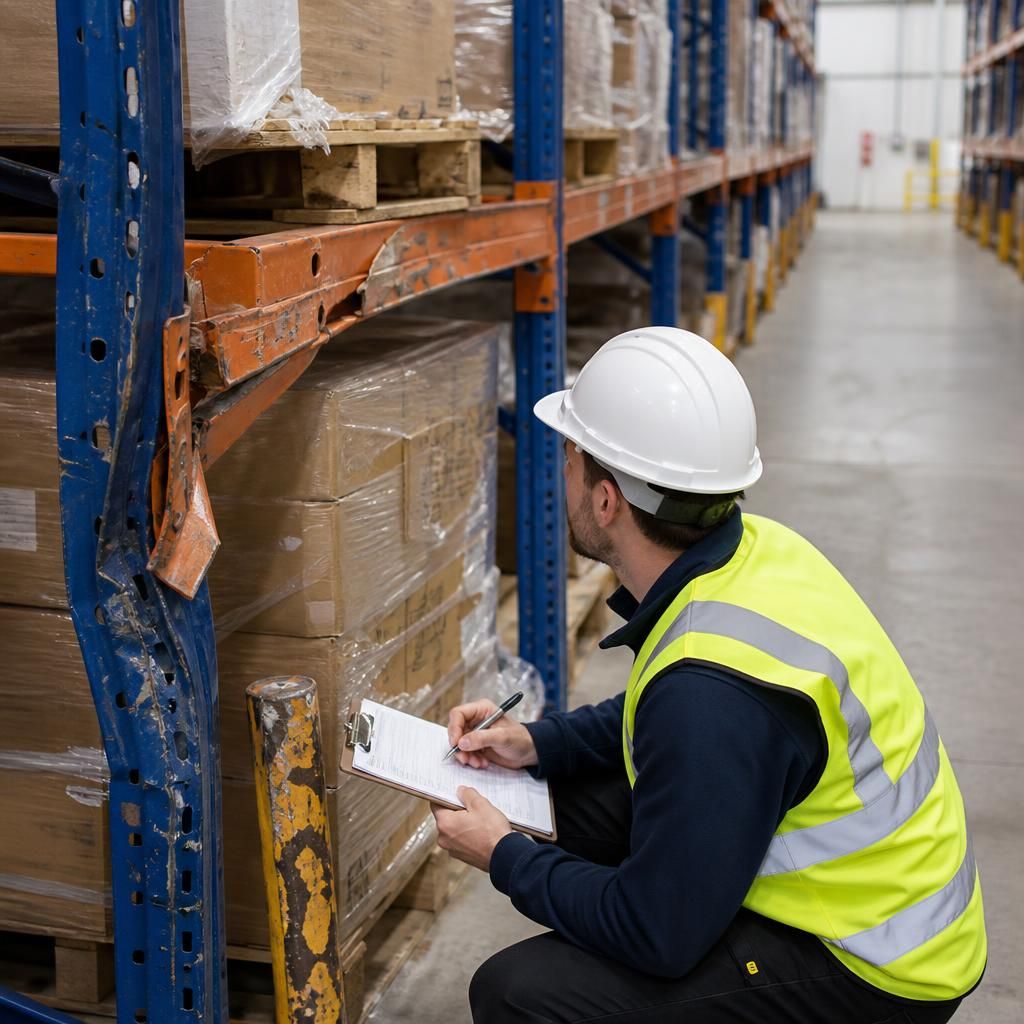
Neglecting regular warehouse racking inspections allows damage, overloading and unstable loads to remain unnoticed, increasing the risk of falling goods and serious injury. An inspection can identify damaged uprights, beams, bracing, fixings, pallets and safety equipment before a local defect develops into a wider structural or operational problem.
Where an immediate hazard is found, the affected bay should be unloaded and isolated until a competent person confirms the required corrective action. Early identification also helps limit stock damage, avoid unplanned disruption and keep repairs proportionate.
Arrange your warehouse racking inspection
Arrange your warehouse racking inspection with Able Racking to identify damage, overloading and other defects before they lead to safety risks or operational disruption. Contact our experienced team to discuss your inspection requirements and plan the appropriate next steps.