
Are additional services like load testing necessary for my warehouse racking inspection?
Additional load testing is not routinely necessary for every warehouse racking inspection, but it may be recommended where there is suspected overloading, damage, unusual system design or uncertainty about the structure’s capacity. Able Racking can assess the circumstances and advise whether a load test, engineering review or other supporting checks are appropriate alongside the inspection.
Additional load testing is not routinely required for every warehouse racking inspection. A competent inspection usually assesses the visible condition, stability, configuration, damage, protection and safe use of the system. Load testing or other specialist checks may be recommended when the inspection identifies uncertainty about the racking’s capacity, evidence of overloading, significant damage, unusual design or changes that cannot be verified from the available records.
What a standard warehouse racking inspection establishes
A warehouse racking inspection is primarily a visual and condition-based assessment. The inspector examines the structure, including frames, beams, bracing, connections, base plates, floor fixings, protection and visible signs of impact or deformation. They also consider whether the system is being used in accordance with its configuration and displayed load information.
This type of inspection can identify many defects without placing additional loads on the structure. It does not, however, prove that a system can safely support a particular load where the original design information is missing, the configuration has been altered or the condition of key components cannot be reliably established.
When load testing may be appropriate
Load testing may be considered where there is a specific reason to verify performance or capacity. Examples include:
- There are no reliable manufacturer details, design calculations or load notices.
- Beam levels, bay widths, frame heights or component types have been changed from the original design.
- The warehouse racking has been relocated, extended or combined with components from different systems.
- There is evidence that loads have exceeded the stated capacity or have been stored incorrectly.
- Frames, beams, bracing or connections have sustained impact or other damage that raises concerns about structural performance.
- The system has unusual dimensions, non-standard components or a design that cannot be verified through available documentation.
- There is noticeable deflection, movement, settlement or instability that requires further engineering assessment.
- A change in stored goods or operating methods has introduced heavier, larger or differently distributed loads.
A visible defect does not automatically mean that a load test is the correct remedy. In some cases, immediate unloading, isolation of the affected bay, component replacement or an engineering review will provide a safer and more appropriate response.
What a load test can and cannot demonstrate
A properly planned load test can provide evidence about how a defined warehouse racking arrangement responds to specified loads. Depending on the system and the purpose of the assessment, this may involve monitoring deflection, movement or other behaviour under controlled conditions. It must be based on the actual configuration, component specifications and intended loading pattern.
Load testing does not make a damaged or incorrectly configured system safe, and it should not be used as a substitute for routine inspections, correct loading practices or suitable protection. A successful test also applies only to the arrangement and conditions assessed. Changing beam positions, components, loads or operating practices may require a fresh review.
Testing must therefore be planned and controlled by a suitably competent person. Unauthorised loading during an informal test can increase the risk of collapse, damage components or expose operatives to avoidable danger. The test method, load values, monitoring arrangements, exclusion controls and acceptance criteria should be documented before work begins.
Other additional checks that may be recommended
Load testing is only one possible supporting service. Depending on the findings, a suitable assessment may instead include:
- Verification of the manufacturer’s specifications and permissible load information.
- A review of original drawings, design calculations and any later alterations.
- An engineering assessment of damaged or non-standard components.
- Checks on floor condition, base plates, anchors and the suitability of the supporting surface.
- Measurements of frame alignment, upright plumb, beam levels and visible deflection.
- Confirmation that load notices accurately reflect the installed configuration and intended use.
- Advice on safe unloading, temporary restrictions, repairs or replacement components.
These checks help distinguish a capacity question from a condition, installation or usage problem. For example, missing load information may call for documentation and design verification rather than a physical load test. A damaged upright may require isolation and replacement rather than testing. A change to the arrangement may require revised calculations and updated load notices.
How the need for additional testing is decided
The decision should follow the findings of the warehouse racking inspection and the available evidence about the system. Able Racking can review the inspection observations, manufacturer information, previous reports, repair history, loading arrangements and any proposed changes. This allows the appropriate next step to be identified rather than recommending testing automatically.
Where the system is in good visible condition, correctly configured, supported by reliable specifications and used within its stated limits, a routine warehouse racking inspection will usually be sufficient. Where important information is missing or the inspector identifies a credible structural concern, the system should be treated cautiously until the issue has been assessed and controlled.
What to do if testing or further assessment is recommended
- Follow any immediate instructions to unload, isolate or restrict access to affected bays.
- Do not alter the warehouse racking or carry out an informal load test before the assessment is agreed.
- Provide available drawings, load notices, manufacturer details, previous inspection reports and repair records.
- Explain any changes to the system, stored goods, handling equipment or operating methods.
- Arrange the recommended engineering review, testing or repair through a suitably competent provider.
- Keep the resulting report and update load information, risk controls and inspection records where necessary.
In summary, load testing is an additional investigative measure, not an automatic part of every warehouse racking inspection. It is most relevant where capacity, configuration or structural performance cannot be confirmed by inspection and documentation alone. Able Racking can explain what the inspection findings mean, identify whether further checks are justified and help establish a practical route to safe continued use.
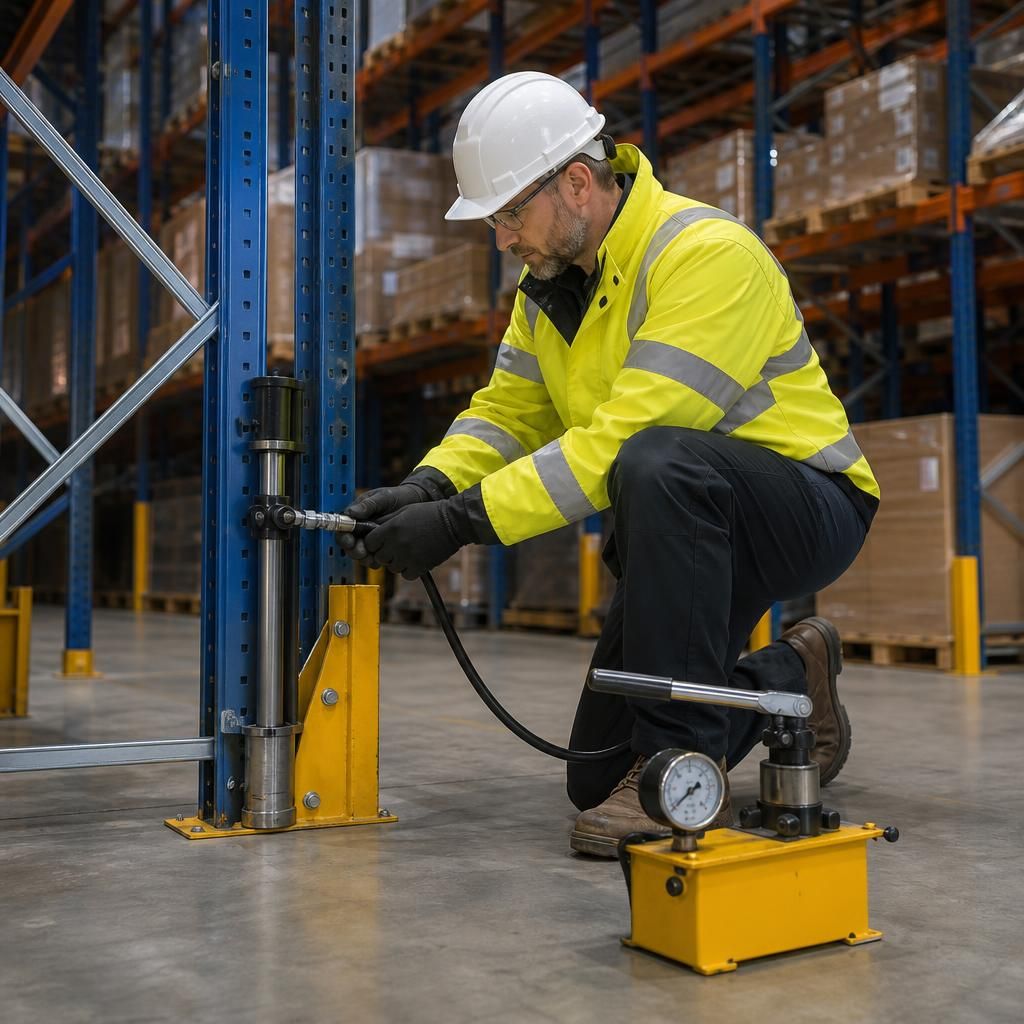
Load testing is not a routine requirement for every warehouse racking inspection. It is an additional investigation used when the system’s capacity, configuration or structural performance cannot be confirmed through visual inspection and reliable documentation alone.
It may be appropriate where load information is missing, the warehouse racking has been altered or relocated, components have been mixed, or there are concerns about overloading, damage, movement or unusual deflection. In other cases, unloading, isolating an affected bay, replacing damaged components or completing an engineering review may be safer and more suitable than testing.
Any test should be planned by a competent person using the actual warehouse racking configuration and intended loading pattern. Informal loading should never be used to test capacity, as it can increase the risk of damage or collapse. Able Racking can review the inspection findings and available records to help determine whether load testing or another specialist check is justified.
Discuss Your Warehouse Racking Inspection Requirements
Contact Able Racking to discuss your warehouse racking inspection requirements and whether load testing or another specialist assessment is appropriate.