
What qualifications do SEMA-approved inspectors hold?
SEMA-approved racking inspectors hold the SEMA Approved Racking Inspector (SARI) qualification, gained through approved training and assessment covering warehouse racking systems, safety standards, damage assessment and inspection reporting. They also need relevant practical competence and must keep their knowledge current so they can identify risks accurately and recommend appropriate remedial action.
SEMA-approved inspectors hold the SEMA Approved Racking Inspector (SARI) qualification. They gain this through approved training and assessment covering warehouse racking systems, inspection methods, damage evaluation, safety requirements and the preparation of inspection reports. The qualification is important, but it is only one part of an inspector’s competence: effective inspections also depend on practical experience, sound judgement and current knowledge of applicable guidance.
The SARI qualification covers the core technical knowledge required to inspect warehouse racking. Training typically addresses the main types of storage equipment, their components and the way loads are supported and transferred through the structure. Inspectors learn how to recognise defects in frames, beams, bracing, connections, protection and other components, as well as how damage or deterioration can affect the stability and safe use of the installation.
Assessment also covers the inspection process itself. An inspector must be able to examine warehouse racking systematically rather than simply identify obvious damage. This includes checking the condition of structural members, looking for signs of impact, unauthorised alteration, overloading, missing components and poor housekeeping, and considering whether the installation is being used in accordance with its design and operating instructions.
Damage assessment is a particularly important part of the qualification. Inspectors need to distinguish between minor defects that should be monitored and damage that requires prompt action. They must be able to record the location and nature of a defect, assess its significance using the relevant SEMA guidance and recommend suitable next steps. Depending on the finding, this may involve monitoring, reducing the load, isolating a section or arranging repair or replacement by a competent person.
SEMA-approved inspectors are also trained to produce clear inspection reports. A useful report should identify the warehouse racking inspected, describe findings accurately, include the location of each issue and set out the recommended remedial action. Good reporting gives the responsible person a practical basis for prioritising repairs and retaining evidence that inspections have been completed.
Practical experience is needed alongside the formal qualification. Inspectors should understand how warehouse racking is installed, loaded and used in real working environments. Experience helps them recognise issues that may not be apparent from a single visual check, such as repeated forklift impacts, changes to the original layout, unsuitable load information or damage that has been concealed by stored goods. It also supports consistent decisions when conditions are complex or several defects occur in the same area.
The relevant competence may be built through previous work in warehouse racking installation, inspection, maintenance, design, warehouse operations or health and safety. A formal engineering degree is not necessarily required for the SARI qualification, but the inspector must have the knowledge and ability to carry out the work safely, objectively and to the required standard.
Inspectors must keep their knowledge current. Warehouse operations, equipment, layouts and working practices can change, while guidance and manufacturer information may also be updated. Ongoing professional development, refresher learning and regular inspection experience help an inspector remain familiar with current SEMA guidance, relevant British and European standards, safe systems of work and effective reporting practices. Where an installation has unusual features or requires design advice, the inspector should recognise the limits of their role and refer the matter to an appropriately qualified specialist.
It is also important to distinguish between a person who has attended general warehouse safety training and a SEMA-approved inspector. General training may help an employee spot and report visible problems, but it does not automatically provide the specialist competence needed to complete a formal warehouse racking inspection. Similarly, an inspection carried out by an experienced warehouse operative is not necessarily a SEMA inspection unless the individual meets the relevant SEMA qualification and competence requirements.
When arranging an inspection, you can ask to confirm that the inspector holds the SARI qualification and has relevant experience with the type of warehouse racking installed at your premises. It is also sensible to check that the inspection scope is clear, the report will identify defects precisely and recommendations will be explained in practical terms. A properly qualified inspector should be able to discuss the findings with the responsible person and help ensure that urgent risks are controlled without delay.
In summary, SEMA-approved inspectors combine the SARI qualification with practical competence, knowledge of warehouse racking safety and the ability to assess and report defects consistently. This combination allows inspections to provide more than a list of visible faults: it supports informed decisions about safe use, repair, replacement and ongoing maintenance.
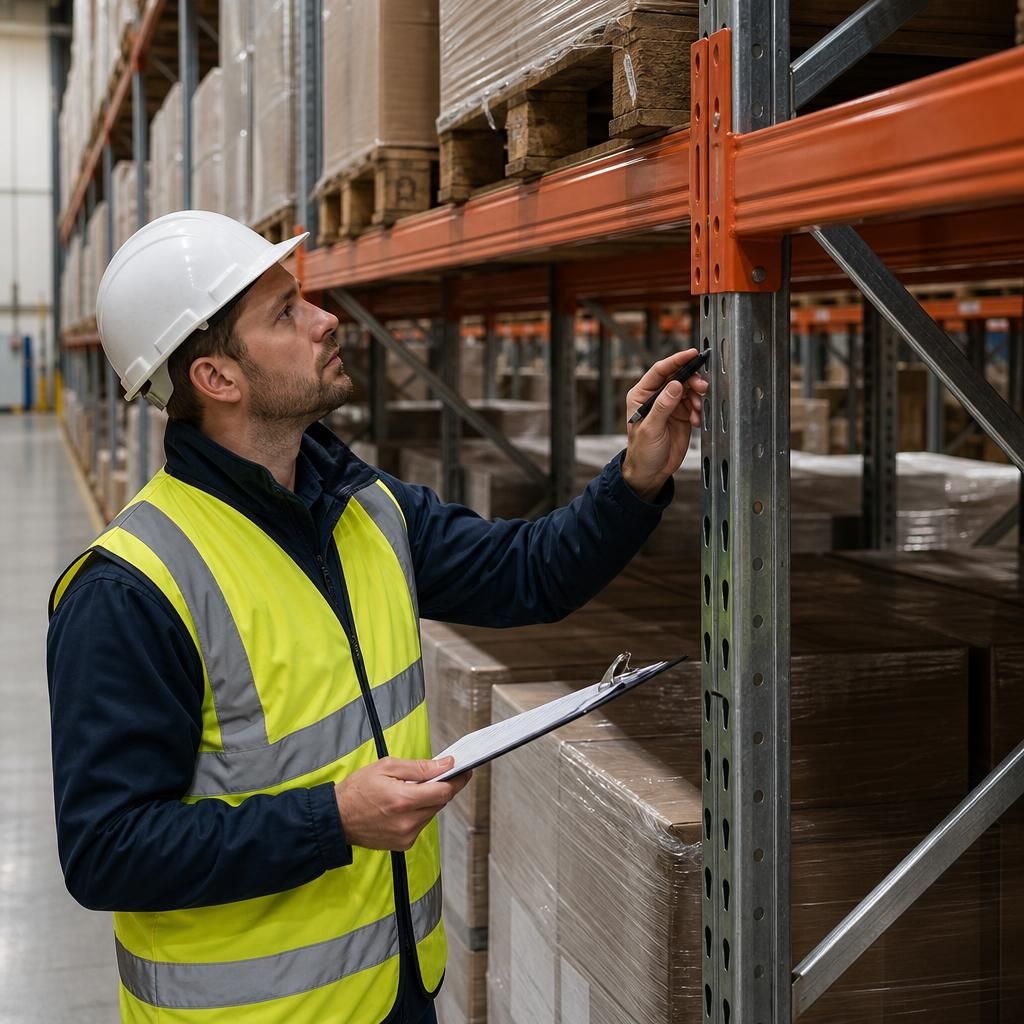
SEMA-approved inspectors hold the SEMA Approved Racking Inspector (SARI) qualification, but the qualification is only effective when supported by practical competence. Inspectors must understand how warehouse racking is installed, loaded and used so they can assess whether defects could affect structural stability or safe operation.
Their training covers systematic inspection methods, damage assessment, relevant safety guidance and accurate reporting. They assess issues such as impact damage, missing components, unauthorised alterations, overloading and deteriorated connections, then recommend proportionate action. Depending on the findings, this may include monitoring, reducing loads, isolating an area or arranging repair by a competent specialist.
Practical experience also helps inspectors recognise problems that may not be obvious during a brief visual check, including repeated forklift impacts, changes to the original layout or unsuitable load information. When reviewing an inspection report, confirm that the inspector’s SARI qualification, relevant experience and inspection scope are clear.
Arrange an Inspection with a SEMA-Approved Inspector
Arrange an inspection with a SEMA-approved inspector to assess your warehouse racking and receive clear, practical recommendations for any required action.