
What is included in a SEMA racking inspection report?
A SEMA racking inspection report records the areas inspected, identified defects or damage, risk classifications, supporting photographs and any recommended remedial action. It should also provide enough detail to help the responsible person prioritise repairs, isolate unsafe equipment where necessary and maintain a clear record of warehouse racking safety checks.
A SEMA racking inspection report is a formal record of the warehouse racking examined, the condition of its components, any defects or damage identified, the level of risk associated with each finding and the action recommended. It should provide enough information for the responsible person to decide what requires immediate attention, what needs planned repair and what should continue to be monitored.
The precise layout varies between inspection providers, but a properly prepared report will normally include the following information.
- Inspection details: the name and address of the site, the date of the inspection, the areas covered, the name of the inspector and, where relevant, the inspection reference or report number.
- Scope and limitations: a description of the warehouse racking, aisles or storage areas inspected, together with any areas that were inaccessible, obstructed or excluded. This is important because an inspection can only confirm the condition of equipment that was visible and safely accessible at the time.
- Equipment identification: information that helps locate the affected structure, such as aisle references, bay positions, rack numbers, levels or other site identification used by the warehouse team.
- Condition findings: details of damage, defects or other unsafe conditions affecting components such as frames, uprights, bracing, beams, connectors, guards, floor fixings, pallets and load supports. The report may also record issues involving missing components, unauthorised alterations, overloading indicators or poor housekeeping where these affect safe use.
- Risk classification: findings are generally categorised according to their urgency and potential impact. A red classification indicates that the affected area or equipment should be taken out of use immediately until suitable action has been completed. An amber classification indicates that remedial work is required within an appropriate timescale, with the equipment managed safely in the meantime. A green classification normally identifies damage or conditions that should be monitored and addressed as part of planned maintenance.
- Photographic evidence: photographs can show the location, type and extent of a defect. A useful report links each photograph to the relevant finding rather than presenting images without an explanation. Images are supporting evidence and do not replace a written description or risk assessment.
- Recommended action: the report should state what needs to happen next. This may include unloading and isolating a damaged bay, arranging a repair, replacing a component, removing an unsafe pallet, correcting a loading issue or improving protection against vehicle impact. Recommendations should be clear enough for the responsible person to allocate and track the work.
- Completion or follow-up requirements: where remedial work is needed, the report may identify the need for confirmation that the action has been completed and that the equipment has been checked before being returned to service. This creates a useful audit trail between the original finding and its resolution.
A report should distinguish between damage observed during the inspection and the action required to control the associated risk. For example, a bent upright is a condition; isolating the affected bay and arranging an appropriate repair are control measures. The inspector should not simply list defects without explaining their significance or urgency.
The report may also record general observations about the condition and use of the warehouse racking. These can include evidence of repeated vehicle impact, unsuitable loading practices, missing load notices, inadequate protection, changes made without technical approval or poor housekeeping around aisles. Such observations are valuable because correcting the underlying cause can help prevent the same damage from recurring.
Where load information is relevant, the report may refer to the available load notices, pallet configuration, beam levels and visible signs of overloading or inappropriate storage. An inspection does not automatically confirm that every load is suitable for the structure. The responsible person must ensure that the warehouse racking is used within its design and stated capacity, and that any changes to the configuration are properly assessed.
Photographs, bay references and clear descriptions are particularly important when several similar runs or storage areas are present. A finding such as “damage to frame” may be difficult to act on, whereas a description identifying the aisle, bay, level, component and approximate position allows the warehouse team and repair contractor to locate it efficiently.
The report is not normally a substitute for design verification, structural calculations or an investigation into an incident. If the inspector identifies unusual damage, significant alterations, uncertainty about capacity or a condition outside the scope of a visual inspection, further technical assessment may be necessary. The report should make these limitations clear rather than implying that the inspection has answered questions it was not intended to address.
Once the report has been issued, the responsible person should review every finding, apply the recommended controls and record the action taken. Red findings should be dealt with without delay, including isolation where necessary. Amber findings should be assigned to a competent person with a realistic completion date. Green findings should be included in routine maintenance and checked during subsequent inspections. Repairs should be carried out using suitable components and methods, and damaged areas should not be returned to service solely because the defect has been temporarily concealed.
Keep the completed report with the site’s warehouse racking safety records. It provides evidence of the inspection, supports communication between managers and operatives, helps identify recurring damage and gives the next inspector useful background. It should be read alongside manufacturer information, load notices, repair records, risk assessments and any previous inspection findings.
A SEMA racking inspection report is therefore more than a list of faults. Its practical value comes from connecting each observed condition to a precise location, a clear risk classification and a proportionate action. Able Racking can explain the findings with you, help prioritise remedial work and support the follow-up process so that inspection records lead to effective warehouse racking safety management.
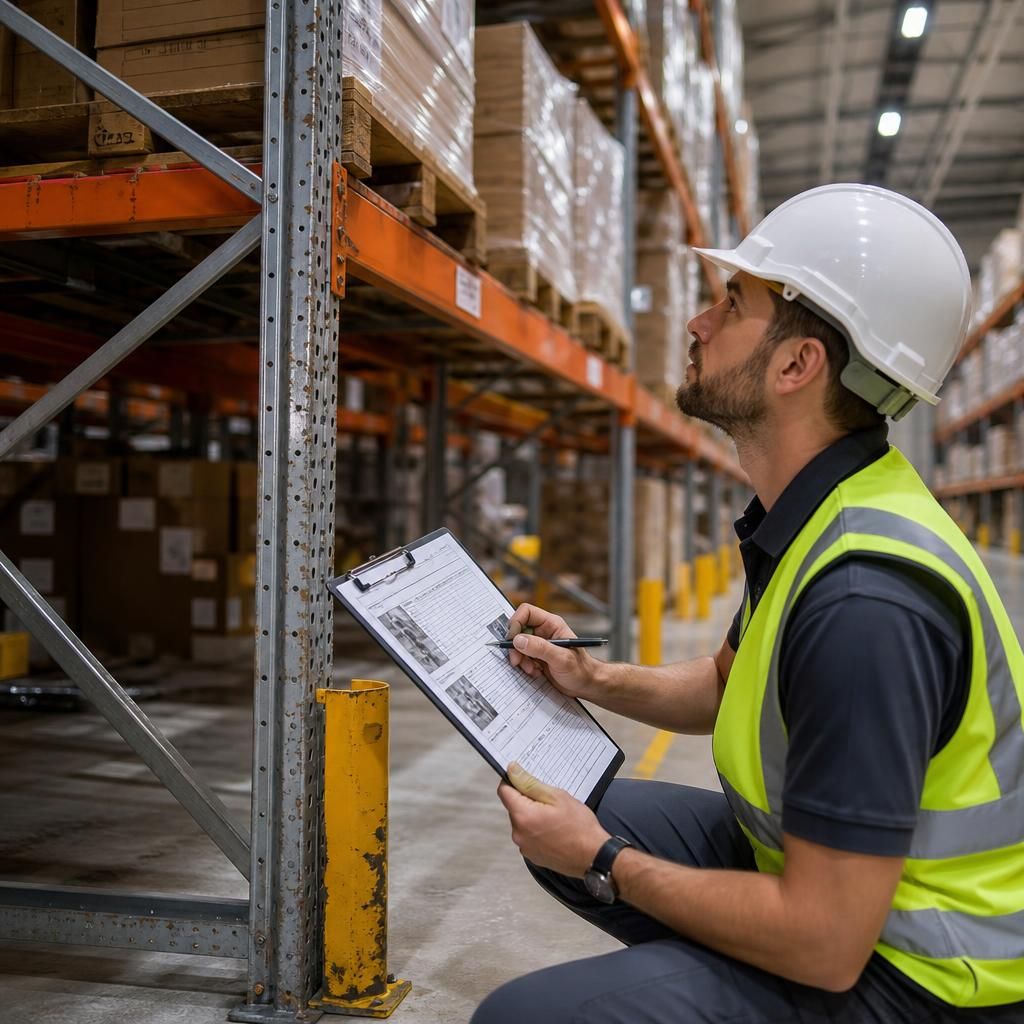
A SEMA racking inspection report should identify each finding precisely, so the warehouse team can locate the affected bay and take the correct action without delay.
Useful details include the aisle or rack reference, bay position, level, damaged component, risk classification and a supporting photograph. This is more effective than a general note such as “damage to frame”, particularly where several similar runs are installed. Clear descriptions also help repair contractors complete the work accurately and provide a reliable record when the area is checked again.
Discuss your SEMA racking inspection report with Able Racking
If you have questions about your SEMA racking inspection report or need help prioritising remedial work, discuss the findings with Able Racking. Our experienced team can clarify the recommendations and support the next steps for your warehouse racking.