
What are the long-term benefits of integrating regular SEMA Racking Inspections into your warehouse safety protocol?
Regular SEMA warehouse racking inspections provide long-term benefits by identifying damage, deterioration and unsafe conditions before they cause injury, product loss or operational disruption. They also support ongoing compliance, enable planned maintenance and help extend the serviceable life of your warehouse racking while controlling repair and replacement costs.
Regular SEMA warehouse racking inspections provide long-term control over safety, compliance and maintenance. They identify damage, deterioration, overloading, unsuitable alterations and other unsafe conditions before these issues develop into injuries, stock losses, structural failures or avoidable operational disruption. By creating a consistent inspection record, they also help you plan repairs, manage risk and extend the serviceable life of your warehouse racking.
A single inspection provides a condition assessment at a particular point in time. The greater long-term value comes from integrating inspections into an ongoing safety protocol. Comparing findings over time helps reveal recurring damage, gradual deterioration and changes in how the storage system is being used. This gives warehouse managers a more reliable basis for deciding what needs immediate attention and what should be monitored or included in planned maintenance.
Earlier identification of damage
Warehouse racking can be damaged by forklift impacts, contact with handling equipment, poorly positioned loads and changes to the working environment. Some defects are obvious, while others may involve distortion, loosened components, damaged protection or changes in alignment that are harder to identify during routine operations.
A competent SEMA inspection examines the condition and use of the system rather than relying only on a visual check from a distance. Findings can be categorised according to their severity, allowing unsafe areas to be isolated and corrective action to be prioritised. Addressing a damaged upright, beam, brace, connector or protection component at an early stage is generally more manageable than responding after the damage has spread or a collapse has occurred.
Improved protection for people, stock and equipment
Safe warehouse racking depends on the combined condition of the structure, the loads it carries and the way it is used. Regular inspections help confirm that the system remains suitable for its intended purpose, that load information is available and that visible damage or unauthorised changes are not being overlooked.
Corrective action following an inspection may include unloading an affected bay, installing an approved replacement component, improving impact protection, reinstating missing signage or reviewing loading practices. These measures reduce the likelihood of falling goods, unstable loads and progressive structural damage. They also support safer movement for employees, visiting drivers and contractors working around the storage system.
Stronger evidence of compliance and responsible management
Businesses must take reasonable steps to protect people who may be affected by workplace activities. Warehouse racking inspections support this duty by providing documented evidence that storage systems are being checked, defects are being assessed and remedial work is being managed.
Inspection reports should be retained with repair records, installation information, load details, risk assessments and relevant training records. This creates an auditable history of the condition of the warehouse racking and the actions taken in response to identified risks. An inspection is not a substitute for a risk assessment, manufacturer information, daily user checks or competent maintenance, but it is an important part of a properly managed safety system.
More predictable maintenance costs
Regular inspections allow repairs to be planned around operational requirements wherever the risk allows. Instead of relying on emergency responses, you can identify required components, arrange competent repair work and coordinate access to affected areas. This can make expenditure easier to forecast and reduce the likelihood of urgent work being required after serious damage has occurred.
Inspection findings can also help distinguish between isolated impact damage and wider issues, such as repeated vehicle contact, unsuitable load placement or inadequate protection. Correcting the underlying cause is important. Replacing a damaged component without addressing the activity that caused the damage may lead to repeated repairs and unnecessary cost.
Longer serviceable life for the storage system
Warehouse racking is a long-term business asset, but its condition depends on correct loading, suitable use, prompt repairs and protection from repeated impacts. Inspection programmes help prevent minor defects from being left in service and allow deterioration to be managed before it affects surrounding components.
Inspections do not make warehouse racking last indefinitely, and they cannot compensate for overloading, poor installation or unsuitable alterations. However, when findings are acted on promptly, they can help preserve the intended performance of the system and reduce premature replacement of sound components. Any repair or alteration should be completed using suitable, compatible parts and by appropriately competent operatives.
Fewer operational interruptions
Unexpected damage can lead to restricted access, stock relocation, temporary loss of storage capacity and delays while repairs are arranged. In more serious cases, an affected area may need to be taken out of use immediately. Regular inspections reduce the chance that significant defects remain unidentified until they cause an urgent problem.
Planned inspection and maintenance also support better coordination with warehouse operations. Areas can be made safe in advance, stock movements can be scheduled appropriately and repairs can be arranged with less disruption. This is particularly valuable where storage capacity, order fulfilment and vehicle movements are closely linked.
Better control of changing warehouse conditions
Storage systems often remain in use while stock profiles, handling equipment, traffic routes and working practices change. New loads or altered configurations may affect whether the original arrangement remains appropriate. A regular inspection provides an opportunity to identify changes that require technical review, updated signage, revised load information or additional controls.
Managers should also review the inspection frequency when there are changes to the building, storage layout, loading patterns, vehicle activity or incident history. The suitable interval depends on the level of risk and the conditions of use; it should not be selected solely for convenience.
How to obtain the full long-term benefit
- Use a suitably competent inspector familiar with SEMA inspection principles and warehouse racking systems.
- Keep inspection reports accessible and record the person responsible for reviewing and closing each action.
- Prioritise immediate controls where a defect presents a risk, including unloading or restricting access where necessary.
- Use approved repair methods and compatible components rather than improvised alterations.
- Investigate recurring damage and address its cause through protection, layout changes, operating controls or refresher training.
- Continue routine user checks and report new damage promptly; a periodic inspection does not replace day-to-day vigilance.
- Review the inspection programme after incidents, significant changes or repeated defects.
The long-term benefit is therefore not simply the inspection report itself. It is the controlled process that follows: identifying risk, making the area safe, completing suitable repairs, learning from recurring problems and maintaining clear records. Integrated in this way, SEMA warehouse racking inspections help keep storage systems safe, compliant, serviceable and less likely to create avoidable cost or disruption.
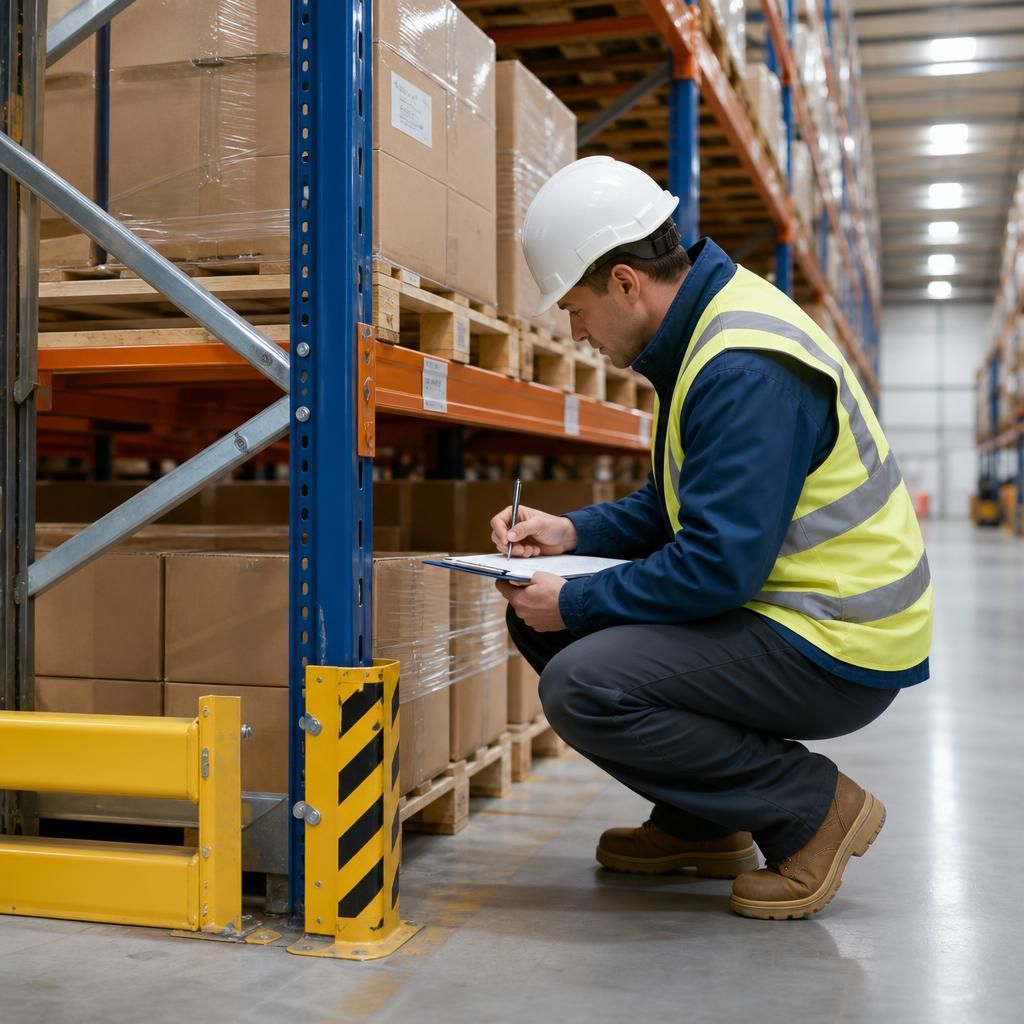
Regular SEMA warehouse racking inspections create a documented record of condition over time, helping you identify recurring damage and gradual deterioration before they develop into more serious safety or operational issues. Reviewing inspection findings alongside repair records makes it easier to distinguish isolated incidents from problems caused by vehicle movements, loading practices or unsuitable protection.
This information supports more effective preventative maintenance. Warehouse managers can prioritise urgent defects, plan suitable repairs around operations and address the underlying cause of repeated damage. Keeping reports, remedial actions and updated load information together also provides clear evidence that warehouse racking is being actively monitored and responsibly maintained.
Plan your next SEMA Racking Inspection
Plan your next SEMA warehouse racking inspection with Able Racking to identify emerging defects, maintain compliance and support reliable warehouse operations.