
What are the essential safety standards and regulations that SEMA Racking Inspections adhere to? SEMA Racking Inspections assess warehouse racking against SEMA guidance, relevant British and European standards, the manufacturer’s instructions and the requirements of the Health and Safety at Work etc. Act. Inspections identify damage, overloading, instability and other hazards so corrective action can be documented and completed promptly.
SEMA Racking Inspections assess warehouse racking against SEMA guidance, BS EN 15635 where applicable, manufacturer’s instructions and relevant UK health and safety legislation. Inspections identify damage, overloading, instability and other hazards so corrective actions can be documented, prioritised and completed promptly.
SEMA Racking Inspections assess warehouse racking against recognised SEMA guidance, applicable British and European standards, the manufacturer’s instructions and UK health and safety legislation. The purpose is to identify conditions that could affect structural stability or safe use, then ensure that risks are recorded, prioritised and addressed through suitable corrective action.
SEMA guidance is an important industry benchmark, but it does not replace the legal duties placed on employers, warehouse operators, equipment owners and other responsible parties. A competent inspection considers how the storage system is designed, installed, loaded, operated and maintained in its actual working environment.
The main standards and requirements considered include:
- SEMA guidance and codes of practice: These provide practical recommendations for the safe design, use, inspection and maintenance of storage equipment. They cover matters such as damage assessment, safe working loads, component condition, protection measures and the responsibilities of users.
- BS EN 15635: This standard sets out principles for the use and maintenance of steel static storage systems. It addresses responsibilities, inspection arrangements, damage classification, action following damage and the need for regular checks by a technically competent person.
- BS EN 15629: This standard concerns the specification of storage equipment. It supports the assessment of whether the installed system is suitable for its intended loads, layout, operating conditions and handling equipment.
- BS EN 15620: Where applicable, this standard covers tolerances, deformations and clearances for adjustable pallet storage systems. These factors can affect safe operation and the movement of handling equipment.
- The Health and Safety at Work etc. Act: This places general duties on employers and those controlling workplaces to protect employees and others who may be affected by their activities.
- The Provision and Use of Work Equipment Regulations: Warehouse racking is work equipment, so it must be suitable for its intended use, maintained in an efficient condition and inspected where deterioration could create a significant risk.
- The Management of Health and Safety at Work Regulations: These require suitable and sufficient risk assessments, appropriate arrangements for managing health and safety, and action where hazards are identified.
- HSE guidance for warehousing and storage: HSE publications, including guidance on warehouse operations and storage equipment, help translate legal duties into practical controls. HSE guidance is not legislation, but it is a relevant reference when establishing a reasonable inspection and maintenance regime.
What the inspection checks
A competent inspector examines the condition and use of the installation rather than relying solely on its original design. The assessment commonly includes frames, uprights, bracing, beams, connectors, baseplates, anchors, guards, pallets, load notices and visible fixings. The inspection also considers impact damage, corrosion, distortion, missing or displaced components, unsafe alterations, overloaded locations, poor housekeeping and obstructions affecting safe access.
Safe working load information is checked against the way the system is being used. Loads should be compatible with the stated configuration, beam levels and pallet arrangements. Changes to bay dimensions, beam positions, components or operating methods can affect capacity and may require a competent design review. An inspection should not be treated as approval for unverified modifications or loads that fall outside the manufacturer’s or designer’s specifications.
Operating conditions are also relevant. The inspector considers vehicle movements, pedestrian routes, loading practices, visibility, impact protection, floor condition and the competence of personnel using the equipment. Repeated impact or unsafe loading can create a risk even where there is no obvious major defect during a brief visual check.
How damage is managed
BS EN 15635 provides a recognised approach to classifying damage and deciding what action is required. Depending on the severity and location of the defect, the response may include monitoring, arranging a prompt repair, reducing the load, isolating a location or immediately unloading and preventing further use. The responsible person should follow the inspector’s instructions and the relevant site procedure rather than continuing to use an affected area until a convenient maintenance period.
Corrective work should use suitable replacement components and competent installers. Straightening, welding, drilling or improvised repairs may alter the performance of the system and should not be carried out without appropriate technical approval. Once work is completed, the affected area should be checked and formally released for use by a suitably competent person.
Inspection frequency and records
The inspection regime should reflect the level of risk, the intensity of use, the working environment, previous damage and any changes to the installation. Regular in-house visual checks should be carried out by trained personnel, with faults reported immediately. A formal inspection by a technically competent person should also be completed at appropriate intervals; BS EN 15635 identifies a period of no more than twelve months for this type of inspection, unless a risk assessment or other circumstances require more frequent assessment.
Records should show the inspection date, areas covered, findings, risk classification, responsible person, required action and completion status. Retaining the latest layout, load information, installation details, previous reports and repair evidence helps the inspector compare the installation with its intended configuration and allows recurring problems to be identified.
Responsibilities of the warehouse operator
Standards and inspections work effectively only when supported by day-to-day controls. The responsible business should ensure that:
- the installation is used within its stated configuration and safe working loads;
- load notices remain visible, accurate and relevant to the installed arrangement;
- employees and equipment operators receive suitable instruction and supervision;
- damage is reported promptly and affected locations are controlled;
- alterations are approved and carried out by competent people;
- repairs and follow-up inspections are documented; and
- the inspection programme is reviewed after incidents, layout changes, changes in use or repeated damage.
SEMA Racking Inspections therefore provide more than a visual condition report. They apply recognised technical guidance and legal principles to the way the warehouse racking is designed, loaded and operated. By combining competent examination, clear risk classification, reliable records and timely repairs, the inspection process supports compliance and helps keep storage operations safe and available for daily use.
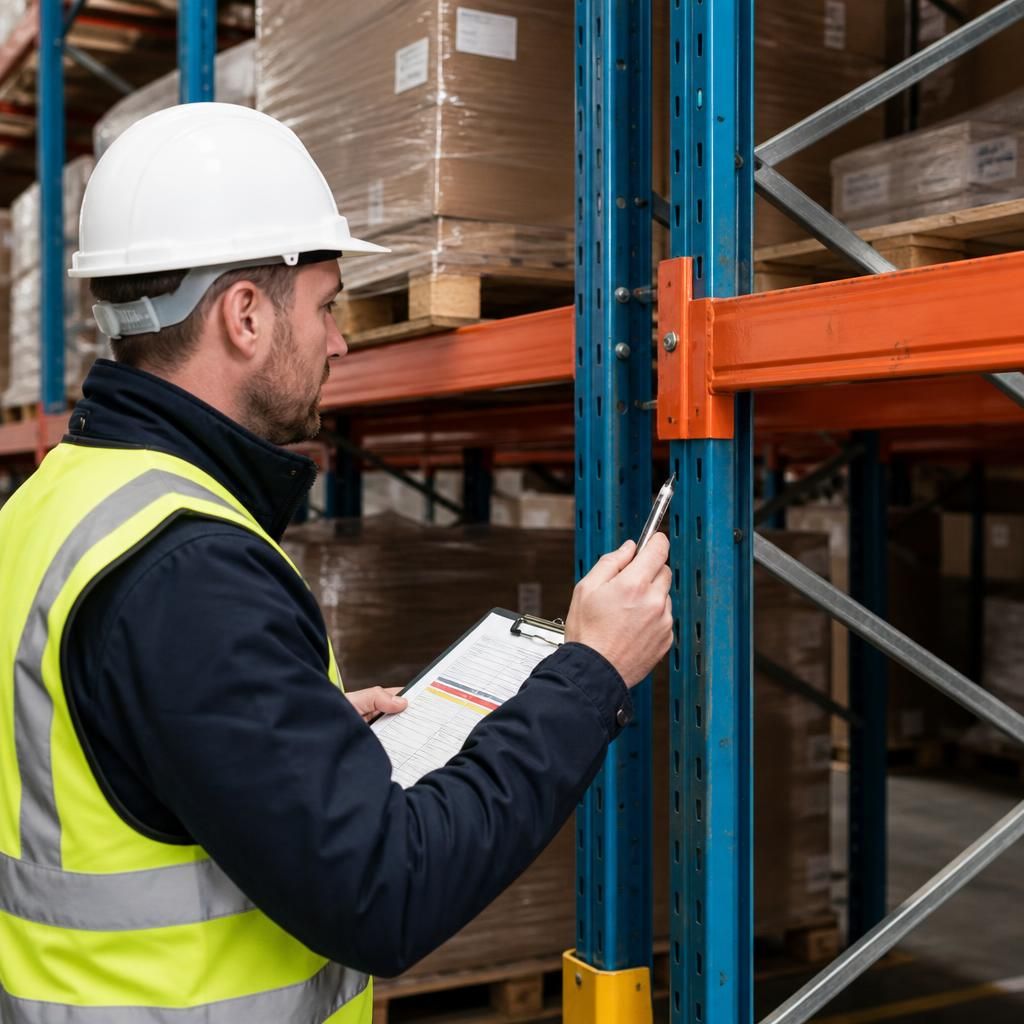
SEMA Racking Inspections compare warehouse racking with recognised SEMA guidance, applicable British and European standards, the manufacturer’s instructions and relevant UK health and safety duties. This provides a structured assessment of damage, loading, stability, protection measures and how the installation is being used.
SEMA guidance and BS EN 15635 support a practical inspection and maintenance process, but they do not transfer legal responsibility from the warehouse operator. The responsible business must still ensure that warehouse racking is suitable, used within its specified safe working loads, maintained properly and taken out of service when damage creates an unacceptable risk. Inspection findings should therefore be recorded, prioritised and followed through with competent repairs or other corrective action.
Arrange Your SEMA Racking Inspection
Contact Able Racking to arrange your SEMA Racking Inspection and assess whether your warehouse racking continues to meet applicable safety requirements. Our experienced inspectors can help identify corrective actions and support the safe, compliant operation of your installation.