
What distinguishes a SEMA Approved Inspector's assessment from other racking inspections? A SEMA Approved Inspector's assessment follows recognised SEMA guidance and is carried out by an independently approved specialist trained to identify damage, instability, misuse and compliance risks in warehouse racking. It provides a structured inspection, clear risk categorisation and documented recommendations, rather than a basic visual check.
A SEMA Approved Inspector’s assessment is a structured, independent evaluation of warehouse racking carried out against recognised SEMA guidance, rather than a basic visual check. It identifies damage, instability, misuse and compliance risks, then records findings by risk level with clear recommendations for corrective action.
A SEMA Approved Inspector’s assessment is a formal, structured evaluation of warehouse racking carried out by an independently approved specialist using recognised SEMA guidance and established safety principles. Unlike a basic visual inspection, it assesses the condition, use, protection and suitability of the warehouse racking system, categorises risks and produces a documented action plan.
The main differences are the inspector’s competence, the consistency of the inspection method and the quality of the resulting evidence. A routine check may identify obvious damage, such as a bent upright or missing component. A SEMA Approved Inspector looks beyond individual defects to consider how damage, loading, configuration, traffic movement and previous repairs affect the stability and safe use of the complete warehouse racking system.
Recognised inspection methodology
A SEMA assessment follows a defined process rather than relying on personal judgement alone. The inspector reviews the warehouse racking layout and observes how it is being used, including loading practices, aisle activity, forklift movements, working clearances and the condition of protective measures. Components are examined for damage, displacement, corrosion, missing parts, inadequate fixings and signs of overloading or unauthorised alteration.
The assessment also considers whether the warehouse racking remains consistent with available design information, load notices and operating requirements. Where information is missing or the installation has been altered, this is recorded as a risk because the system may no longer be demonstrably suitable for its intended use.
Specialist knowledge and independence
A SEMA Approved Inspector has been assessed and approved to carry out warehouse racking inspections to the relevant scheme requirements. This provides greater assurance that the inspector understands common warehouse racking designs, failure points, loading principles, component damage and the practical causes of unsafe conditions.
Independence is also important. The inspector should assess the installation objectively and report defects whether or not corrective work is subsequently undertaken by the same service provider. This helps separate the safety assessment from decisions about repairs, replacement or future improvements.
Risk-based findings
One of the clearest distinctions is the way findings are prioritised. A SEMA inspection does not simply list defects; it evaluates their likely significance and identifies the response required. Serious damage or instability may require the affected section to be unloaded, isolated or taken out of use immediately. Less urgent defects may require prompt repair, monitoring or inclusion in a planned maintenance programme.
This risk-based approach helps the responsible person focus on the conditions that could most affect people, stock and warehouse operations. It also avoids treating every observation as equally urgent, while ensuring that apparently minor issues are not ignored when they form part of a wider pattern of deterioration or misuse.
Detailed reporting and traceability
A proper SEMA Approved Inspector’s report should provide a clear record of what was inspected, where findings were located and what action is recommended. Depending on the installation and the inspection scope, it may include:
- Details of the areas and warehouse racking inspected.
- Identification of damaged or missing components.
- Observations about loading, protection, housekeeping and use.
- Risk classifications or priorities for corrective action.
- Photographs, location references or marked-up plans where useful.
- Recommendations for repair, replacement, isolation, monitoring or further technical review.
- Any limitations, inaccessible areas or information that was not available during the assessment.
This information makes it easier to assign responsibility, arrange suitable repairs and confirm that actions have been completed. It also creates a useful record for internal safety management, maintenance planning and future inspections.
More than a visual condition check
A standard visual check can be valuable between formal inspections, particularly when completed by trained staff as part of a daily or weekly safety routine. However, it is not a substitute for an assessment by a competent specialist. Internal checks may focus on obvious impact damage and housekeeping, whereas a SEMA Approved Inspector considers structural condition, system configuration, operational controls and the interaction between these factors.
The assessment is still a point-in-time inspection. It does not guarantee that warehouse racking will remain safe if it is subsequently damaged, overloaded, altered or poorly maintained. Staff should continue to report defects, remove unsafe areas from use where necessary and carry out routine checks in line with the site’s safety arrangements.
A SEMA Approved Inspector’s assessment also does not automatically confirm that every aspect of an installation complies with all legal, design or operational requirements. Where the original design information is unavailable, the use has changed or significant alterations are proposed, additional technical evaluation may be needed. The inspector should make these limitations clear rather than presenting the inspection as a design approval.
In practical terms, the value of a SEMA Approved assessment lies in its combination of specialist competence, recognised guidance, consistent risk evaluation and usable reporting. It gives the responsible person a clearer basis for deciding what must be made safe immediately, what should be repaired promptly and what should be managed through planned maintenance. Able Racking can use these findings to support informed corrective action and help maintain safe, efficient warehouse racking throughout its working life.
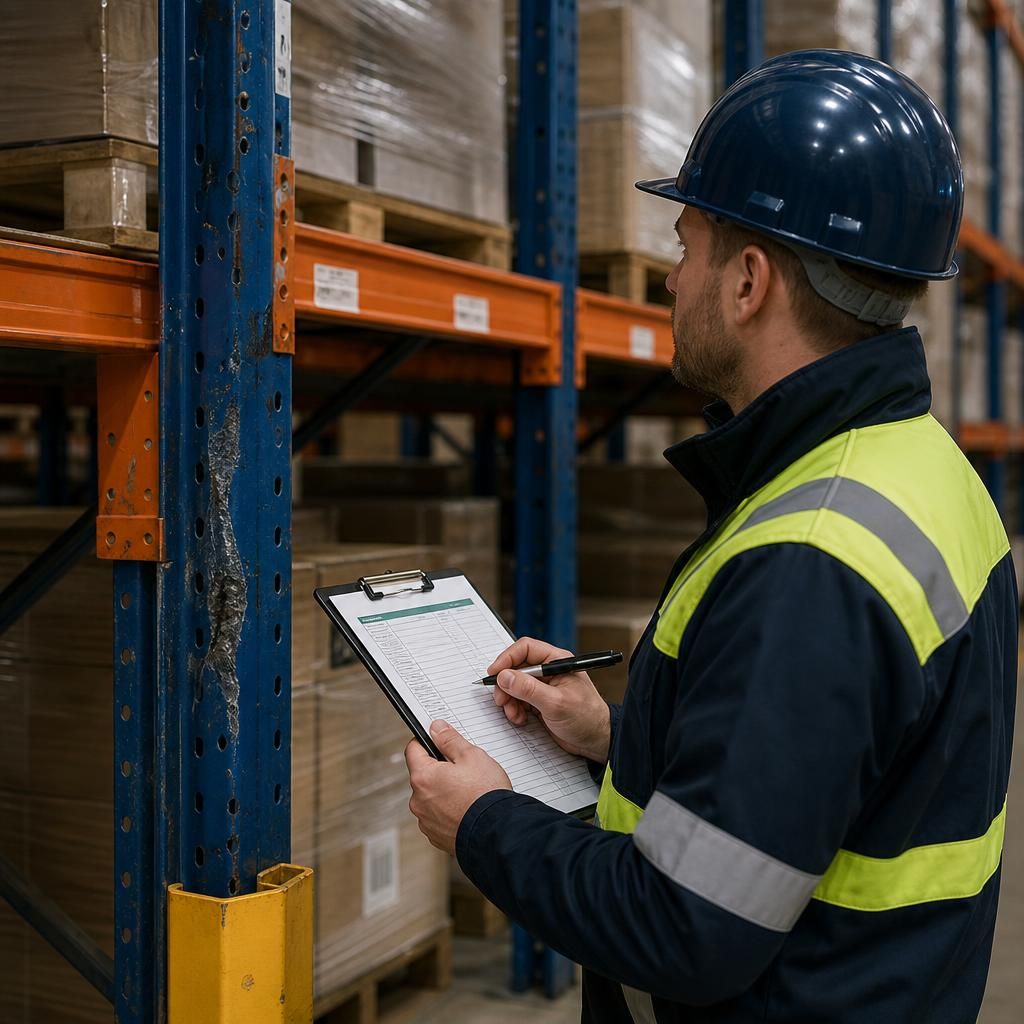
A SEMA Approved Inspector’s assessment differs from a routine warehouse racking check because it evaluates the significance of each finding, not just whether visible damage is present. The inspector considers structural condition, loading, configuration, forklift activity, protection and evidence of misuse together.
Findings are then recorded with clear priorities. Serious damage or instability may require an affected area to be unloaded or isolated immediately, while less urgent defects may be assigned for prompt repair, monitoring or planned maintenance. This risk-based reporting gives the responsible person a practical basis for deciding what action is needed and provides a traceable record for confirming that corrective work has been completed.
Arrange a SEMA Approved Inspector’s assessment
Arrange a SEMA Approved Inspector’s assessment of your warehouse racking to identify safety risks and prioritise corrective action. Contact Able Racking to discuss your inspection requirements and the next steps.