
How often should SEMA racking inspections be conducted?
SEMA racking inspections should be carried out at least every 12 months by a technically competent person, with documented visual checks undertaken more frequently—normally weekly or according to your risk assessment. Additional inspections are needed after impact, damage, alterations or other events that could affect the safety of the warehouse racking.
SEMA racking inspections should be conducted at least every 12 months by a technically competent person. This formal expert inspection should be supported by more frequent internal visual checks, normally carried out weekly or at intervals determined by your warehouse risk assessment. Further inspections are required whenever warehouse racking is damaged, altered, relocated or exposed to an event that could affect its stability or safe use.
Annual expert inspection
The annual inspection is a detailed examination of the warehouse racking system by a suitably competent inspector. It is intended to identify damage, defects and unsafe conditions that may not be recognised during routine checks. The inspection should cover the structure, frames, beams, connections, protection, floor fixings, load notices and any other components that could affect the system’s capacity or stability.
The inspector will assess whether identified defects require immediate action, remedial work within a specified period or continued monitoring. Findings should be recorded in a written report, with photographs or other supporting details where appropriate. The report should also make clear who is responsible for completing the required actions.
Routine visual checks
Routine checks should be completed by a person who understands the warehouse racking system and has been trained to recognise signs of damage or unsafe use. These checks are commonly carried out weekly, although the appropriate frequency depends on the risk assessment. A busier warehouse with frequent forklift movements, changing loads or a history of impacts may require checks more often.
Routine checks should look for issues such as:
- Damaged or bent uprights, beams, bracing or protection;
- Loose, missing or displaced components and connections;
- Signs that frames are out of alignment or no longer properly fixed to the floor;
- Overloaded, unevenly loaded or incorrectly positioned pallets;
- Missing, damaged or unclear load notices;
- Obstructions, poor housekeeping or unsafe access around the warehouse racking; and
- Any change that could affect the safe operation of the storage system.
All checks should be documented, including the date, areas examined, defects found and actions taken. Records provide evidence that the inspection process is being managed and help identify recurring problems, such as repeated vehicle impacts or unsuitable loading practices.
When additional inspections are needed
Do not wait for the next scheduled inspection if warehouse racking has been struck by a forklift or other equipment. The affected area should be isolated or taken out of use until it has been assessed by a competent person. An additional inspection is also appropriate after structural alterations, changes to the load configuration, relocation, significant overloading, fire, flooding or another unusual event.
Any damage classified as requiring immediate action should be dealt with promptly. Where damage is serious, removing the affected loads and preventing access may be necessary until suitable repairs or replacement work has been completed. Damaged components should not be straightened or modified on site unless the repair method has been properly assessed and approved.
What the regulations require
Workplace safety requirements place a duty on employers to maintain storage equipment in a safe condition and to manage foreseeable risks. HSE guidance, including HSG76, supports regular systematic inspections and action where defects are identified. SEMA guidance provides recognised good practice for the inspection of warehouse racking, including the use of a technically competent person for the periodic expert inspection.
The annual interval is a maximum, not a target that suits every warehouse. Your inspection schedule should reflect the design and condition of the system, the type and frequency of handling activity, the competence of operators, the working environment and the consequences of failure. A risk assessment may therefore justify more frequent expert inspections.
To maintain compliance, keep the latest inspection report, routine check records, repair evidence, training records and details of any changes to the warehouse racking system. Reviewing these records helps ensure that recommendations are closed out rather than carried forward unnoticed.
A properly planned inspection programme combines regular internal checks with an annual expert inspection and immediate assessment after damage or change. This approach helps identify problems early, supports safe warehouse operations and protects the ongoing performance of the warehouse racking system.
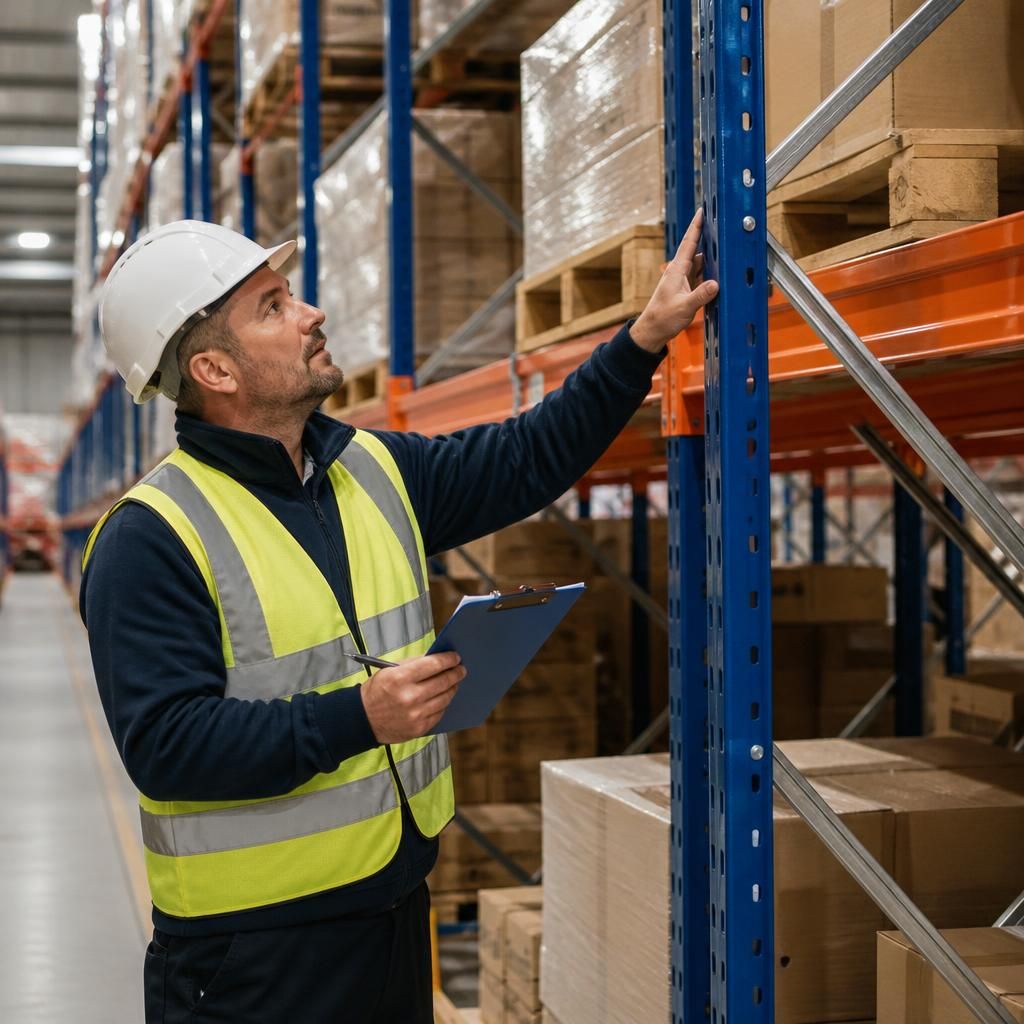
The annual SEMA racking inspection is a maximum interval, not a standard that suits every warehouse. Your inspection frequency should reflect the condition and design of the warehouse racking, the level of forklift activity, the loads stored and the findings of your risk assessment.
Arrange an additional inspection whenever warehouse racking is struck, altered, relocated or exposed to an event such as overloading, fire or flooding. The affected area should be isolated until a technically competent person has assessed it. Regular internal visual checks should continue between formal inspections, with all defects and corrective actions recorded.
Book your SEMA racking inspection
Contact Able Racking to book your SEMA racking inspection and receive practical advice on maintaining safe, compliant warehouse racking.