
What tools are used during warehouse racking safety inspections?
Warehouse racking safety inspections use tools such as spirit levels, measuring equipment, plumb gauges, cameras and inspection checklists to identify damage, movement, misalignment and other hazards. Inspectors combine these tools with visual checks and their practical experience to assess whether the warehouse racking remains safe, stable and suitable for use.
Warehouse racking safety inspections use a combination of visual inspection tools, measuring equipment, recording systems and reference documents. Common examples include torches, spirit levels, plumb gauges, tape measures, cameras, inspection checklists and mobile reporting devices. These tools help an inspector identify impact damage, distortion, movement, misalignment, corrosion, missing components and other conditions that could affect the safe use of the warehouse racking.
Tools support the inspection, but they do not replace the inspector’s judgement. An experienced inspector compares the condition of the warehouse racking with its design, load information, installation requirements and applicable safety guidance. They also consider how the equipment is being used, including vehicle movements, loading practices and any changes made since installation.
Visual inspection equipment
- High-intensity torch: Helps illuminate poorly lit areas, beam connections, rear faces of frames, baseplates and areas beneath loads. Good lighting is important when checking for cracks, bent components, corrosion, loose fixings and damaged safety devices.
- Inspection mirror: Allows the inspector to view concealed or difficult-to-reach areas without disturbing stored goods or entering an unsafe position.
- Camera or camera-enabled tablet: Provides a dated visual record of defects, impact points, missing components and areas requiring attention. Photographs can support the inspection report and help maintenance teams locate the affected warehouse racking.
- Binoculars or an extended viewing aid: May be used to examine elevated components from ground level where access would introduce unnecessary risk. This does not remove the need for closer examination where the condition cannot be confirmed safely from below.
Tools for checking alignment and condition
- Spirit level: Used to check whether suitable components are level or whether a visible lean may be present. It is most useful when combined with other measurements and the original installation tolerances.
- Plumb line, plumb gauge or laser alignment tool: Helps assess whether upright frames remain vertical and whether impact or settlement has caused movement. Laser equipment can make alignment checks more consistent, although the readings must be interpreted in relation to the floor and the warehouse racking design.
- Tape measure, rule and depth gauge: Used to record clearances, component dimensions, frame positions, aisle space and the extent of visible damage. Measurements help distinguish minor cosmetic marks from distortion that may require further assessment.
- Gap and thickness gauges: Can assist with checking certain clearances, gaps or material thicknesses where a precise comparison is needed. They are used selectively because the significance of a measurement depends on the component, design and manufacturer’s information.
- Digital level or measuring device: May provide a more precise record of gradients, frame position or floor conditions. Readings should be repeatable and recorded with the location and component concerned.
Tools for checking components and fixings
- Hand tools for confirmation: An inspector may use suitable hand tools to confirm whether accessible bolts, clips or restraints are present and secure. Any adjustment or repair should follow the manufacturer’s instructions and the site’s control procedures rather than being carried out as an informal part of the inspection.
- Torque wrench: Where the design specifies a torque value, a calibrated torque wrench may be relevant during installation, maintenance or remedial work. It is not a substitute for checking whether a bolt, connection or component has already been damaged.
- Non-destructive testing equipment: Specialist equipment may be required where there is concern about concealed cracking, material condition or weld integrity. This is normally arranged when the initial inspection identifies a matter that cannot be resolved through visual checks and basic measurement.
- Floor and baseplate inspection tools: A straight edge, level or measurement device can help identify uneven floors, settlement, damaged baseplates or anchor problems that may affect frame stability.
Recording and assessment tools
- Inspection checklist: Provides a consistent structure for examining frames, beams, connectors, guards, anchors, bracing, baseplates, load notices, clearances and surrounding working areas. A checklist should guide the inspection without encouraging a superficial tick-box approach.
- Site layout drawings and installation information: Drawings, load notices and manufacturer’s details help the inspector compare the installed warehouse racking with its intended configuration. They can reveal unauthorised alterations, missing components or loads that exceed the stated design.
- Mobile inspection software or tablet: Digital systems can link photographs, measurements, defect locations, risk classifications and recommended actions to a specific warehouse racking bay or area. They also make it easier to track whether reported defects have been isolated, repaired and closed.
- Previous inspection and repair records: Earlier reports help identify repeated impact, progressive distortion or defects that have not been adequately resolved. They provide important context when assessing whether a condition is new, stable or worsening.
Safety equipment used by the inspector
Personal protective equipment is not a measuring tool, but it is essential during a safe inspection. Depending on the workplace risk assessment, this may include a safety helmet, hi-vis clothing, safety footwear, gloves and eye protection. Where work at height or access to elevated areas is unavoidable, suitable access equipment and fall protection must be selected and used under the site’s procedures. Inspectors should not climb on warehouse racking, beams or stored goods to obtain a closer view.
Traffic-management controls are equally important. Barriers, exclusion zones, warning signs and communication with warehouse staff may be needed where inspections take place near forklift trucks or other moving equipment. The safest tool is often a controlled inspection method that prevents people and vehicles from entering the inspection area at the same time.
Measurements and photographs should be linked to clear defect descriptions. A useful record identifies the location, component, observed condition, likely significance and recommended action. Where damage could affect stability or safe loading, the affected area may need to be taken out of use until a competent person has assessed it and suitable repairs have been completed.
No single tool can confirm that warehouse racking is safe. A spirit level may identify a lean, for example, but it cannot determine its cause or whether the structure remains within its permitted tolerance. Similarly, a photograph records damage but does not by itself establish the required repair. The inspector must combine tool readings with knowledge of the system, the manufacturer’s requirements, the site’s risk controls and relevant workplace safety guidance.
Following the inspection, the findings should be explained clearly to the responsible person. Immediate hazards require prompt control, while lower-risk defects should still be recorded, assigned to an appropriate person and monitored through to completion. Keeping accurate reports, photographs and repair evidence creates a reliable history of the warehouse racking and supports continued compliance and preventative maintenance.
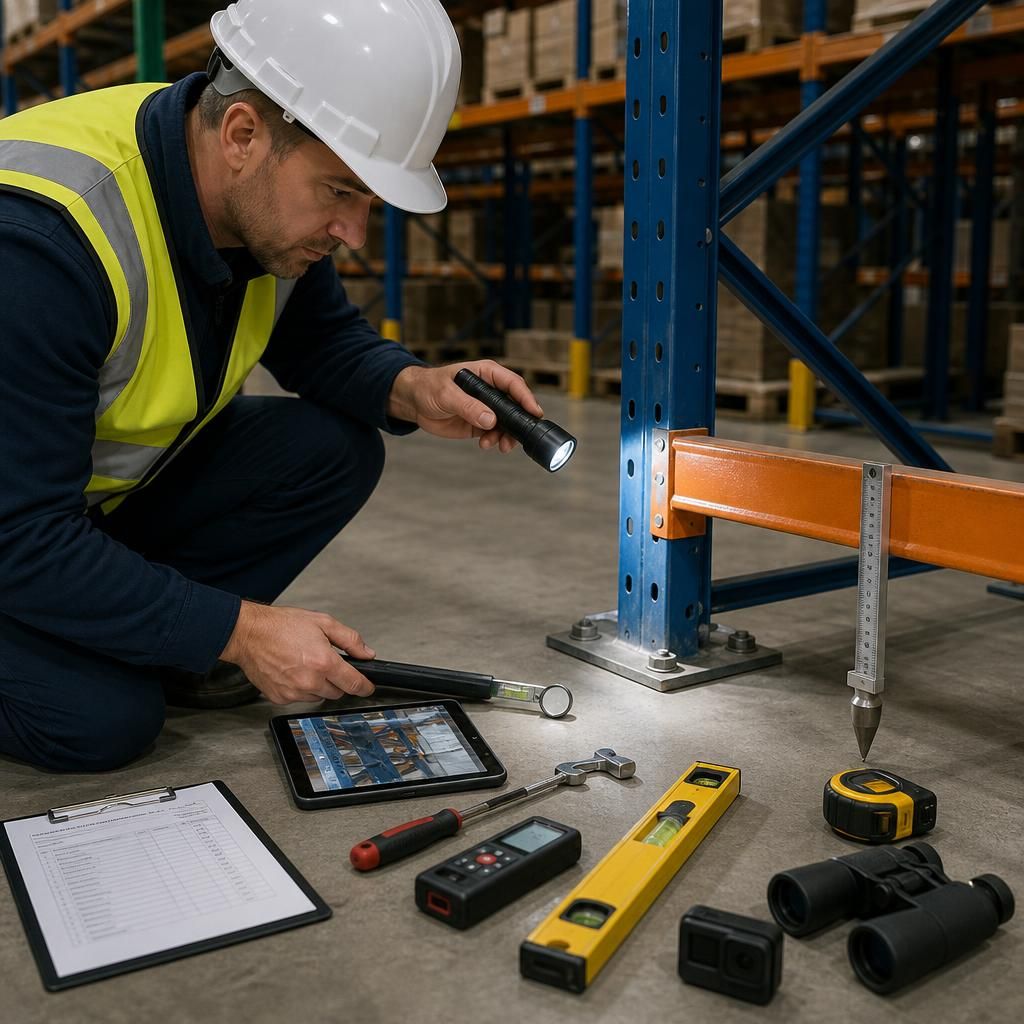
Photographs and digital inspection records are essential tools during a warehouse racking safety inspection because they provide clear evidence of the condition found at the time. An inspector can photograph impact damage, distorted uprights, missing components, corrosion or unsafe loading conditions and link each image to the correct bay or location.
A useful record combines photographs with measurements, defect descriptions, risk classifications and recommended actions. This helps the responsible person identify the affected warehouse racking, arrange suitable repairs and confirm that corrective work has been completed. Previous reports can also be reviewed to identify repeated impacts or defects that are worsening.
Arrange a warehouse racking safety inspection
Arrange a professional warehouse racking safety inspection with Able Racking to identify defects, assess risks and support continued compliance. Contact our experienced inspection team to discuss your requirements and plan a suitable visit.