
What qualifications should a racking safety inspector have to ensure a thorough evaluation?
A racking safety inspector should be demonstrably competent through relevant training, practical experience and a sound understanding of warehouse racking systems, manufacturer guidance, HSE expectations and BS EN 15635. They should be able to identify damage, instability, overloading and unsafe modifications, assess the associated risks, and provide clear, prioritised findings with appropriate corrective actions.
A racking safety inspector should be demonstrably competent through relevant training, practical experience and a detailed understanding of warehouse racking systems. They should be able to assess damage, instability, overloading, unsafe alterations and site-specific risks, then provide clear findings that are prioritised according to the seriousness of each issue.
There is no single statutory qualification that automatically makes someone suitable to inspect warehouse racking. Competence depends on a combination of technical knowledge, practical experience, appropriate inspection training and the ability to apply recognised guidance consistently. A competent inspector should understand the requirements of BS EN 15635, relevant HSE guidance, manufacturer instructions and the principles of risk assessment.
Relevant technical training
The inspector should have completed recognised training covering warehouse racking design, safe use, damage assessment and inspection procedures. This should include an understanding of:
- Common warehouse racking configurations and their structural components
- Load notices, safe working loads and the effects of overloading
- Uprights, beams, bracing, anchors, safety accessories and protection systems
- Typical damage caused by forklifts, pallet movement, impact and poor handling
- Unauthorised alterations, missing components and incompatible repairs
- How floor conditions, building movement and changes to storage operations can affect stability
Training should not be limited to recognising obvious impact damage. A thorough inspector must also identify less visible conditions, such as distorted components, loose or missing fixings, inadequate beam engagement, displaced loads and signs that the installation no longer matches its intended design.
Practical inspection experience
Classroom training needs to be supported by practical experience in warehouses. An experienced inspector will have assessed different systems, layouts, operating environments and damage patterns. This helps them distinguish between cosmetic defects, repairable damage and conditions requiring immediate action.
Practical competence also involves working safely around vehicles, pedestrians, stored goods and live warehouse operations. The inspector should be able to carry out a systematic inspection without creating additional risk, while accessing relevant areas and communicating effectively with the people responsible for the site.
Understanding of BS EN 15635 and HSE expectations
A suitable inspector should know how BS EN 15635 applies to the use and maintenance of warehouse racking. They should understand the responsibilities of the person in charge, the need for reporting and responding to damage, and the importance of documented inspections and corrective actions.
They should also be familiar with HSE expectations for safe storage and workplace risk control. This includes assessing how racking is used in practice rather than checking the structure in isolation. For example, the inspection should consider vehicle movements, loading methods, pallet condition, housekeeping, changes in stock and whether warehouse staff are following safe operating procedures.
Ability to assess risk and prioritise actions
Qualifications are only useful when the inspector can interpret findings accurately. A competent inspector should classify defects according to their potential effect on safety and state what action is required. Reports should make clear:
- Where the defect is located
- What component or condition has been affected
- Why the issue presents a risk
- Whether the area needs to be unloaded, isolated or taken out of use
- What repair, replacement or further assessment is appropriate
- Whether the issue should be monitored and when it should be reviewed
Findings should be supported by clear descriptions and photographs where helpful. Vague comments such as “damage noted” are not sufficient if they do not allow the responsible person to locate the problem and take appropriate action.
Knowledge of manufacturers’ requirements
The inspector should understand that safe limits and repair methods can vary between systems. Manufacturer information, original design details and load data may therefore be needed when assessing a defect or proposed modification. An inspector should not recommend an improvised repair or assume that components from different systems can be combined safely.
Where information is unavailable, the inspector should identify the limitation and recommend a suitable engineering or manufacturer assessment. This is an important indication of competence: a responsible inspector recognises when an issue falls outside the scope of a routine visual inspection.
Independence, objectivity and reporting skills
The inspector should provide an impartial assessment based on observed conditions and available evidence. They should not minimise a defect because resolving it may be inconvenient, and they should not recommend unnecessary work without explaining the technical reason.
A professional report should be accurate, dated and easy for the site team to use. It should identify the inspection scope, areas not accessed, defects found, risk priorities and recommended next steps. The inspector should also be able to discuss the findings with the person responsible for warehouse safety and answer reasonable technical questions.
Evidence to request before appointing an inspector
Before arranging an inspection, ask for evidence of relevant training, practical experience and insurance. It is also reasonable to confirm that the inspector understands BS EN 15635 and current HSE guidance, uses a consistent reporting process and can provide examples of suitably detailed inspection reports with confidential information removed.
Training certificates alone are not enough. Check who will attend the site, what inspection method will be used, whether the service covers the full warehouse racking installation and how urgent defects will be communicated. The inspector should explain what the inspection can and cannot establish, particularly where design records, load information or concealed fixings are unavailable.
In practice, the strongest qualification profile combines recognised technical training, substantial hands-on inspection experience, current knowledge of warehouse safety requirements and disciplined reporting. That combination gives the responsible person reliable information on which to base repairs, restrictions, maintenance and future inspections.
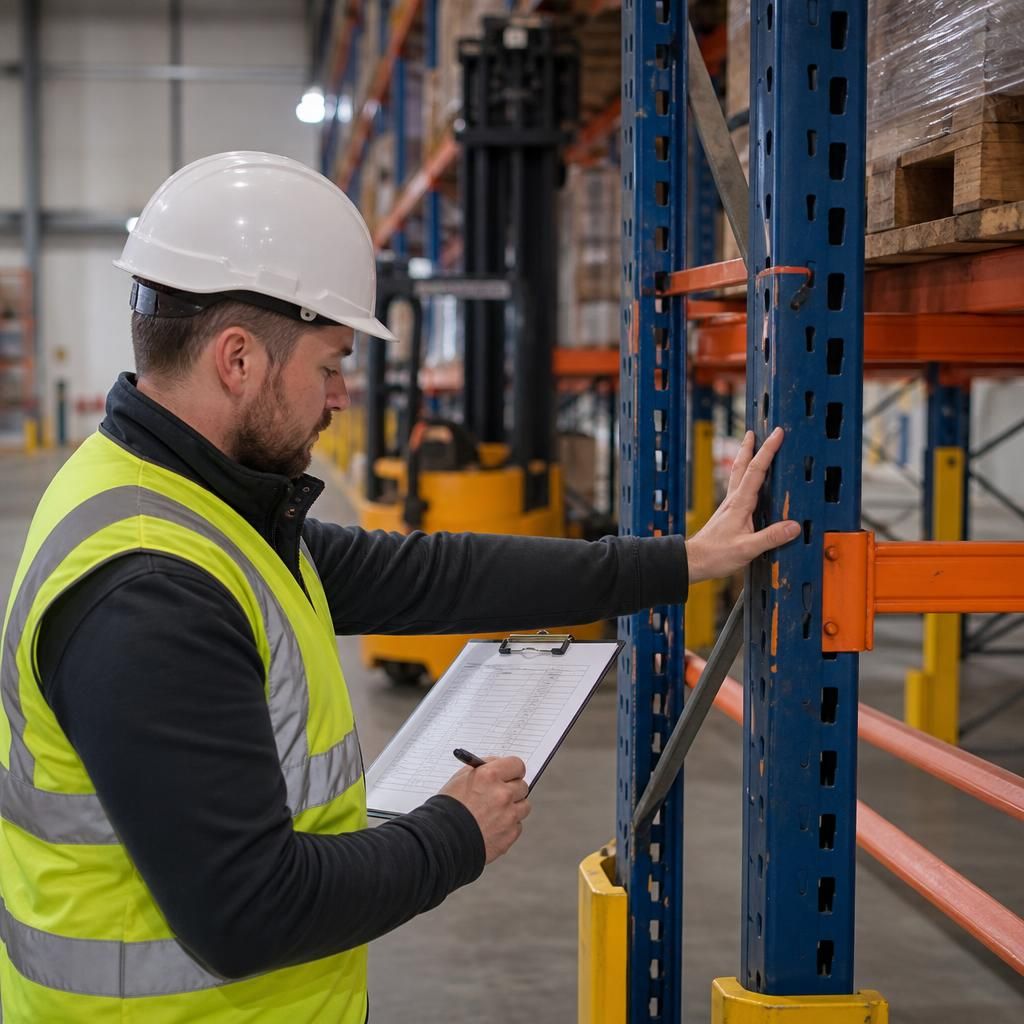
A qualified warehouse racking safety inspector combines recognised technical training with practical experience of inspecting storage systems in active warehouse environments. They should understand BS EN 15635, relevant HSE expectations, manufacturer guidance, load information and the risks associated with impact damage, overloading, missing components and unauthorised alterations.
Training certificates should be supported by evidence of competent inspection work and clear reporting. A suitable inspector will record the location and severity of each defect, explain the associated risk and identify whether the area requires unloading, isolation, repair or further technical assessment. They should also state any areas that could not be accessed and recognise when specialist manufacturer or engineering advice is needed.
Book a Qualified Warehouse Racking Safety Inspection
Arrange a qualified warehouse racking safety inspection with Able Racking to assess defects, risks and compliance across your storage system. Contact our experienced team to discuss your inspection requirements and next steps.