
What are the critical components evaluated during a warehouse racking safety inspection?
A warehouse racking safety inspection evaluates the condition, stability and compliance of key components including frames, uprights, beams, bracing, connectors, baseplates, guards and load notices. The inspection also considers damage, overloading, installation quality, aisle clearances and any changes that could affect the safe performance of the warehouse racking system.
A warehouse racking safety inspection evaluates the condition, stability, configuration and use of every accessible part of the warehouse racking system. The inspector looks for damage, deterioration, overloading, incorrect installation, missing components and changes to the surrounding working area that could affect safe performance.
The inspection normally includes the following critical components:
- Frames and uprights: Uprights are checked for dents, bends, twists, corrosion, splits, impact damage and other deformation. Damage near the base of an upright is particularly important because it can affect the load-bearing capacity and stability of the complete frame.
- Beams: Horizontal beams are examined for bending, twisting, impact marks, damaged end connectors and signs that they have become displaced. The inspector also checks that beams are properly seated, secured and positioned at the intended levels.
- Bracing: Horizontal and diagonal bracing helps maintain the geometry and strength of a frame. Missing, loose, bent or damaged bracing can reduce stability and requires prompt assessment.
- Beam-to-frame connectors: Connectors, locking pins and retaining devices are inspected to confirm that beams are securely attached to the frames. Missing or incorrectly fitted locking devices can allow a beam to lift or become displaced during normal operation.
- Baseplates and floor fixings: Baseplates are checked for damage, movement and correct contact with the floor. Anchors and other fixings are examined for looseness, failure or signs that the floor or fixing arrangement is no longer providing adequate support.
- Guards and protection: Upright guards, end-of-aisle protection and other protective measures are assessed for damage, secure attachment and suitable positioning. Protection should cover areas exposed to vehicle impact without obstructing access, visibility or safe handling.
- Decking and support components: Timber, steel or other decking is checked for cracks, breaks, displacement, overloading and inadequate support. Supporting components must be correctly installed and capable of carrying the intended loads.
- Load notices and identification: Load notices should be present, legible and consistent with the installed configuration. The inspection considers whether stated capacities are clear and whether the information reflects beam levels, bay arrangements and any approved changes.
- Aisles, clearances and access: Aisle widths, working clearances and access routes are reviewed against the operating requirements of the warehouse. Obstructions, inadequate clearance, damaged floors or changes to traffic routes may increase the risk of collision or unsafe handling.
The inspector also assesses the system as a whole rather than viewing each component in isolation. This includes checking whether the warehouse racking is plumb and aligned, whether bays remain square, whether loads are evenly distributed and whether the current configuration matches the original design or approved layout. Changes such as altered beam positions, additional levels, removed bracing or different load types can affect capacity and stability even where individual components appear undamaged.
Evidence of impact is a key part of the assessment. Forklift and handling equipment contact can cause visible damage to uprights, beams, guards, bracing and fixings, but some damage may be difficult to identify without a careful close inspection. The inspector records the location and severity of defects, considers their likely effect on structural performance and recommends suitable action. Depending on the finding, this may include monitoring, unloading the affected area, restricting access or arranging an urgent repair by a competent specialist.
Environmental and operational conditions are considered as well. Corrosive substances, moisture, poor housekeeping, uneven floors, inadequate lighting and recurring vehicle movements can all contribute to deterioration or further impact. The inspector may also review whether loads are being placed within the intended positions and whether operators are using the system in a way that matches its design and the information displayed on site.
A useful inspection report should identify each affected location, describe the defect clearly, record its priority and set out the required corrective action. Photographs, bay references and an updated layout can make repairs easier to plan and help responsible staff verify that issues have been resolved. Records should be retained alongside installation information, load data, previous inspection reports and repair documentation.
A warehouse racking safety inspection is therefore more than a visual check for obvious damage. It combines examination of structural components, fixings, protection, load information, clearances, operating conditions and supporting records. Addressing findings promptly helps maintain the intended capacity and stability of the system, supports compliance with applicable workplace safety duties and reduces the likelihood of preventable disruption or failure.
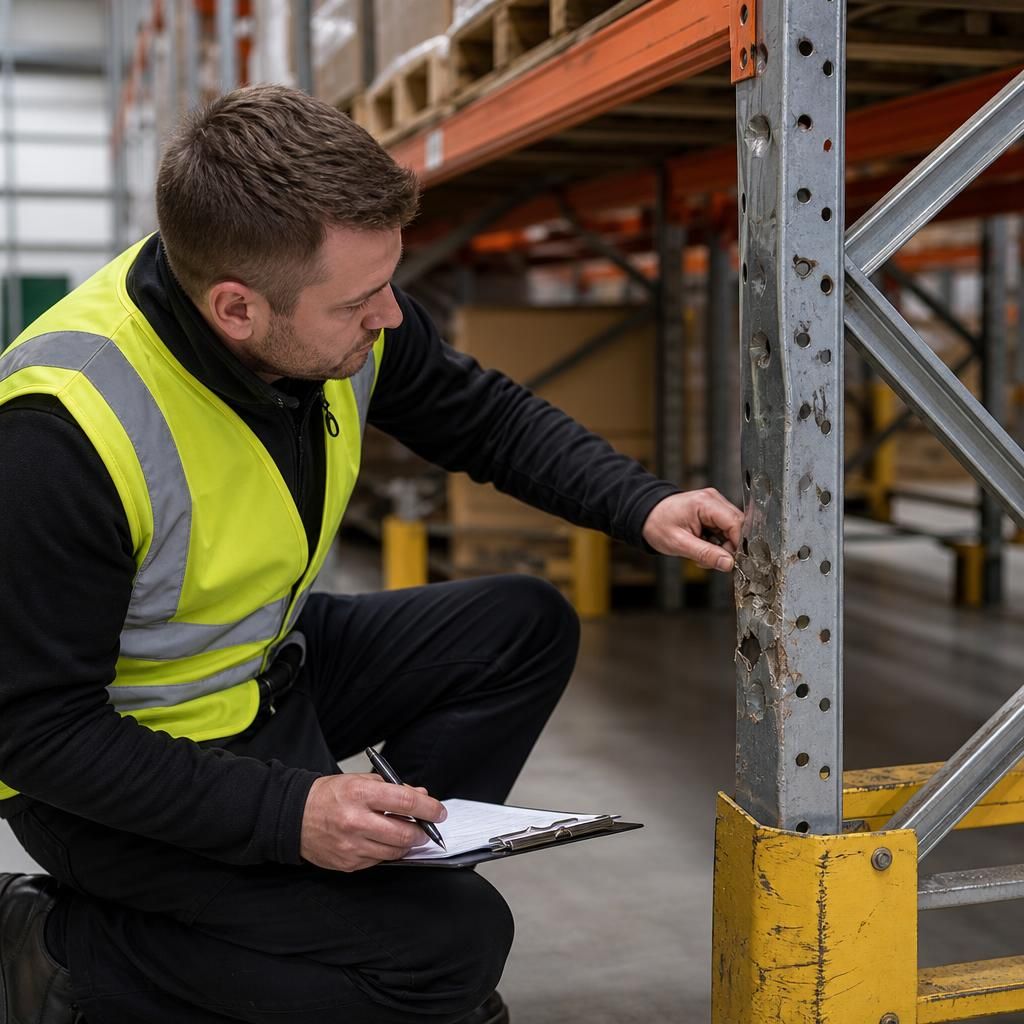
Impact damage is a critical point evaluated during a warehouse racking safety inspection because contact from handling equipment can weaken uprights, beams, bracing, guards and fixings. Even damage that appears minor may affect the stability or load-bearing performance of the affected bay.
The inspector records the location and severity of each defect, considers its likely effect on the warehouse racking system and recommends appropriate action. This may include monitoring, unloading the affected area, restricting access or arranging a prompt repair. Clear bay references and photographs help responsible staff identify the defect and confirm that corrective work has been completed.
Arrange your warehouse racking safety inspection
Arrange your warehouse racking safety inspection with Able Racking to identify defects, confirm safe operation and support ongoing compliance. Contact our experienced team to discuss your inspection requirements.