
What specific factors are assessed during an HSE warehouse racking inspection?
An HSE warehouse racking inspection assesses the condition, stability and safe use of the system, including damage to frames and beams, loading, anchorage, protection, configuration, signage and surrounding workplace conditions. It also checks whether inspection records, risk controls and maintenance arrangements support continued compliance and safe operation.
An HSE warehouse racking inspection assesses whether the storage system is structurally sound, correctly configured, properly loaded and safely operated. The inspection considers the condition of frames, beams, connections, protection, anchors, pallets, load information and the surrounding workplace, alongside the records and procedures used to control ongoing risk.
A competent inspector will normally compare the installation with available layout drawings, design information, manufacturer guidance, load notices and relevant workplace safety requirements. Where appropriate, the inspection approach will also reflect recognised guidance such as HSE warehousing guidance and BS EN 15635.
Structural condition and visible damage
- Upright frames are checked for bends, dents, twists, buckling, corrosion and damage to the base of the structure.
- Beams are examined for deflection, impact damage, distortion, damaged welds and signs that connectors have become displaced.
- Bracing, tie bars, safety pins, locking devices and other structural components are checked for looseness, missing parts or incorrect installation.
- Baseplates, floor fixings and anchors are assessed for damage, movement, looseness and signs that the floor or fixing arrangement may no longer provide adequate support.
- Repairs, alterations or replacement components are reviewed to establish whether they appear suitable and correctly fitted.
Minor-looking damage can affect the load-bearing capacity of a frame or beam. The inspector therefore considers the location, severity and likely cause of each defect rather than relying only on whether the installation appears generally tidy.
Stability, anchorage and installation
The inspection considers whether the system remains stable in its operating environment. This includes checking that uprights are adequately anchored, rows are correctly aligned, bracing is present and connections are secure. The inspector may also look for settlement, uneven flooring, movement caused by vehicle impact or changes to the building that could affect stability.
Clearances around the installation are also relevant. Restricted aisles, contact with building elements, obstructed access routes or insufficient space for handling equipment can increase the likelihood of impact and unsafe loading.
Configuration and conformity with the intended design
Changes to beam levels, bay widths, frame heights, components or aisle arrangements can alter the system’s capacity and behaviour. An inspection therefore checks whether the installed configuration matches the available design information and whether unauthorised alterations have been made.
Particular attention is given to:
- Changes in beam positions or storage levels.
- Removed or relocated beams, bracing or protective components.
- Mixed components that may not have been designed to work together.
- Additional bays, extensions or changes in layout.
- Evidence that the system has been modified without suitable technical assessment.
Where the available information is incomplete, the inspection can identify the need for further technical review. A visual inspection should not be presented as a substitute for structural calculations where the capacity or suitability of a configuration cannot be confirmed.
Load capacity, load distribution and notices
The inspector checks whether stored goods and loading arrangements appear consistent with the stated capacity of the system. This includes considering pallet weights, load dimensions, the number of pallets per level, beam spacing and how loads are distributed across each bay.
Load notices should be present, legible and positioned where operatives can readily see them. They should provide information that enables safe loading, including the relevant capacity limits and any conditions affecting use. If the actual configuration or loading practice does not match the information on the notice, the discrepancy is recorded for corrective action.
Inspectors also look for overhanging loads, unevenly positioned pallets, concentrated loads, damaged pallets and goods that could fall through or protrude into an aisle. These issues can create risks even when the steelwork itself appears undamaged.
Pallets, accessories and protective measures
The condition and suitability of pallets are assessed because a defective pallet can fail or become unstable while stored. The inspection may identify broken boards, missing supports, excessive deflection, unsuitable pallet types or loads that are not adequately secured.
Protective measures are reviewed in areas exposed to handling equipment or other foreseeable impact. This can include upright guards, end-of-aisle protection, barriers, back protection and protection around vulnerable structural members. The inspector checks whether protection is correctly positioned, securely fixed and suitable for the risks present, while also considering whether it obstructs access or creates new hazards.
Workplace conditions and operating practices
A warehouse racking inspection is not limited to the steelwork. The surrounding conditions and the way the installation is used can directly affect safety. The inspection may consider:
- Vehicle routes, pedestrian routes and segregation arrangements.
- Evidence of forklift or other handling-equipment impacts.
- Housekeeping, obstructions and access to emergency routes.
- Lighting and visibility around loading and unloading areas.
- Storage of loose, unstable, hazardous or incompatible goods.
- Unsafe climbing, overreaching, overloading or loading from unsuitable positions.
- Whether damaged areas have been isolated and reported promptly.
These observations help establish whether the system is being used as intended and whether operational controls are reducing the likelihood of further damage.
Signs, records and management controls
The inspector reviews the arrangements supporting continued safe use. This can include the warehouse racking layout, load notices, previous inspection reports, damage records, repair records, maintenance information and evidence that identified defects have been closed out.
The inspection process should also consider whether employees know how to report damage, whether reported defects are assessed promptly and whether suitable action is taken before an affected bay is used again. Training and supervision may be reviewed where working practices appear to contribute to recurring damage or unsafe loading.
How findings are prioritised
Findings are assessed according to their seriousness and the level of risk they present. A defect that could cause immediate collapse or falling loads may require the affected area to be unloaded, isolated and taken out of use without delay. Less urgent issues may require planned repair, monitoring or further assessment, but they should still be recorded with a clear responsible action and completion timescale.
The final report should identify the location of each finding, describe the observed condition, explain the potential risk and state the recommended action. Photographs, bay references and clear descriptions make it easier for the responsible person and repair team to verify that corrective work has been completed.
An inspection provides a condition assessment at the time of the visit. Ongoing safety also depends on routine visual checks, competent maintenance, prompt reporting of damage, controlled alterations and periodic expert inspections based on the risks and use of the warehouse racking system.
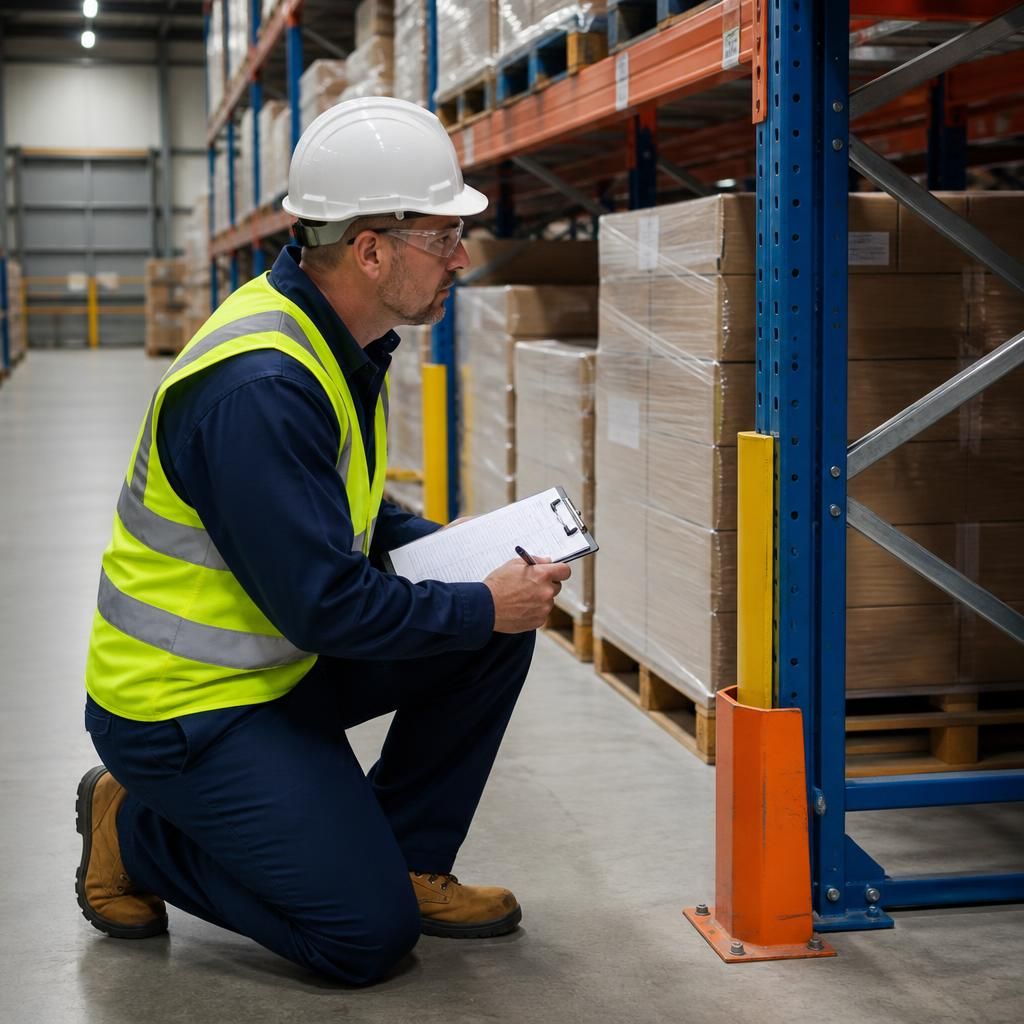
An HSE warehouse racking inspection assesses more than visible damage: it determines whether each defect could affect structural stability, load security or safe warehouse operations. The inspector records the location, severity and likely cause of issues such as bent uprights, damaged beams, loose anchors, displaced components or unstable pallets.
Findings are then prioritised according to risk. An area presenting an immediate danger may need to be unloaded, isolated and taken out of use until suitable repairs are completed. Less urgent defects can be assigned planned corrective action, monitoring or further technical assessment. Clear bay references, photographs and recommended actions help the responsible person verify that repairs have been completed before the affected warehouse racking is returned to normal use.
Arrange an HSE warehouse racking inspection
Arrange an HSE warehouse racking inspection with Able Racking to assess damage, stability, loading and compliance across your storage system. Contact our experienced inspection team to discuss your requirements and plan the next suitable visit.