
What steps are involved in a typical warehouse racking repair process?
A typical warehouse racking repair process involves a safety inspection, isolating any damaged area, assessing the required repair or replacement, completing the work with approved components, and checking the system before it is returned to service. The completed repair should also be documented, with any follow-up actions or preventative maintenance identified.
A typical warehouse racking repair process starts with a competent inspection, followed by making the affected area safe, assessing the damage, selecting an appropriate repair or replacement solution, completing the work with compatible components and checking the system before it is returned to service. The findings and completed work should then be recorded, with any follow-up inspections or preventative measures clearly identified.
Initial safety inspection
The process begins with a visual inspection of the damaged warehouse racking and the surrounding area. The inspector looks for issues such as bent uprights, damaged beams, displaced components, missing safety clips, impact damage, loose fixings, corrosion, overloading and signs that the structure has moved out of alignment.
The inspection should consider more than the visibly damaged part. Damage to an upright, for example, may affect connected beams, bracing, baseplates, floor fixings or adjacent bays. Loads, aisle clearances, protection equipment and the condition of nearby warehouse racking should also be considered. Photographs, measurements and other relevant information may be recorded to support the assessment.
Making the area safe
If damage could affect stability or create a risk to people, vehicles or stored goods, the affected bay or section should be isolated immediately. This may involve removing access, placing suitable warning notices, preventing forklift traffic and unloading the affected area where it is safe and necessary to do so.
Warehouse racking must not be used simply because the damage appears minor. A competent person should determine whether it can remain in controlled service, requires temporary protection or must be taken out of use until repairs are completed. The decision should take account of the type and location of damage, the design of the system and the loads being stored.
Assessing the repair requirement
The next stage is to establish whether the damaged component can be repaired, needs to be replaced or requires further technical assessment. Some damage may be suitable for an approved repair system, while severely distorted, cracked or structurally compromised components may need replacement.
The assessment should confirm the warehouse racking design, component dimensions, load requirements, connection details and floor conditions. Replacement parts must be compatible with the existing system and suitable for its intended use. Substituting an apparently similar component without checking compatibility can affect the capacity and stability of the complete installation.
Where the damage is extensive, unusual or affects the overall configuration, a more detailed design review may be required. This can include checking the original specifications, load notices, installation information and any previous inspection or repair records.
Planning the work
Before work starts, the repair team should agree a safe method of working. This normally covers access equipment, unloading requirements, exclusion zones, handling of components, vehicle movements and coordination with warehouse staff. The method should also address the risks of working at height, lifting heavy parts and disturbing connected sections.
Only suitable tools, access equipment and approved components should be used. The work should be carried out by trained and experienced operatives who understand the warehouse racking system and the relevant safety requirements. Repairs should not be improvised by drilling, welding, straightening or mixing components unless the method has been specifically assessed and approved.
Completing the repair or replacement
The affected area is prepared in accordance with the agreed method, which may include removing stored goods and supporting or temporarily stabilising components. Damaged parts are then repaired or replaced using the specified components and fixing arrangements.
During the work, operatives check that uprights, beams, bracing, connectors, baseplates, anchors and protective equipment are correctly positioned. Any component that has been distorted or weakened as a result of the original impact should not be overlooked. The surrounding warehouse racking may need adjustment or repair if the damage has transferred beyond the initially reported location.
Once the work is complete, the team checks that the repaired section is correctly aligned, securely fixed and consistent with the system design. Load notices, protection and safety clips should be reinstated where required. The repair should not be considered complete merely because the visible damage has been removed.
Final inspection and return to service
A final inspection confirms that the repair has been completed correctly and that the area is safe for use. This should include checking the repaired components, connections, fixings, clearances, stability and any affected adjacent bays. Stored goods should only be returned when the competent person has confirmed that the warehouse racking can be placed back into service.
If the repair has changed the arrangement, capacity or operating conditions, updated information may be required. Warehouse staff and forklift operators should be told about any changes, restrictions or precautions before normal use resumes.
Recording the outcome
The completed work should be documented clearly. A useful repair record identifies the location, nature and cause of the damage, the action taken, the components used, any areas taken out of service and the result of the final inspection. Photographs and supporting technical information can provide a useful reference for future inspections.
The record should also note any recommended follow-up work. This might include monitoring a recurring impact area, improving end-of-aisle protection, reviewing load arrangements, replacing damaged safety equipment or arranging a further warehouse racking inspection after a defined period.
Preventing a repeat occurrence
A repair addresses the immediate defect, but identifying why the damage occurred helps reduce future risk. Common causes include forklift impact, unsuitable loading practices, inadequate clearances, poor housekeeping, missing protection or changes to the storage layout.
Following the repair, businesses should review relevant warehouse procedures, reinforce operator training and maintain regular inspections. Prompt reporting of new damage is important because a small defect can worsen if the affected warehouse racking continues to carry loads or is struck again.
Any warehouse racking that shows structural damage, instability or an uncertain repair history should be assessed by a competent specialist before use continues. This provides a reliable basis for deciding whether repair, replacement, monitoring or wider corrective action is appropriate.
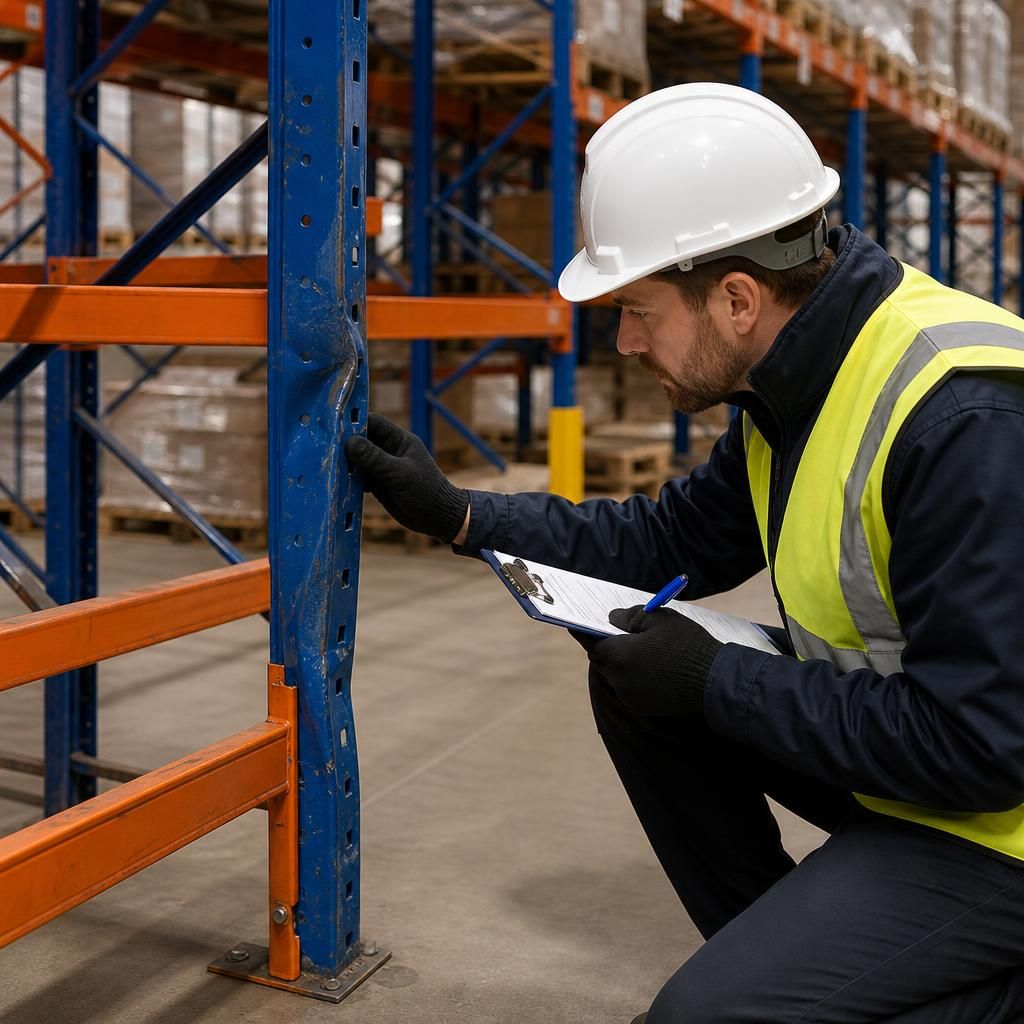
A warehouse racking repair should only be completed after the damaged area has been inspected, made safe and assessed by a competent person. The assessment confirms whether the affected component can be repaired, must be replaced or requires further technical review.
Once the work is complete, the repaired warehouse racking should be checked for secure fixings, correct alignment, suitable protection and safe clearances. Loads should remain out of the area until the final inspection confirms that it can return to service. The repair, components used and any follow-up actions should also be recorded.
Book your warehouse racking repair assessment
Contact Able Racking to book a warehouse racking repair assessment and receive clear advice on the safest next steps for your damaged system.