
What steps are involved in a typical warehouse racking repair process?
A typical warehouse racking repair process begins with making the affected area safe, followed by a detailed inspection to assess the damage and identify the correct repair method. An experienced technician then completes the approved repair, checks that the system is safe and compliant, and provides clear records and recommendations for any further action.
A typical warehouse racking repair process is a controlled sequence of making the affected area safe, assessing the damage, selecting an appropriate repair method, completing the work and verifying that the storage system can be returned to service. The process should be carried out by competent, experienced personnel and recorded so that the condition of the warehouse racking can be monitored afterwards.
1. Report and isolate the damage
The process begins when damage is identified through a routine inspection, a reported impact or a change noticed by warehouse staff. The affected bay, frame, beam or associated component should be clearly identified and assessed without putting people at unnecessary risk.
Where the damage could affect the stability or load-bearing capacity of the warehouse racking, the area should be isolated immediately. Stock may need to be removed, access restricted and handling equipment kept away from the damaged section. A damaged component should not be straightened, welded, drilled or otherwise altered as a temporary measure unless the repair method has been assessed and approved by a competent person.
2. Carry out an initial safety assessment
An initial assessment establishes whether the damage presents an immediate danger. The technician or responsible person considers the location and extent of the damage, the type of component affected and whether the damage has altered the alignment or stability of the structure.
Particular attention is given to damaged uprights, beams, bracing, base plates, floor fixings, guards and connectors. The assessment also considers whether loads are bearing correctly, whether components have become displaced and whether nearby sections have been affected by the same impact. If the damage is severe or the condition is uncertain, the safest course may be to unload and isolate a larger area until a detailed inspection is complete.
3. Inspect the warehouse racking in detail
A detailed inspection records the precise nature of the damage and looks for related defects that may not be visible during an initial check. This can include dents, bends, twists, cracks, loose or missing fixings, damaged welds, displaced beams, deformed bracing and deterioration around floor anchors.
The inspection should also examine the surrounding bays and the warehouse environment. Impact protection, aisle clearance, floor condition, pallet quality, loading practices and the use of handling equipment can all contribute to repeated damage. Existing inspection records, layout drawings, load notices and manufacturer information may be reviewed to confirm how the system was designed to operate.
Photographs, measurements and location references are useful for documenting the condition before work begins. Where appropriate, the findings are compared with the relevant manufacturer’s guidance and recognised industry recommendations. This helps ensure that the proposed work addresses the actual cause and does not compromise the original design.
4. Classify the damage and decide on the correct action
Not every damaged component can be repaired in place. The competent person decides whether the appropriate action is a repair, replacement, adjustment, further engineering assessment or continued isolation. The decision depends on the component affected, the extent of deformation, the way the warehouse racking is loaded and the repair system being used.
A repair may be suitable where an approved repair system can restore the component’s performance without removing the original structural capacity. A replacement may be required where the component is badly deformed, fractured, missing or outside the limits permitted by the repair specification. In some cases, the surrounding structure or floor fixings must also be corrected before the damaged section can safely be used.
Repairs should not be selected solely because they appear quicker or less disruptive. The proposed method must be compatible with the warehouse racking design and the loads it is expected to carry. If the damage is complex, an engineer or the original system designer may need to provide additional advice.
5. Prepare a repair plan and method statement
Before work starts, the repair requirements should be documented clearly. The plan normally identifies the affected location, the components involved, the repair or replacement method, the equipment required and the controls needed to protect workers and other warehouse users.
The method statement should explain how stock will be removed or supported, how access will be controlled and how the area will be kept stable during the work. It should also cover lifting operations, work at height where relevant, personal protective equipment and coordination with warehouse operations. Work should be scheduled to avoid interaction with moving vehicles, pedestrians and active loading activities.
Only components and repair systems that are suitable for the specified warehouse racking should be used. Improvised materials, unapproved brackets or alterations that change the structure’s design can create additional safety risks and may affect the system’s documented load capacity.
6. Remove loads and make the structure safe for repair
The affected area is unloaded in accordance with the agreed method statement. This may involve removing pallets from the damaged bay, adjacent levels or connected sections where their presence could affect stability. Loads should be handled using suitable equipment and controlled routes.
Before the repair begins, the technician confirms that the work area is adequately segregated and that the structure is stable. Temporary supports or other controls may be required, depending on the damage and the repair system. No person should work beneath an unsupported load or within an area that could be affected by component movement.
7. Complete the approved repair or replacement
The technician carries out the work in the sequence specified by the repair method. This may involve fitting a proprietary repair section, replacing a damaged beam or upright, renewing fixings, correcting a displaced component or replacing damaged protection. The work should preserve the correct alignment, connection and clearances of the original installation.
Components are checked as they are installed to ensure that they are correctly positioned and securely fixed. Any work that requires drilling, cutting, welding or other modification should only be undertaken where it has been specifically designed and authorised. The technician should not conceal damage or rely on cosmetic correction where the structural performance of the component has been affected.
8. Inspect and verify the completed work
After the repair, the area is inspected before stock is returned. The check confirms that the repaired components are secure, correctly aligned and free from obvious defects. Fixings, connectors, bracing, base plates, guards and floor anchors are examined where they form part of the repair or may have been affected by it.
The surrounding warehouse racking should also be reviewed to confirm that the repair has not caused displacement, altered clearances or transferred damage to another component. If the original load configuration has changed, the load information must be reviewed and updated before the bay is used.
9. Return the area to service in a controlled way
The repaired area should only be returned to service once the competent person has confirmed that it is safe for its intended use. Any temporary barriers or supports are removed only when appropriate, and stock is replaced in accordance with the approved loading arrangements.
Warehouse staff should be informed of any restrictions, revised load notices, changes to the layout or precautions needed to prevent a repeat impact. Loads should be positioned correctly, with pallets in suitable condition and within the stated capacity and dimensional requirements for the warehouse racking.
10. Complete the records and address the underlying cause
The final stage is to record what was found, what work was completed and whether any further action is required. A useful repair record includes the location, inspection findings, photographs where relevant, components repaired or replaced, materials used, completion date and the name of the competent person or repair team.
Records should be retained with inspection and maintenance information so that future checks can identify recurring problems. If the damage resulted from vehicle impact, poor visibility, unsuitable loading, inadequate protection or a layout issue, corrective measures should be considered. These may include improved impact protection, clearer traffic controls, staff instruction, revised loading procedures or more frequent inspections.
A repair restores a damaged section, but preventative action helps reduce the chance of the same problem returning. Regular warehouse racking inspections, prompt reporting of impacts and proper control of loads and handling equipment are therefore important parts of the overall maintenance process.
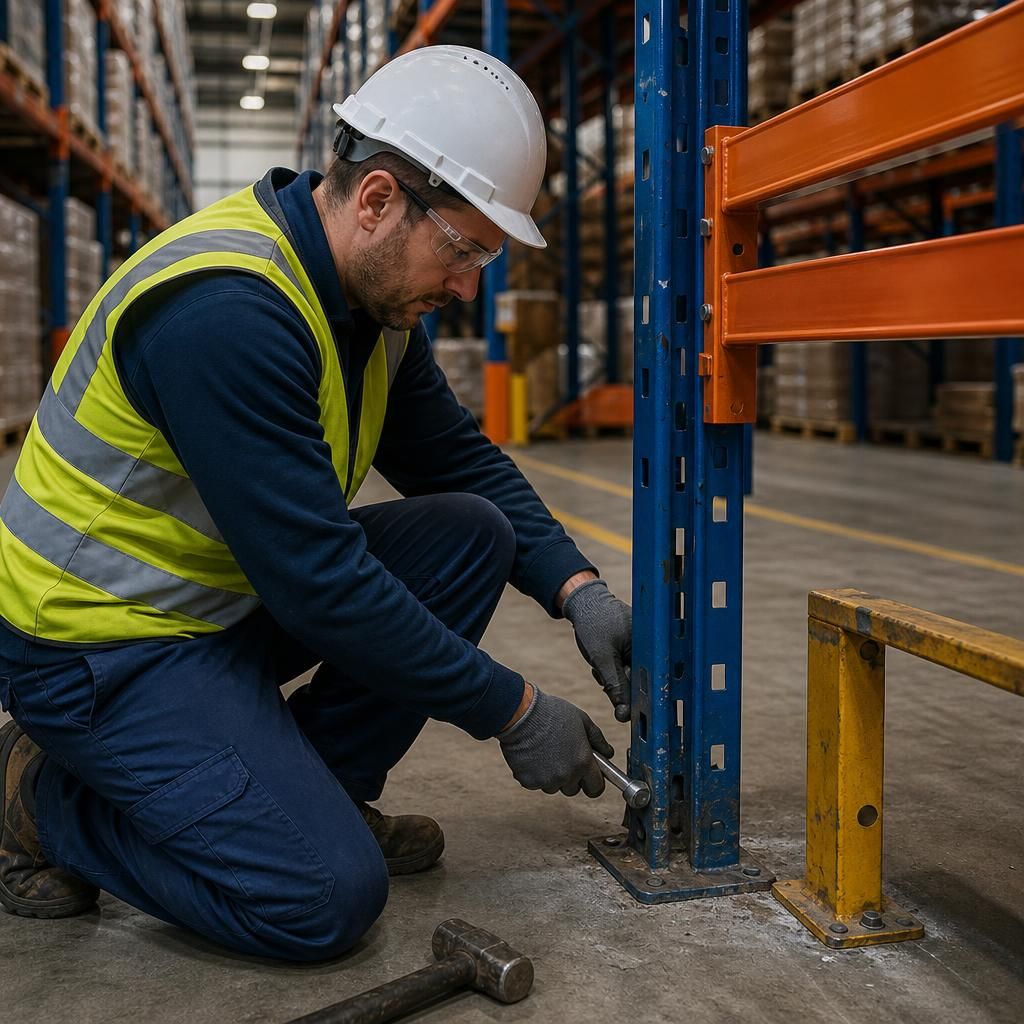
The warehouse racking repair process is only complete when the repaired area has been inspected, confirmed safe for its intended load and formally returned to service. Stock should not be replaced immediately after the physical work finishes.
- Check that repaired components, fixings, bracing and protection are secure and correctly aligned.
- Confirm that the original load configuration and capacity still apply, or update the load information if required.
- Remove temporary supports and barriers only when authorised by the competent person.
- Record the damage, repair method, components used, photographs and any further recommendations.
Clear records provide a reliable reference for future inspections and can help identify recurring causes, such as vehicle impacts, unsuitable loading or inadequate aisle protection.
Arrange a warehouse racking repair assessment
Arrange a warehouse racking repair assessment to establish the extent of any damage and identify the appropriate corrective action. Our experienced team can help you make the affected area safe and plan repairs that support continued compliance and safe operation.