
What preventative measures can businesses take to reduce the need for frequent warehouse racking repairs?
Businesses can reduce the need for frequent warehouse racking repairs by carrying out regular inspections, correcting damage promptly, protecting storage systems from vehicle impact, and training staff in safe loading and handling practices. Maintaining suitable load information, keeping aisles clear, and recording defects also helps prevent minor issues from developing into serious warehouse racking damage.
Businesses can reduce the need for frequent warehouse racking repairs by combining regular inspections with safe operating practices, prompt defect reporting and effective impact prevention. The most important measures are to identify damage early, prevent collisions, keep loads within the system’s design limits and ensure that employees understand how to use the warehouse racking safely.
Carry out regular inspections
Warehouse racking should be checked routinely by trained, competent employees who understand the signs of damage and deterioration. These checks should cover uprights, beams, bracing, baseplates, anchors, safety locks and protective components. Look for impacts, bends, distortion, corrosion, loose fixings, missing parts and signs that a load has been placed incorrectly.
Regular visual checks do not replace a formal inspection by a suitably qualified warehouse racking specialist. A planned inspection programme helps identify developing problems before they affect the stability or performance of the storage system. Inspection findings should be recorded, reviewed and followed by appropriate action.
Report and isolate damage immediately
Employees should have a simple process for reporting damage as soon as it occurs. Any component that may be unsafe should be clearly identified and taken out of service where necessary. Loads should not remain in an affected bay if they could increase the risk of collapse or further damage.
Temporary measures, such as removing a damaged section from use, should not be treated as a permanent repair. Repairs or replacements must be assessed and completed by competent operatives using suitable components and methods. Unauthorised straightening, welding, drilling or improvised fixes can weaken the structure and create additional hazards.
Prevent vehicle impacts
Forklift and other vehicle impacts are a common cause of warehouse racking damage. Businesses can reduce this risk by:
- Installing suitable upright and end-of-aisle protection.
- Maintaining clear travel routes and adequate aisle space.
- Using floor markings to separate vehicles, pedestrians and storage areas.
- Managing vehicle speeds and reversing movements.
- Improving visibility at junctions and restricted areas.
- Reviewing traffic routes after changes to the warehouse layout or equipment.
Protective barriers and guards should be inspected as well as the warehouse racking itself. A damaged guard may no longer provide effective protection, while a guard that is poorly positioned can interfere with normal loading operations.
Follow the specified load limits
Every warehouse racking system should be used within its designed capacity. Load notices should be visible, accurate and kept up to date following any change to the layout, beam levels or stored goods. Employees should know the permitted loads for each relevant bay and should never rely on estimates when placing heavy items.
Loads should be stable, evenly distributed and suitable for the pallet or support arrangement. Damaged pallets, overhanging goods and loads that are too tall or unstable can place unexpected forces on beams and frames. Regularly removing defective pallets and checking stored goods helps prevent avoidable damage.
Train employees in safe handling practices
Training should cover safe loading and unloading, vehicle operation, pedestrian awareness, load positioning, damage reporting and the consequences of overloading or striking warehouse racking. Operators should understand that even a minor impact can affect structural components and must be reported rather than ignored.
Refresher training is particularly useful when there are changes to equipment, staffing, warehouse layout or working procedures. Supervisors should also monitor working practices so that unsafe shortcuts are corrected promptly.
Keep aisles and storage areas well organised
Clear, well-maintained aisles reduce collision risks and make defects easier to see. Stock, packaging, waste and equipment should not obstruct access routes, emergency exits or inspection points. Good housekeeping also reduces the likelihood of loads being dragged, dropped or placed unevenly.
Storage locations should be clearly identified, with goods placed in the correct bays and at the appropriate levels. Consistent organisation makes it easier to identify missing stock, overloaded locations and changes that could affect the safe use of the system.
Control changes to the storage system
Changes to beam positions, bay configuration, load types or handling equipment can affect the original design assumptions. Before making alterations, businesses should obtain suitable technical advice and confirm that the revised arrangement remains appropriate for the intended loads and operating conditions.
New equipment, revised traffic routes and changes in stock profiles should also be considered as part of a safety review. A system that was suitable for one operation may require additional protection or a different configuration after the warehouse process changes.
Maintain a clear inspection and repair record
Records should show when inspections were completed, what defects were found, which areas were restricted and what corrective work was carried out. Keeping this information together helps identify recurring problems, such as repeated impacts in one aisle or damage linked to a particular loading practice.
Trend information can support practical improvements, including additional protection, revised training or changes to traffic management. It also provides evidence that safety responsibilities are being actively managed.
Manage the warehouse environment
Corrosive substances, moisture, temperature changes and poor lighting can contribute to deterioration or make damage harder to detect. Where these conditions are present, inspection frequency and protective measures should reflect the environment. Spills should be cleaned promptly, and areas with limited visibility should be properly illuminated.
Preventative maintenance does not eliminate every repair requirement. Warehouse racking can still be damaged through accidental impact or unusual loading events. However, regular inspection, competent use, prompt action and accurate records significantly reduce the chance that minor defects will develop into more extensive repairs or a serious safety issue.
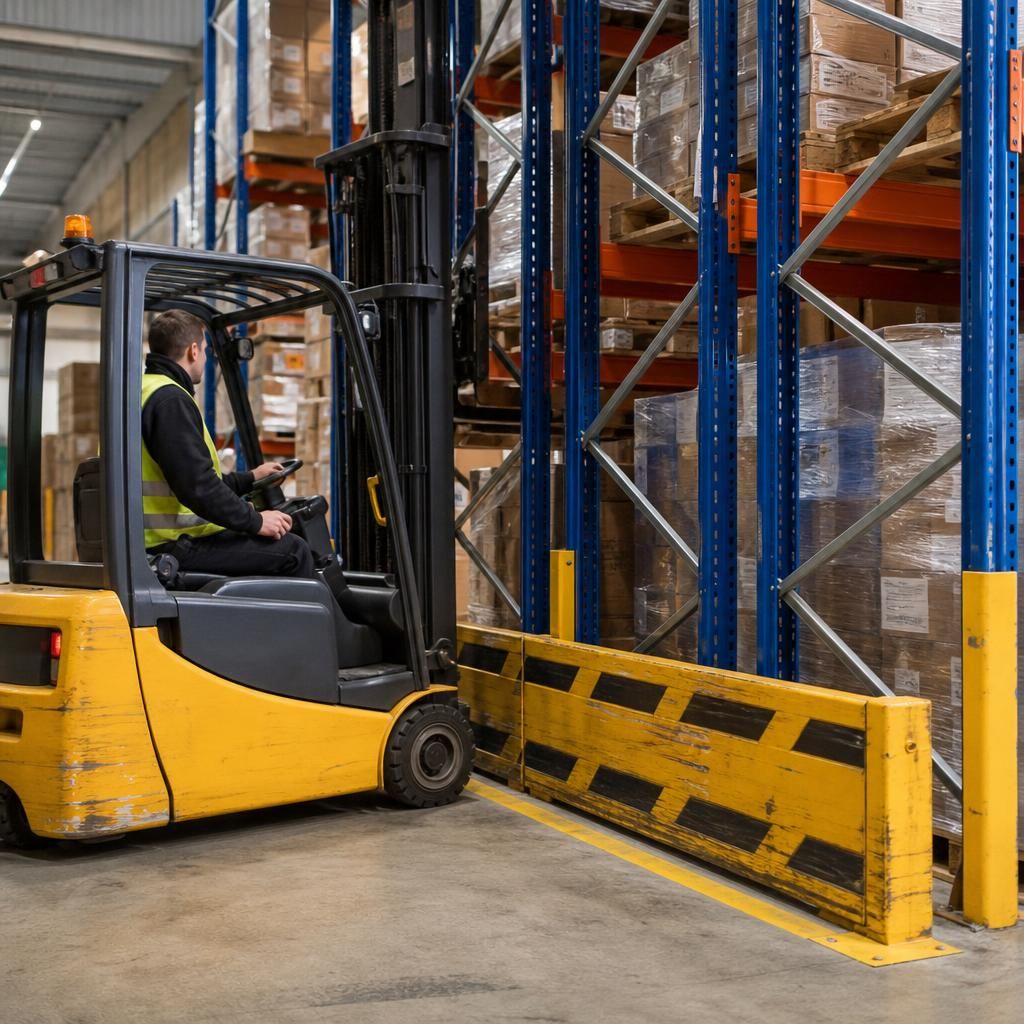
Protecting warehouse racking from forklift and handling-equipment impacts is one of the most effective ways to reduce avoidable repairs. Even a minor collision can bend an upright, dislodge a beam or damage protective components, so impact prevention should form part of the warehouse safety plan.
Businesses should use suitable upright and end-of-aisle protection, maintain clearly marked travel routes and keep aisles free from obstructions. Vehicle speeds, reversing movements and visibility at junctions should also be reviewed. Any damaged protection must be repaired or replaced promptly, as it may no longer absorb impact effectively.
Operators should report every collision or suspected impact immediately, even when no obvious damage is visible. The affected bay should be assessed by a competent person before normal use continues. Reviewing inspection records can also reveal repeated impact locations, allowing businesses to improve traffic routes, positioning, lighting or staff training before further warehouse racking repairs are required.
Arrange a Warehouse Racking Inspection
Arrange a warehouse racking inspection with Able Racking to identify damage early and confirm that your storage system remains safe to use.