
What are the signs that indicate my warehouse racking needs repair?
Warehouse racking needs repair when you find bent or distorted uprights and beams, cracked welds, loose or missing fixings, corrosion, damaged guards, unstable loads or signs of impact from handling equipment. Remove affected sections from use where necessary and arrange an inspection by a competent warehouse racking repair specialist before they are returned to service.
Warehouse racking needs repair when any part of the structure is bent, cracked, loose, corroded, displaced or no longer supporting loads as intended. Damage may result from forklift impact, overloading, poor installation, repeated use or deterioration over time. Even apparently minor defects can reduce the system’s strength or stability, so affected areas should be assessed by a competent warehouse racking repair specialist before they are used again.
The following signs require prompt attention:
- Bent or distorted uprights: Uprights should remain straight and securely anchored. Dents, buckling, twisting, leaning or other deformation can indicate impact damage or structural stress. A damaged upright may transfer additional loads to connected components, so it should not be straightened or put back into service without a professional assessment.
- Damaged beams or beam connections: Beams with bends, visible deflection, crushed sections, split welds or damaged connectors may no longer have their designed load capacity. Check that beam-end connectors are fully engaged and that locking pins or safety clips are present and correctly positioned. Do not increase the load to compensate for a visibly deflected beam.
- Cracked welds, splits or fractures: Cracks around welds, joints, connectors or base plates can worsen under normal loading and vibration. Fractures should be treated as a serious defect. The affected bay should be isolated and inspected rather than being repaired with an improvised weld, bolt or other unapproved modification.
- Loose, missing or damaged fixings: Missing anchor bolts, loose fasteners, damaged locking devices and absent safety pins can allow components to move or disengage. Fixings must be checked against the warehouse racking manufacturer’s specification and replaced with suitable approved parts. Substituting incompatible components can create a further safety risk.
- Corrosion or material deterioration: Rust, flaking coatings, pitting and thinning metal can reduce the strength of uprights, beams, bracing and base plates. Corrosion is particularly important where warehouse racking is exposed to moisture, chemicals or frequent cleaning. Surface rust may require treatment, while advanced corrosion may require component replacement.
- Damaged protection equipment: Bent or detached upright guards, end-of-aisle protection and barriers may no longer protect the structure from handling equipment. Protection equipment should be repaired or replaced after an impact, even where the warehouse racking itself appears undamaged. The cause of the impact should also be reviewed to prevent repeat damage.
- Unstable, displaced or overloaded loads: Pallets that lean, overhang, collapse or sit unevenly can place unintended forces on the structure. Loads exceeding the stated capacity, poorly positioned pallets and damaged pallets can also contribute to failure. Remove unsafe loads where it can be done without putting people at risk, then arrange an assessment of the affected area.
Other warning signs include unusual movement, persistent noise, leaning frames, gaps at connections, damaged floor anchors and changes in the alignment of aisles or beams. A previous collision should also be treated as a reason for inspection, even if there is no obvious visible damage. Some defects are concealed within connections or behind protection equipment.
If a defect is found, prevent access to the affected bay or section and clearly identify it for warehouse staff. Where necessary, unload it using a controlled procedure and keep people away from the exclusion area. Do not attempt to bend components back into position, drill new holes, weld damaged parts or remove bracing without technical approval. These actions can conceal damage or alter the system’s designed behaviour.
A competent inspection should establish the extent of the damage, identify any underlying cause and determine whether repair, replacement, load restriction or removal from service is appropriate. The assessment should consider the original design, component compatibility, loading requirements, floor condition, anchorage, protection measures and any changes made since installation.
After repair, the warehouse racking should be checked to confirm that components are correctly installed, fixings are secure, protection is restored and load notices remain accurate. The repair and inspection should be recorded, including the location, defect, action taken and any restrictions that apply. Warehouse staff should be told when the area is safe to use and reminded to report further impacts or changes immediately.
Regular visual checks by trained staff and scheduled inspections by a competent person help identify defects before they become more serious. However, routine checks do not replace an immediate inspection following impact, structural movement or the discovery of a significant defect. Prompt warehouse racking repair protects employees, stock and equipment while helping the storage system remain compliant and efficient.
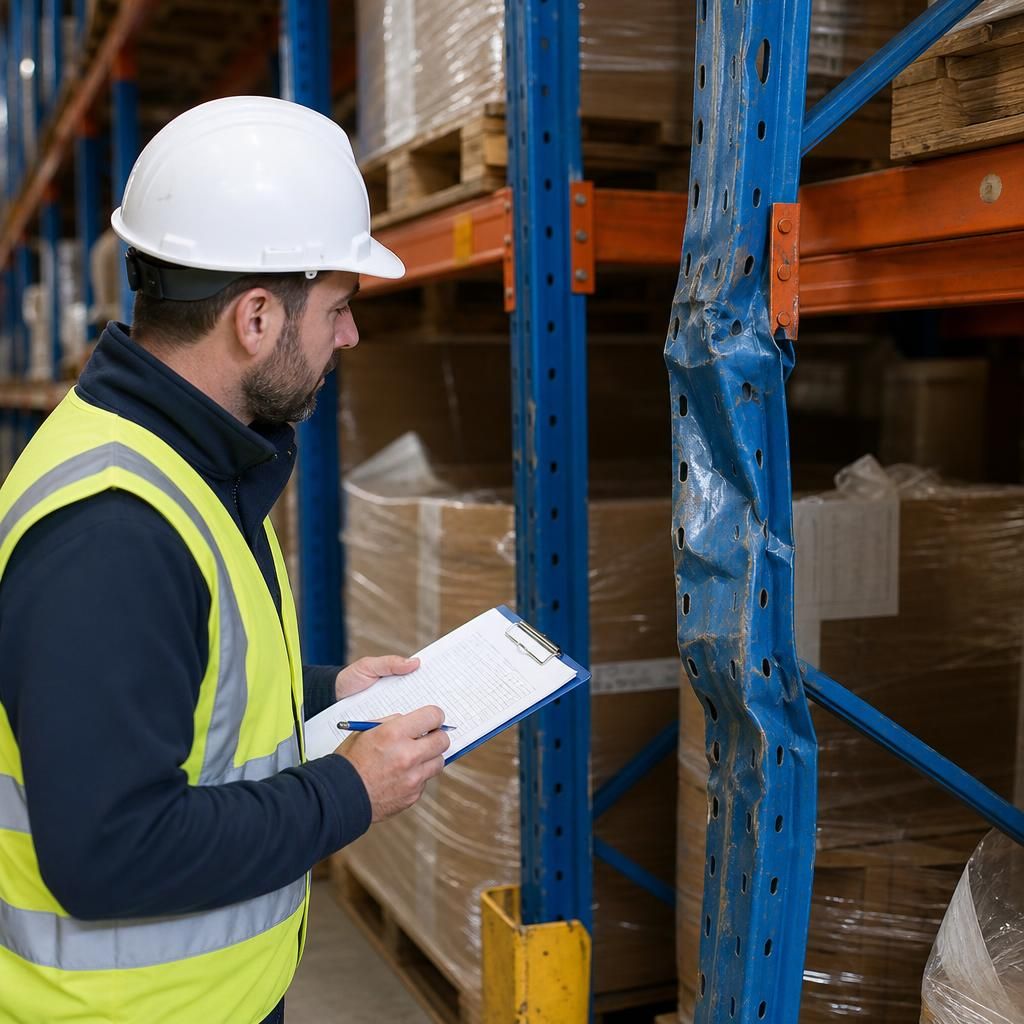
A visible impact from a forklift or other handling equipment is a clear sign that warehouse racking needs professional assessment, even when the damage appears minor. Uprights, beams, connections and anchors can be affected internally or out of alignment without obvious surface damage.
Isolate the affected bay, prevent further loading and report the incident before attempting to straighten, weld or replace any component. A competent inspection can establish whether the warehouse racking requires repair, replacement, load restrictions or removal from service, helping ensure it is safe before being returned to use.
Arrange a warehouse racking repair assessment
If you have identified damage or a potential safety issue, arrange a warehouse racking repair assessment with Able Racking. Our competent team can assess the affected area and advise whether repair, replacement or temporary removal from service is required.