
What qualifications and standards do Able Racking technicians adhere to during rack repairs?
Able Racking technicians are trained and experienced in warehouse racking inspection and repair, applying manufacturer specifications, risk assessments and recognised guidance such as BS EN 15635 and relevant SEMA recommendations. Their work is completed by competent operatives using appropriate repair methods, documented findings and safety controls to help keep your storage system compliant and safe to use.
Able Racking technicians carry out warehouse racking repairs as competent operatives, combining practical experience with appropriate training, manufacturer guidance and recognised industry standards. Their work is informed by BS EN 15635, the SEMA Code of Practice and relevant workplace safety requirements, with each repair selected according to the damage, the storage system and the manufacturer’s specifications.
There is no single statutory licence that makes a person competent to repair every type of warehouse racking. Competence depends on suitable knowledge, training, experience and the ability to identify when a repair is outside the technician’s authority. Able Racking therefore assesses the condition of the affected components, establishes the correct repair method and escalates issues where specialist design input, manufacturer approval or replacement is required.
Relevant qualifications and technical competence include:
- Practical training in warehouse racking inspection, damage assessment and repair procedures.
- Knowledge of common storage system designs, component types, load applications and manufacturer-specific requirements.
- Understanding of risk assessment, safe systems of work, exclusion zones and the controls needed around warehouse traffic and stored loads.
- Training in the correct use of tools, access equipment and personal protective equipment.
- Awareness of when damaged components must be unloaded, isolated, replaced or referred for further engineering assessment.
- Experience of documenting defects, completed repairs and any restrictions that remain after the work.
Where the work involves a proprietary repair system, the technician must also follow that system’s installation instructions. This can include approved methods for fitting reinforcement plates, straightening or securing components, replacing damaged members, tightening fixings and checking the repaired area. A repair is not considered suitable simply because a component appears straight or secure; it must restore the required structural performance and remain compatible with the original system.
The principal standards and guidance used during warehouse racking repairs are:
- BS EN 15635, which covers the application and maintenance of storage equipment. It provides a framework for safe use, damage classification, inspections, reporting and corrective action.
- BS EN 15629, which addresses the specification of storage equipment and helps establish the design information needed when assessing a system.
- BS EN 15620, where relevant, for tolerances, deformations and installation considerations affecting the safe performance of the system.
- SEMA guidance and Codes of Practice, which provide recognised UK industry guidance for the inspection, use, repair and maintenance of warehouse racking.
- The Provision and Use of Work Equipment Regulations, where applicable, requiring work equipment to be suitable, maintained and used by people with appropriate information, instruction and training.
- The Health and Safety at Work etc. Act and associated risk-control duties, which support the safe planning and execution of repair work.
These references do not replace the original manufacturer’s instructions or the system’s design information. A competent technician considers all of them together. For example, the permissible load, connection detail, frame profile, beam type and approved repair component can vary between systems. Substituting an apparently similar component or using an unapproved modification can alter the system’s capacity and may create a further safety risk.
Before work begins, Able Racking technicians normally review the reported damage and inspect the surrounding structure. They consider whether the defect affects an upright, beam, brace, connector, protection component or another load-bearing part, as well as whether there are signs of impact, distortion, corrosion, overloading or repeated damage. The area may need to be unloaded and segregated before a safe repair decision can be made.
The repair plan should identify the defect, the proposed corrective action, the equipment and materials required, and the precautions for people working nearby. Where the damage is severe, the affected bay or aisle should remain out of use until the repair or replacement is complete and the area has been checked. Technicians should not conceal damage with paint or return a system to service without confirming that the corrective work is adequate.
After completion, the technician checks the repaired area against the specified method and records the work carried out. Useful records can include photographs, component identification, the location of the defect, the repair or replacement completed, any remaining recommendations and the date of completion. These records support the warehouse’s ongoing inspection and maintenance arrangements and provide evidence that reported defects have been addressed.
Technicians also understand the limits of a repair service. If the original design information is unavailable, the damage is extensive, the system has been altered, or the proposed work could affect overall capacity, further assessment may be needed before proceeding. In such cases, the responsible course is to recommend replacement, manufacturer confirmation or engineering review rather than improvise a solution.
For existing Able Racking customers, this means repairs are approached as part of the wider safety management of the storage system, not as isolated remedial work. The combination of competent operatives, recognised guidance, manufacturer requirements, documented checks and clear recommendations helps keep warehouse racking safe, serviceable and suitable for continued operation.
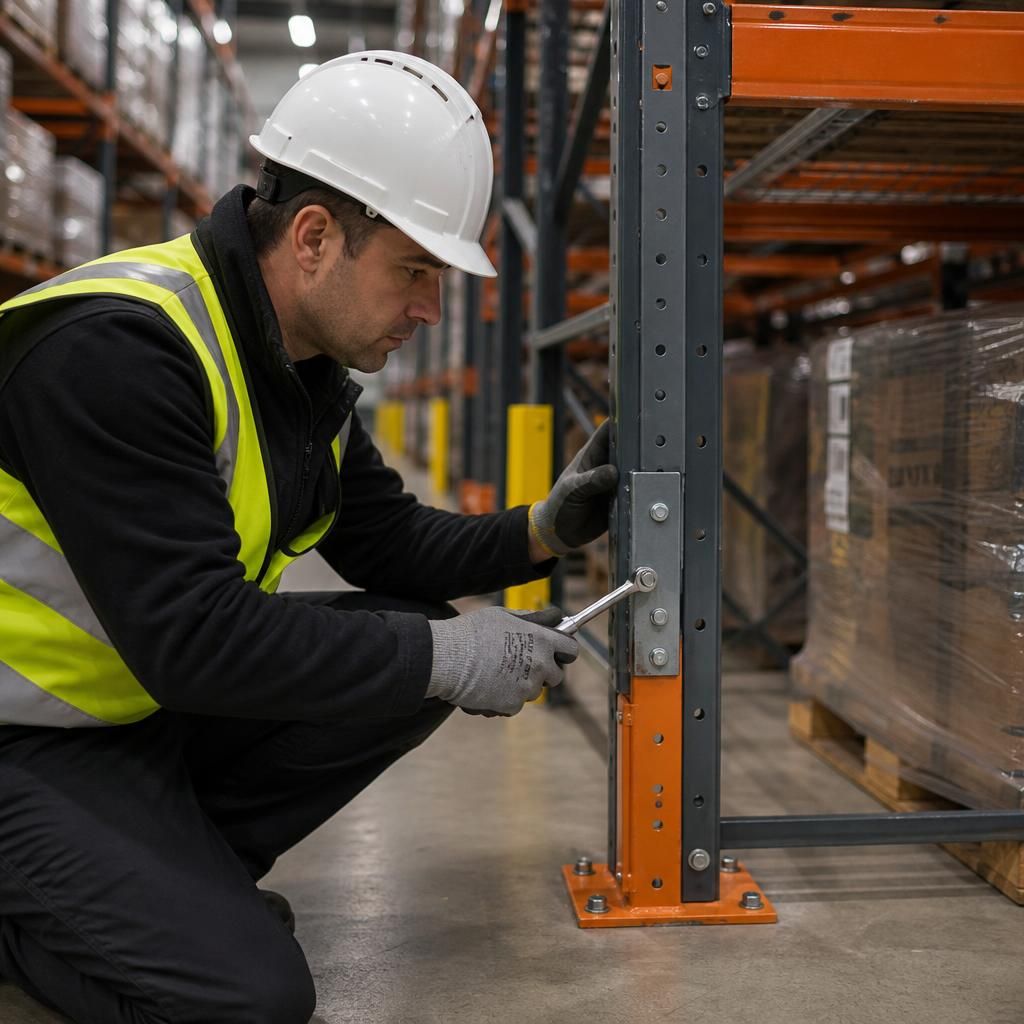
During warehouse racking repairs, technician competence means having the training, practical experience and judgement to assess damage, select an approved repair method and recognise when further engineering advice is required. Able Racking technicians work to the storage system manufacturer’s instructions, relevant risk controls and recognised guidance rather than relying on appearance alone.
Before starting, they assess the affected component and surrounding structure for distortion, impact damage, corrosion, overloading or movement. Where necessary, the affected area is unloaded and isolated. Repairs are then completed using suitable components, tools and installation methods, with the repaired section checked against the specified requirements before it is returned to service.
Completed work is recorded with details such as the defect location, repair or replacement undertaken, photographs and any remaining recommendations. This documentation supports the warehouse’s ongoing inspection programme and provides a clear record that identified damage has been addressed appropriately.
Discuss your rack repair requirements
Discuss your warehouse racking repair requirements with Able Racking to arrange an assessment and agree a safe, compliant repair plan.