
What is the expected timeframe for completing warehouse rack repairs and how does this impact ongoing operations?
Warehouse rack repairs may be completed during a planned visit or escalated for urgent attention, depending on the damage, access requirements and availability of suitable repair materials. Prompt isolation of unsafe areas, clear planning and efficient on-site work help minimise disruption while keeping warehouse operations safe and compliant.
Warehouse rack repairs are typically completed during a planned service visit once the damage, access requirements, repair method and materials have been assessed. Repairs that present an immediate safety risk are prioritised, with the affected area isolated or taken out of service until it has been made safe. The actual timeframe can range from a straightforward visit for a minor, accessible defect to a longer programme where specialist components, extensive damage or phased work are involved.
The initial assessment determines what needs to happen next. A competent inspector or repair technician will review the damaged rack components, identify any associated risks and establish whether the rack can remain in limited use, must be unloaded, or requires immediate isolation. The assessment may consider:
- the location and extent of the damage;
- whether uprights, beams, bracing, safety devices or connections are affected;
- the loads currently stored in the affected bay;
- safe access for operatives, lifting equipment and replacement components;
- whether adjacent sections have also been distorted or impacted;
- the availability of suitable repair materials; and
- the need for any temporary controls before permanent work is completed.
Minor damage may be dealt with during the first planned attendance if the correct repair system and materials are available. This can apply where the work is clearly defined, access is straightforward and the affected area can be safely managed. More involved repairs may require a separate quotation, engineered repair solution, replacement components or additional coordination with the warehouse team. Where materials have to be sourced or manufactured, the lead time for those items can become the main factor affecting completion.
Urgent damage is managed differently from routine remedial work. If a rack has been struck by handling equipment, shows significant deformation, has a compromised connection or appears unstable, the affected location should be reported immediately and controlled in line with the site’s safety procedures. Stock and equipment may need to be removed, and access restricted, before repair work can begin. Continuing to use visibly damaged storage equipment while waiting for a convenient repair slot can increase the risk of further damage and wider operational disruption.
For planned repairs, the work is usually coordinated around warehouse activity. Able Racking can review the proposed scope with the customer, confirm the areas to be made available and identify any restrictions affecting access. Good preparation helps the technician complete the work efficiently and may include:
- clearing stock from the affected bays where required;
- providing safe access and suitable working space;
- confirming site induction and permit requirements;
- coordinating with warehouse, transport and facilities teams;
- identifying suitable times to pause vehicle or pedestrian movements nearby; and
- making relevant drawings, inspection records or previous repair information available.
The effect on ongoing operations depends mainly on the location and severity of the damage. A localised repair may require only a temporary exclusion zone around the work area. Repairs affecting a busy picking aisle, a main access route or a section supporting connected storage may require a wider temporary restriction. If stock must be relocated, the warehouse may experience reduced capacity or slower picking until the repair and any required reloading checks are complete.
Where possible, the work can be phased so that safe sections remain available while the damaged area is repaired. Alternative storage locations, temporary traffic controls and agreed work windows can also reduce the effect on picking, replenishment and vehicle movements. These arrangements should never override the need to isolate an unsafe area. Operational continuity is important, but it must be managed within the limits set by the condition of the storage system and the repair method.
Repair duration also depends on whether the work is a component replacement or a more extensive structural intervention. A replacement may be relatively direct where the surrounding structure is sound and the load can be safely managed. Repairs involving distorted frames, damaged bracing, multiple connected components or uncertain load paths require more detailed control. The technician may need to unload sections, support or stabilise the structure, replace several parts and check the completed work before the area returns to service.
Following the repair, the completed area should be checked before it is reloaded or brought back into normal operation. This may include confirming that components are correctly fitted, connections are secure, the repaired section is stable and protection or safety accessories are in place. Any load information, use restrictions or follow-up actions should be communicated to the responsible warehouse team. Records of the inspection and repair provide useful evidence for future inspections, maintenance planning and internal safety reviews.
Customers can help avoid unnecessary delay by reporting damage promptly and supplying clear information about its location, likely cause and current condition. Photographs can assist with initial planning, although they do not replace an on-site assessment where structural safety is in question. It is also helpful to explain any operational deadlines, access limitations or stock movements before the repair is scheduled.
In practical terms, the expected timeframe should be confirmed after the damage has been assessed rather than estimated from the report alone. Able Racking’s experienced operatives can distinguish between work that needs immediate control, work suitable for the next planned visit and repairs that require further design, materials or coordination. This approach reduces avoidable downtime while ensuring that warehouse rack repairs are completed safely, checked properly and returned to service only when the affected area is suitable for use.
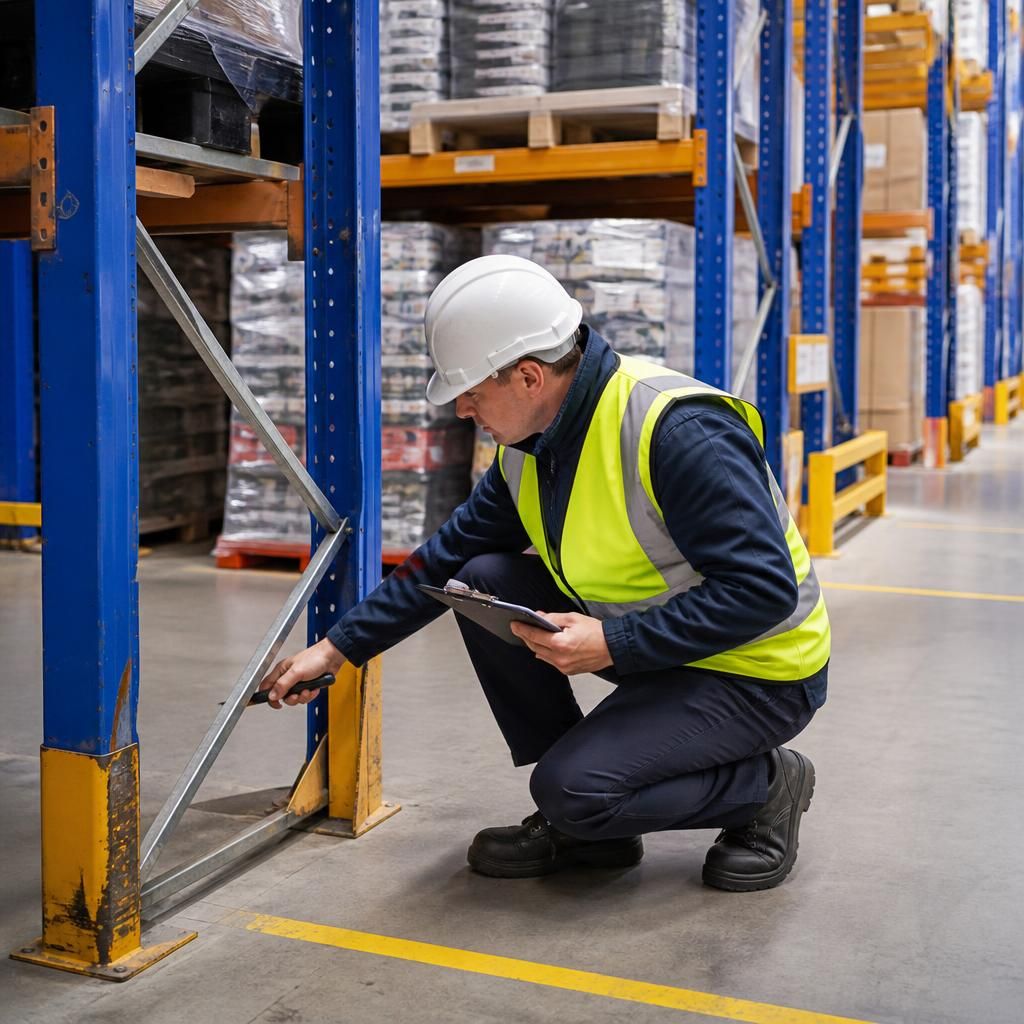
The timeframe for warehouse racking repairs is determined by the damage, access requirements, repair method and availability of suitable components. A straightforward, localised defect may be resolved during a planned visit, while structural damage or a repair requiring replacement parts may need additional assessment, preparation and a separate attendance.
Good preparation helps reduce the effect on ongoing warehouse operations. Before work begins, the affected bays may need to be unloaded, access routes kept clear and vehicle or pedestrian movements controlled around the work area. Agreeing these arrangements in advance allows the repair technician to work efficiently without compromising safety.
- Provide the precise location and details of the damage.
- Share photographs or previous inspection information where available.
- Confirm stock, access and operational restrictions before the visit.
- Plan any temporary isolation or alternative storage arrangements.
After the repair, the affected warehouse racking should be checked before it is reloaded or returned to normal use. This final check confirms that the repair has been completed correctly and identifies any remaining restrictions or follow-up actions, helping the warehouse team resume operations safely.
Plan your warehouse rack repairs
Contact Able Racking to arrange an assessment of your warehouse rack damage and confirm the appropriate repair timeframe. Providing the location, condition and access requirements in advance helps us plan the work and minimise disruption to your operations.