
What are the specific repair techniques suitable for the type of damage in your warehouse rack systems?
The suitable repair technique depends on the damage, its location and the load-bearing role of the affected warehouse rack component. Typical solutions include approved repair kits for damaged uprights, replacement of bent beams or bracing, renewed anchors and fixings, and controlled removal and replacement where the component cannot be safely restored; every repair should follow a competent inspection and manufacturer guidance.
The correct repair technique for warehouse racking depends on the damaged component, the position and extent of the damage, the imposed loads and the manufacturer’s design. In practice, suitable repairs may include an approved bolt-on repair system for a damaged upright, replacement of bent beams or bracing, renewal of anchors and fixings, or controlled removal and replacement where the component cannot be safely restored. Repairs should only begin after a competent inspection and should follow the manufacturer’s instructions, relevant design information and current warehouse racking safety guidance.
Initial assessment before repair
Every repair starts with making the affected area safe. The warehouse racking should be unloaded where necessary, the damaged bay identified and the risk assessed by a competent person. The inspection should establish:
- Which warehouse racking component is damaged, such as an upright, beam, brace, connector, anchor or protection system.
- Whether the damage is cosmetic, localised, structural or likely to affect the load-bearing capacity.
- Whether the damage is isolated or extends into adjacent components, connections or floor fixings.
- Whether the damage resulted from impact, overloading, incorrect assembly, corrosion, fire, settlement or another cause.
- Whether the manufacturer’s replacement parts, repair details and original load information are available.
Photographs, measurements and records of the affected bay help the repair technician select the correct method and provide a clear repair history. If there is any doubt about stability, the bay should remain out of service until the repair has been completed and checked.
Damaged warehouse racking uprights
Uprights are particularly vulnerable to forklift impact. Damage can occur at the base, along the upright face, around the perforations or at a connection with the bracing. A bent, buckled or twisted upright must not be straightened by force, heated or welded on site unless a specifically engineered method permits it. These approaches can alter the steel’s properties, weaken protective coatings and leave hidden distortion.
Where the damage is suitable for repair, an approved upright repair system can be installed around the affected section. This normally involves isolating and unloading the bay, removing or loosening only the components required by the repair design, positioning the repair members accurately and securing them with the specified bolts or fixings. The repair system must have adequate strength for the upright profile and the warehouse racking load configuration. The completed repair should be inspected for correct alignment, bolt installation and clearance from pallets and handling equipment.
If the upright is severely distorted, split, torn, buckled over a significant length or damaged at a critical connection, complete replacement is generally more appropriate. This involves controlled unloading, temporary stability measures where required, removal of the damaged frame or section and installation of a matching replacement component. The repaired bay should not be returned to service until its stability and load information have been confirmed.
Bent or damaged beams
Warehouse racking beams can be damaged by impact from handling equipment, incorrect pallet placement or excessive loading. Typical signs include a visible bend, twisted beam, damaged end connector, distorted safety lock or separation at the connection with the upright.
Beams that are bent, cracked, badly twisted or no longer engage correctly with the upright should normally be replaced rather than straightened. A replacement beam must match the required length, section, connector design and load capacity. The beam locks must be fully engaged, and the beam should be checked for level and secure seating at both ends. Damaged beam safety pins, locking devices or retaining components should also be replaced with the correct parts.
Where a beam has suffered only minor surface damage, it should still be assessed rather than assumed safe. Scrapes may have removed protective coating, while a small dent near an end connector can affect the connection more seriously than damage in the middle of the beam. Any replacement should be followed by a check that the pallet positions, clearances and load notices remain correct.
Damaged bracing and frame connections
Horizontal and diagonal bracing maintains the geometry and stability of a warehouse racking frame. Bent, fractured or missing bracing should be replaced with components of the correct type and length. A brace should not be pulled back into position with improvised equipment or substituted with a visually similar part, because its dimensions and connection details affect the frame’s design.
Repair work may involve replacing the damaged brace, renewing brace bolts, replacing connection plates or correcting a displaced frame member. The technician should check the surrounding connections for ovalised holes, pulled threads, cracked welds or distortion. Once repaired, the frame should be checked for plumb, alignment and signs of continuing movement.
Anchors, baseplates and floor fixings
Loose or damaged anchors can reduce the stability of warehouse racking even when the uprights and beams appear undamaged. The appropriate technique depends on whether the problem is a loose fixing, damaged anchor, cracked concrete, incorrect embedment or a displaced baseplate.
- Loose fixings may require controlled tightening to the specified requirements after the baseplate has been correctly positioned.
- Damaged or unsuitable anchors should be removed and replaced with approved fixings of the correct type, diameter, embedment and installation method.
- Cracked or deteriorated concrete may require an engineered solution before a new anchor can be installed.
- A bent or displaced baseplate may need replacement, together with a check that the upright remains plumb and properly supported.
Drilling new holes close to existing anchors, enlarging holes without approval or relying on a different fixing because it is readily available can compromise the design. The floor condition and the original fixing specification should therefore be confirmed before work proceeds.
Impact protection and ancillary components
Damaged upright guards, end-of-aisle barriers, bollards and other protection should be replaced or repaired promptly. These items are intended to absorb or deflect impact before it reaches the warehouse racking frame. A guard that is bent, detached or no longer covers the vulnerable area may provide little protection.
Replacement protection should be compatible with the aisle layout, forklift movements, pallet dimensions and fixing arrangement. It should not obstruct beam connections, reduce access to load positions or create a trip hazard. Protection is not a substitute for repairing a damaged upright; both issues should be addressed where impact has reached the frame.
Corrosion, coating damage and weld defects
Light surface corrosion may be treated after the affected area has been cleaned and assessed, using a suitable protective coating compatible with the original finish. More advanced corrosion, pitting, section loss or corrosion around connections can reduce the component’s capacity and may require replacement rather than coating.
Site welding should not be used as a routine warehouse racking repair technique. A weld can conceal cracking, introduce heat-related distortion and invalidate the original design assumptions if it is not supported by an appropriate engineering assessment and controlled procedure. Suspected weld failure, cracked steel or torn connection plates should be isolated and referred for a specific repair or replacement decision.
When replacement is safer than repair
Repair is not automatically the best option. Replacement is usually preferred where the steel has fractured, the component has lost its original shape, the damage affects a critical connection, several members in the same frame are damaged, or the proposed repair would interfere with load paths and access clearances. The replacement component must be suitable for the existing warehouse racking system; mixing incompatible profiles, connectors or beam capacities can create a new safety risk.
Checks after the work
After a repair, the technician should verify the installation against the approved method and inspect the surrounding warehouse racking for related damage. Checks may include upright plumb, beam seating, locking devices, brace connections, anchor security, baseplate condition, protection clearance and the visibility of load notices. Any temporary measures should be removed only when the permanent repair is secure.
The repair should be recorded with the location, damage identified, technique used, components fitted and any restrictions or follow-up actions. The area can then be returned to service when the competent person is satisfied that it is safe and suitable for its intended load. If the original cause was vehicle impact, poor pallet positioning or overloading, corrective action and a follow-up inspection are important to prevent the same damage recurring.
Able Racking’s experienced operatives can assess the damage, explain whether repair or replacement is appropriate and complete the work in a controlled manner. Where the condition of the warehouse racking is uncertain, arranging an inspection before attempting to move loads or make alterations provides the clearest route to a safe, compliant repair.
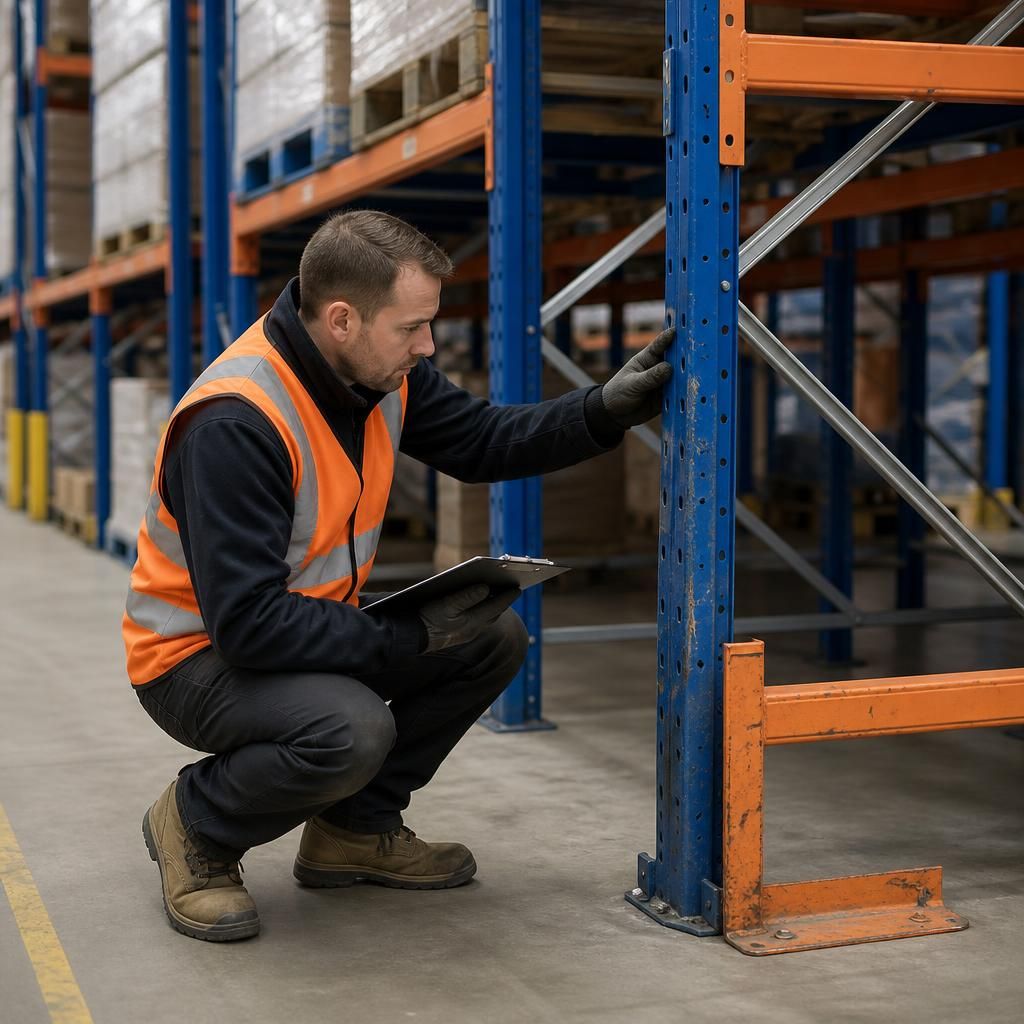
The correct warehouse racking repair technique is determined by the damaged component, the extent of the damage and its effect on the system’s load-bearing capacity. A competent inspection should confirm whether an approved repair system is suitable or whether the affected beam, upright, brace, anchor or protection component must be replaced.
Damaged warehouse racking should not be straightened, welded or modified without an approved engineering method. Repairs must use compatible components and specified fixings, followed by checks on alignment, connections, anchors, load notices and surrounding damage before the area is returned to service. Where impact caused the damage, the underlying handling or protection issue should also be addressed.
Arrange Your Warehouse Rack Repair Assessment
Arrange a warehouse rack repair assessment with Able Racking to identify the correct repair or replacement method for the damage. Our experienced technicians will assess the affected system and explain the work required to restore safe, compliant operation.