
Are regular inspections and maintenance part of the warehouse rack repair service package offered?
Yes. Able Racking’s warehouse rack repair service can include regular inspections and preventative maintenance, helping identify damage early, keep storage systems compliant and reduce disruption to warehouse operations.
Yes. Regular inspections and preventative maintenance can form part of Able Racking’s warehouse rack repair service package. The purpose is to identify damage before it affects structural performance, complete suitable repairs promptly and help keep the storage system safe, compliant and operational.
Inspections are an essential part of effective repair planning. A repair should not be treated as an isolated task when damage may have been caused by vehicle impact, overloading, poor load placement, movement of components or an underlying installation issue. An Able Racking inspection assesses the condition of the relevant warehouse racking and records defects so that repair recommendations are based on the actual site conditions.
Depending on the agreed service scope, an inspection may cover:
- uprights, frames, beams, bracing and connections;
- guards, protectors, safety pins and other protective components;
- signs of impact, distortion, corrosion, loose components or missing parts;
- load notices and whether the configuration appears consistent with the intended use;
- aisles, access points and areas where handling equipment could contact the storage system; and
- previously repaired areas that require follow-up checks.
The inspection findings are used to classify defects and determine the appropriate action. Depending on the severity and location of the damage, this may involve monitoring, isolating a bay, unloading the affected area, replacing components or carrying out an engineered repair. Where a warehouse rack presents an immediate safety concern, it should not be used until suitable controls or repairs have been put in place.
Maintenance is the preventative element of the service. It can include checking and securing components, replacing damaged protectors or fixings, correcting unsuitable parts and reviewing recurring damage. Maintenance does not mean modifying the system without assessment. Changes to beam levels, loading arrangements, components or the layout should be considered by a competent person and supported by the relevant design information where required.
Routine checks by warehouse staff also remain important. Staff should report visible damage, unusual movement, missing safety components and any impact as soon as it is noticed. These checks do not replace a competent inspection, but they allow defects to be controlled quickly between formal visits. The inspection and maintenance schedule should reflect the warehouse environment, traffic levels, equipment used, previous damage and the findings of the site risk assessment.
UK guidance generally requires storage equipment to be inspected at suitable intervals based on risk, with expert inspections carried out at intervals not exceeding twelve months unless the risk assessment indicates that more frequent inspections are necessary. Able Racking can help establish a practical inspection schedule and explain what should be checked between visits. The exact frequency and service inclusions should always be agreed for the individual warehouse rather than assumed to be identical for every site.
A typical repair and maintenance process includes:
- Reviewing the reported damage, site history and any available layout or load information.
- Inspecting the affected warehouse racking and surrounding areas.
- Recording defects and identifying any immediate restrictions or isolation requirements.
- Providing repair recommendations, including the parts, access arrangements and timescales involved.
- Completing the approved repair using suitable components and competent operatives.
- Checking the completed work and updating inspection or maintenance records.
Inspection and maintenance records should identify the location of the defect, the condition found, the action taken and any further monitoring required. Keeping these records supports ongoing safety management and helps identify repeated impact points or operational practices that may need attention. It also provides useful evidence that reported defects have been assessed and addressed.
Regular inspections cannot prevent every incident, and maintenance is not a substitute for correct loading, operator awareness or adequate impact protection. However, combining routine staff checks, scheduled expert inspections and prompt warehouse rack repairs provides a more reliable way to control structural risks and reduce avoidable disruption to warehouse operations.
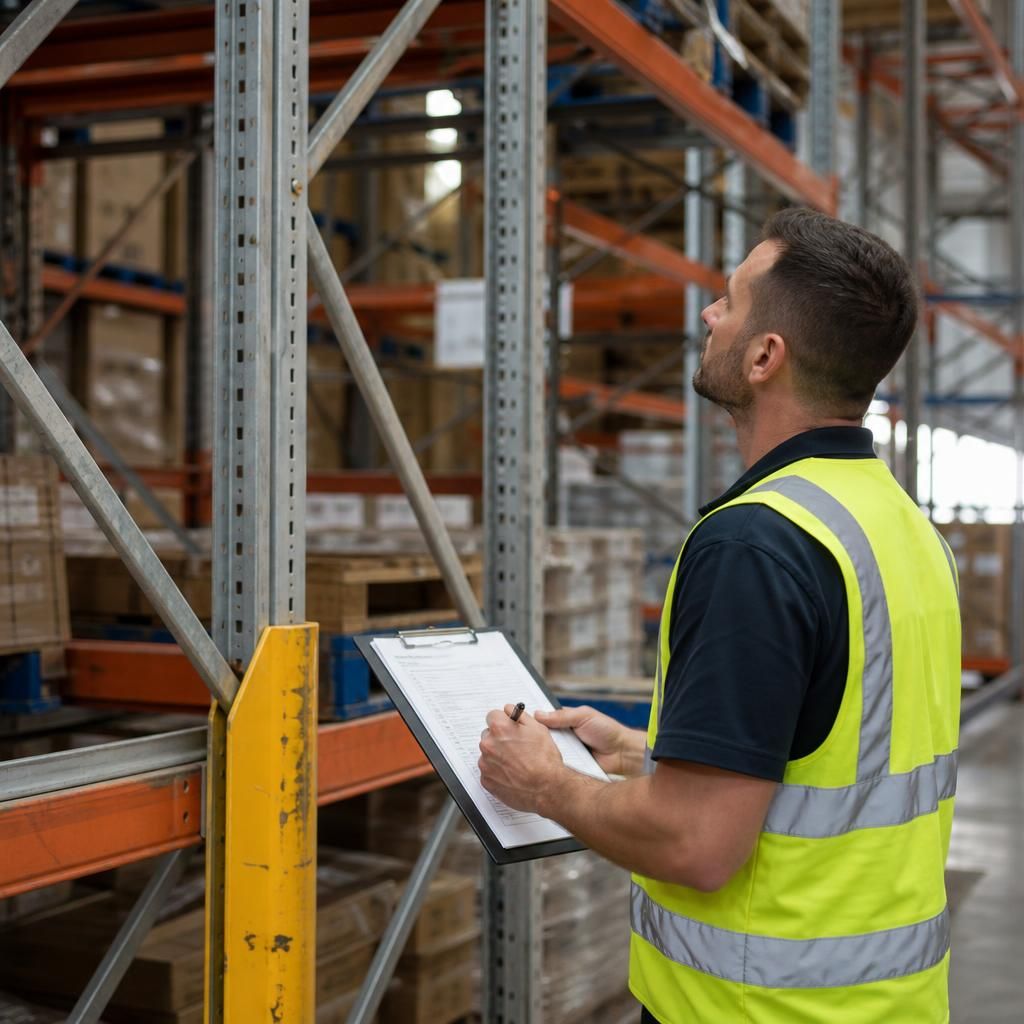
Regular inspections and preventative maintenance can be included within Able Racking’s warehouse rack repair service, subject to the agreed scope of work. Inspections identify impact damage, distortion, loose components, corrosion and other defects, while maintenance addresses issues before they develop into more serious structural or operational risks.
Inspection findings are recorded and used to determine the appropriate action, such as monitoring, isolating an affected bay, replacing components or completing an engineered repair. The inspection schedule should reflect site conditions, traffic levels, handling equipment and previous damage. Routine checks by warehouse staff remain important between competent inspections, with any impact or visible defect reported promptly.
Arrange Your Warehouse Rack Repair Inspection and Maintenance Review
Contact Able Racking to arrange a warehouse rack repair inspection and maintenance review tailored to your site, equipment and previous damage history.