
What type of inspections are conducted during the warehouse rack repair process?
During warehouse rack repair, inspections typically cover visible damage to frames, beams, bracing and fixings, along with alignment, stability, connections, load capacity and any changes to the storage system. The findings are assessed against the manufacturer’s specifications and relevant safety requirements so that repairs can be prioritised and completed safely.
During a warehouse rack repair process, inspections normally examine visible damage, structural condition, alignment, connections, stability, load information and the surrounding working environment. The inspection findings determine whether a component can remain in service, needs immediate unloading, requires repair or should be replaced.
A competent inspector will assess the warehouse racking systematically rather than looking only at the reported defect. This helps identify related damage and underlying causes, such as forklift impact, overloading, poor installation, movement of the storage system or changes to the way goods are stored.
Initial condition and safety assessment
The first stage is an overall assessment of the affected warehouse racking and the area around it. The inspector will consider whether there is an immediate risk of collapse or falling loads and whether the affected bay should be isolated or unloaded before a closer examination takes place. Warning signs, temporary supports and access restrictions may be recommended where the damage presents a significant risk.
This initial assessment also confirms the rack layout, the location of the reported defect and whether adjacent bays may have been affected. Impact damage can transfer through connected frames and beams, so limiting the inspection to one visibly damaged component may not provide a reliable safety assessment.
Inspection of frames, uprights and bracing
Vertical frame uprights are checked for dents, bends, twists, buckling, splits, corrosion and other deformation. The inspection includes the lower sections, which are particularly exposed to forklift impact, as well as the full height of each affected frame. Horizontal and diagonal bracing is examined for distortion, looseness, missing components or damaged welds and fixings.
The inspector will also check whether protective guards are correctly positioned and whether they have absorbed an impact without allowing damage to the upright behind them. A guard that appears intact does not necessarily confirm that the warehouse racking frame is undamaged.
Inspection of beams and load-supporting components
Beams are examined for bending, twisting, cracking, impact marks, damaged end connectors and movement within their connection points. Beam locking devices are checked to ensure they are present, correctly engaged and not distorted. The condition of beam seats, pins and other connection components is also considered.
Where decking, pallets, supports or other load-bearing accessories form part of the storage arrangement, these are checked for damage, displacement and unsuitable loading. Missing or damaged components can affect how loads are distributed, even where the main frame and beams appear sound.
Alignment, level and stability checks
An inspection considers whether frames remain plumb and whether beams and runs are correctly aligned. The inspector may use suitable measuring equipment to identify movement, settlement or deviations that are not obvious during a visual examination. Floor condition, slab damage and uneven settlement are also relevant because they can affect the stability and performance of the warehouse racking.
Baseplates, floor fixings and anchors are checked for looseness, damage, corrosion or signs of movement. The inspection may also consider whether the fixings are suitable for the floor and the loads being stored. Any evidence that the system has moved from its intended position should be investigated before repair work is authorised.
Connections, fixings and component compatibility
Connections between frames, beams, braces and accessories are inspected for missing, loose or incompatible parts. The repair assessment should confirm that replacement components are suitable for the specific warehouse racking system and that they will restore the intended structural arrangement.
Using an unapproved substitute or modifying a component on site can create a further safety risk. For that reason, repairs should be based on the manufacturer’s specifications, original design information or an appropriate technical assessment. Any changes to the system should be recorded and reviewed rather than treated as like-for-like repairs without verification.
Load capacity and configuration review
The inspection includes a review of load notices, beam levels, bay configuration and the loads currently stored. The stated capacity must correspond with the actual arrangement, including beam spans, levels, pallet type, load distribution and frame configuration.
Inspectors look for signs that the warehouse racking has been overloaded or used differently from its intended design. Examples include excessive beam deflection, damaged pallets, concentrated loads, unsupported goods, incorrect beam levels or loads that project into access aisles. If the layout or loading pattern has changed, the original capacity information may need to be reassessed.
Assessment of the warehouse environment
The surrounding workplace is reviewed because the cause of damage may not be limited to the storage system itself. The inspection can consider forklift routes, aisle widths, pedestrian movement, visibility, lighting, housekeeping and the effectiveness of impact protection.
Repeated damage near a particular aisle or bay may indicate a traffic-management issue, inadequate protection or insufficient operator visibility. Repairing the damaged component without addressing the cause may lead to further damage and recurring disruption.
Checks for alterations and unauthorised changes
The inspector will compare the installed warehouse racking with available drawings, specifications or previous inspection records where these are available. This can identify changes such as relocated beams, removed bracing, added accessories, altered aisle arrangements or extensions that have not been assessed.
Alterations can change load capacity and system stability even when every component appears undamaged. They should therefore be reviewed as part of the repair inspection and documented before the system is returned to normal use.
Compliance and inspection records
The findings are considered against the manufacturer’s instructions, the system design and relevant workplace safety requirements. In the UK, warehouse operators are expected to maintain work equipment safely and arrange suitable inspections based on risk. Warehouse racking should also be subject to regular, systematic checks by competent people, with more detailed inspections where damage or a significant change is identified.
A useful inspection report records the location and type of damage, the affected components, the risk classification or recommended priority, photographs where appropriate, immediate control measures and the proposed repair. It should also identify any defects that do not require immediate repair but need monitoring or planned attention.
Post-repair inspection
Once repairs have been completed, the affected area should be inspected again. This confirms that the correct components have been installed, connections and fixings are secure, alignment has been restored and any temporary restrictions can be removed safely. The surrounding bays should also be checked where the original damage may have affected connected components.
The warehouse racking should not be returned to full service solely because a damaged part has been replaced. The completed work needs to be verified against the repair recommendation and any updated load information, drawings or inspection records. Where the inspection identifies serious or widespread damage, a more detailed engineering assessment may be necessary before use resumes.
For customers arranging warehouse rack repair, providing the inspection report, load details, layout information and records of previous alterations helps the repair team make a sound assessment. Keeping the completed report and repair records with the warehouse safety documentation also supports future inspections and helps identify recurring damage.
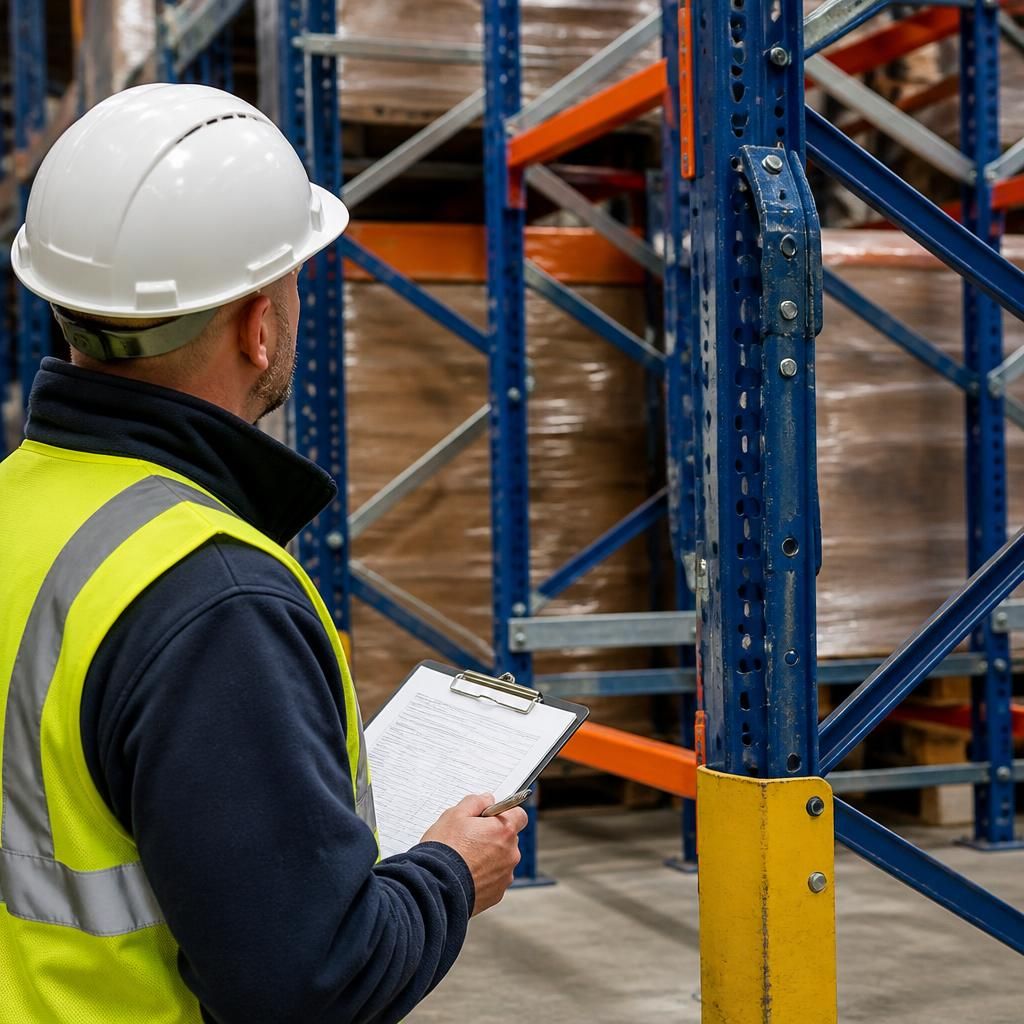
A post-repair inspection verifies that the warehouse racking has been safely restored before the affected area returns to normal use. The inspector checks that the specified components have been installed correctly, beam connections and locking devices are secure, frames are aligned, fixings are sound and any damage to adjoining bays has been addressed.
The inspection should also confirm that load notices, layout information and any temporary restrictions are still accurate. If the repair has not restored the system to its intended condition, the affected bay should remain unloaded or isolated until further corrective work or a technical assessment is completed. Recording these findings alongside the original damage report provides a clear audit trail for future warehouse racking inspections.
Arrange your warehouse rack repair inspection
Contact Able Racking to arrange a warehouse rack repair inspection and identify the correct corrective work for your storage system. Our competent team can assess the damage, recommend appropriate repairs and confirm when the affected area is safe to return to service.