
What is the typical turnaround time for warehouse rack repair services?
The typical turnaround for warehouse rack repair services depends on the extent of the damage, the required components and access to the affected area. Able Racking assesses the issue promptly, prioritises repairs that present an immediate safety risk and confirms the expected completion time once the work has been scoped.
The typical turnaround time for warehouse rack repair services depends on the severity and location of the damage, the parts required and whether the affected area can be safely accessed. Straightforward repairs may be completed during the initial visit when suitable components are available, while extensive damage, unusual parts or restricted access can require a planned follow-up visit.
Able Racking first assesses whether the damage presents an immediate risk to people, stock or the stability of the warehouse racking. Where necessary, the affected bay or aisle is isolated, unloaded or taken out of service before permanent repair work begins. This temporary control may be put in place promptly, but it should not be treated as a substitute for a properly specified repair.
Typical factors affecting the turnaround include:
- Whether the damage affects a frame, upright, beam, bracing member, protection or another structural component.
- The extent of deformation, cracking, corrosion or other deterioration.
- Whether the warehouse racking can be safely isolated without affecting essential operations.
- Whether replacement components are standard, available and compatible with the existing system.
- Whether unloading, lifting equipment, traffic management or additional site controls are required.
- The size and complexity of the repair, particularly where several bays or connected sections are affected.
- Whether the work requires approval from the equipment manufacturer, a responsible person or the site’s safety team.
Minor and straightforward damage can often be dealt with quickly, provided the correct replacement parts are available and the area is ready for the operative. Examples may include replacing a damaged protection component, renewing a compatible beam or carrying out a clearly defined repair to an accessible section. The affected location still needs to be made safe, checked and released for use only after the repair has been completed and assessed.
More extensive damage usually takes longer because the repair must be properly scoped before work starts. Damaged uprights, bracing, beams or connected sections may require unloading, temporary support, dismantling or replacement of multiple components. If a repair kit or matching component is not immediately available, Able Racking can identify the required parts and confirm the expected completion window once availability and site requirements have been checked.
The repair process normally involves reviewing the reported damage, inspecting the affected warehouse racking, recording the findings, agreeing the safe working method and completing the repair with suitable components. Following the work, the repaired area should be checked for correct installation, alignment, connections and stability. Any restrictions on loading or use should be communicated to the site team, together with details of further action where required.
Access arrangements can make a significant difference to completion time. Repairs are easier to schedule when the location is clearly identified, the relevant aisle or bay can be made available and stored goods can be removed safely. If warehouse activity continues around the work area, additional segregation, pedestrian controls or lifting arrangements may be needed. Providing photographs, bay references and details of any known impact can also help Able Racking prepare for the visit.
If damage is found during an inspection, the inspection findings should not be used to estimate a completion date without considering the repair scope. The inspection identifies the condition and risk; the repair plan determines the components, equipment, labour and controls needed to restore the warehouse racking safely. For this reason, a reliable timescale is normally confirmed after the affected area has been assessed rather than given as a fixed promise in advance.
When a repair cannot be completed immediately, the affected location should remain controlled in line with the risk assessment. This may mean unloading it, restricting access, applying a clear out-of-service marking or introducing other site controls until the permanent work is finished. Loads should not be returned simply because the area appears stable from ground level.
For the most accurate turnaround estimate, provide the site address, the location of the damage, photographs where safe to take them, the type of warehouse racking involved, any loading restrictions and the access conditions. Able Racking can then prioritise urgent risks, identify the likely repair requirements and confirm whether the work can be completed during the initial visit or needs a planned return.
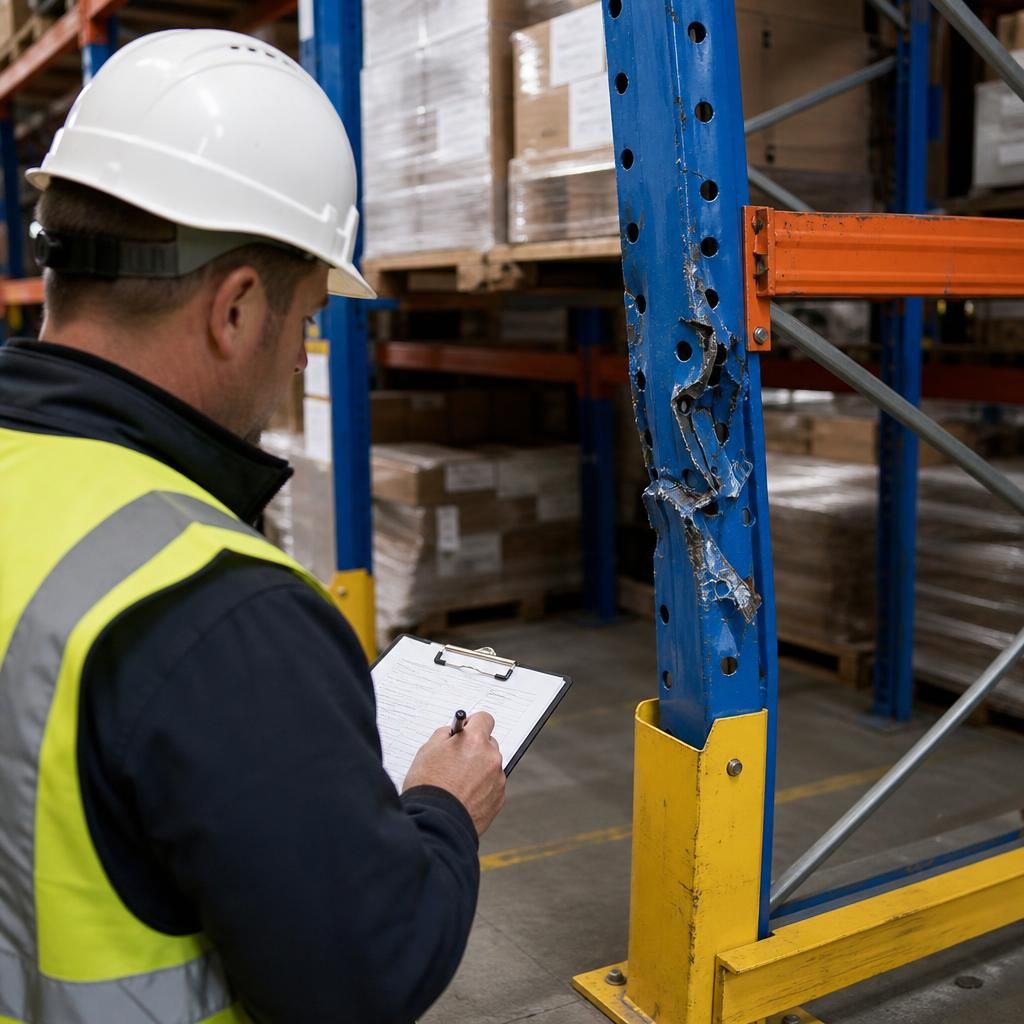
The availability of suitable replacement components and safe access to the damaged warehouse racking are two of the main factors affecting repair turnaround. If the affected bay is clearly identified, safely unloaded and accessible to the operative, the repair can often be planned and completed more efficiently.
Photographs, bay references and details of the damage can help Able Racking assess the likely requirements before attending site. Where compatible components are available and the damage is clearly defined, a repair may be completed during the initial visit. More complex damage, restricted access or parts that need to be sourced can require a planned follow-up visit.
Request a warehouse rack repair turnaround assessment
Contact Able Racking to arrange a warehouse rack repair turnaround assessment. We will review the damage, access requirements and parts needed, then confirm the most suitable repair timescale.