
What is the typical process for conducting warehouse rack repairs and how long does it take?
Warehouse rack repairs typically involve a damage assessment, risk control, repair planning, replacement of damaged components and a final safety check. Minor repairs may be completed during a scheduled visit, while more extensive work can take longer if parts, isolation or specialist installation are required.
Warehouse rack repairs typically follow a controlled process: the damage is assessed, immediate risks are isolated, the repair is planned, suitable components are sourced or prepared, the work is completed by competent operatives, and the repaired area is checked before being returned to service. Minor damage may be dealt with during a planned visit, while more extensive repairs can require additional time for specialist components, unloading, access arrangements or a follow-up inspection.
The process usually includes the following stages:
- Initial damage assessment. A competent inspector examines the affected upright, beam, bracing, protection, fixings and surrounding bays. They assess the type and extent of damage, consider whether the structure has moved or been overloaded, and look for related defects that may not be visible from the original impact point.
- Immediate risk control. If the damage presents a safety risk, the affected section is clearly identified and taken out of use. Loads may need to be removed, access restricted or the area isolated until a suitable repair has been completed. This prevents further loading or vehicle impact from worsening the defect.
- Repair planning. The repair method depends on the component affected, the severity of the damage, the design of the warehouse racking system and the manufacturer’s requirements. The plan may involve a proprietary repair solution, component replacement, realignment, new fixings or, where appropriate, removal and reinstatement of the damaged section. A damaged component should not be straightened, welded or improvised unless the method has been assessed and approved as suitable.
- Parts and access confirmation. The required components, tools, lifting equipment and access arrangements are confirmed before work starts. If replacement parts are readily available and the area can be safely accessed, the work may be completed during the original attendance. If parts are bespoke, unavailable or need to be matched to an existing system, the repair will normally be scheduled for a later visit.
- Repair or replacement. Before work begins, loads are removed where necessary and the repair area is made safe. Operatives then install the approved repair components or replace the damaged elements in accordance with the agreed method. The surrounding structure is also checked during the work, as impact damage can affect connections, floor fixings or adjacent bays.
- Final checks and handover. Once the work is complete, the repaired section is inspected for secure fixings, correct alignment, suitable protection and any remaining signs of damage. The area can then be returned to service only when it is safe to do so. Repair records, photographs, component details and any recommendations for ongoing monitoring should be retained with the site’s warehouse racking safety documentation.
How long the repair takes depends on the circumstances. A minor repair involving an accessible component and readily available parts may be completed during a scheduled attendance. A more involved repair may take longer because the affected bay must be unloaded, specialist access is needed, several connected components require attention or replacement parts have to be sourced. Repairs involving multiple bays, substantial impact damage or changes to the warehouse layout may require a planned installation visit and a separate completion check.
The time between reporting damage and completing the repair is also affected by the urgency of the risk. Damage that makes a section unsafe should be reported promptly and controlled immediately, rather than waiting for a routine inspection. Where the area can be safely isolated, the repair can be planned around stock movements and operational requirements. Where isolation is not practical, arrangements may need to be made outside normal warehouse activity to protect people, stock and equipment.
Before a repair visit, it is helpful to provide photographs, the location of the affected bay, details of any impact, information about the stored loads and whether the area can be unloaded. This allows the repair scope, access requirements and likely parts to be assessed in advance. It can reduce delays, although the final method must still be confirmed by a competent inspection on site.
A repair is not complete simply because a replacement part has been fitted. The underlying cause should also be considered. Repeated impact may indicate inadequate end protection, poor traffic segregation, restricted manoeuvring space or a need to review operator awareness. Overloading, unauthorised alterations, missing locking devices and uneven floors can also contribute to recurring defects. Addressing these issues helps prevent the same damage from returning.
Following completion, the site should continue with its planned warehouse racking inspections and routine visual checks. Any new impact, distortion, missing component or change in the condition of the repaired area should be reported without delay. Keeping repair records alongside inspection findings provides a clear history of the structure and supports ongoing compliance with the manufacturer’s instructions, the site’s risk assessment and recognised warehouse racking safety guidance.
For an accurate timescale, the condition of the damaged area, availability of parts and required isolation arrangements need to be confirmed together. A detailed assessment can establish whether the work is suitable for an immediate repair, requires planned replacement or should be escalated because the affected structure needs a more extensive safety review.
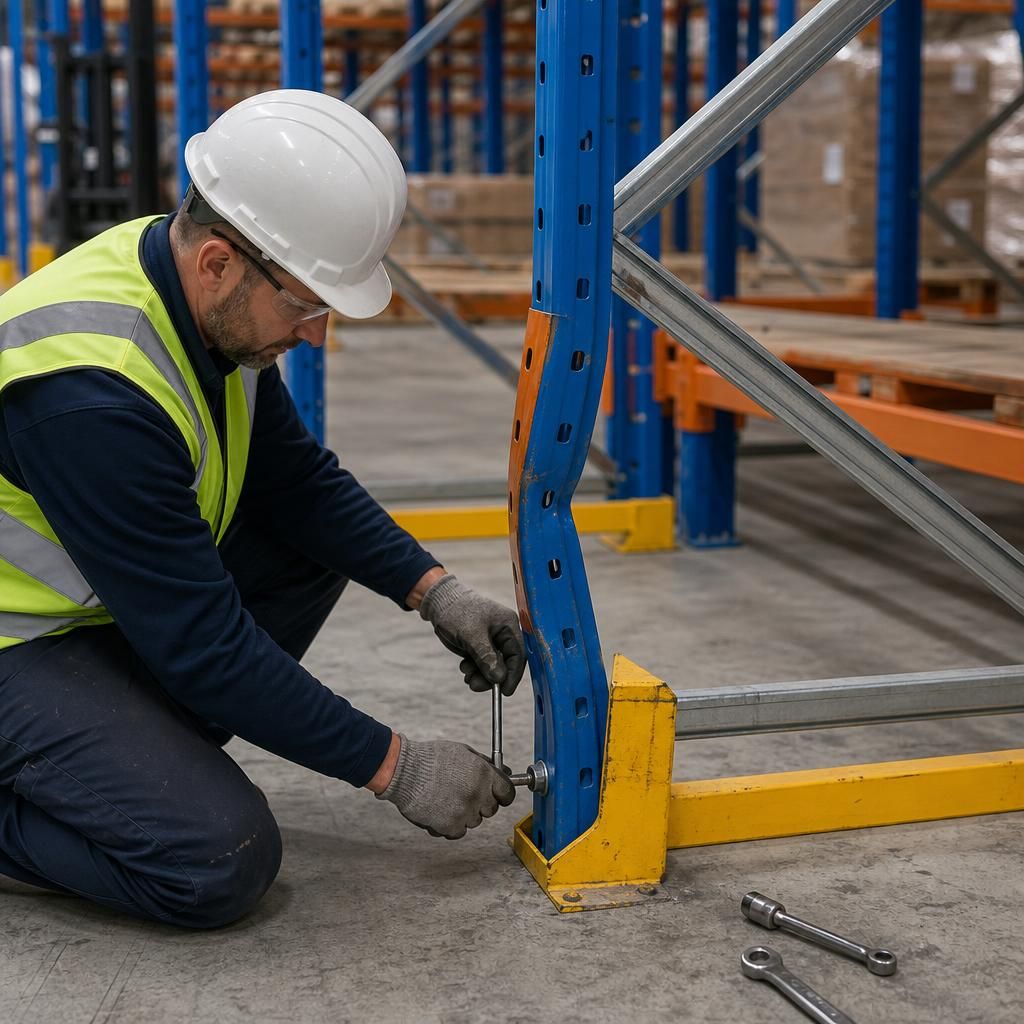
The time required for warehouse rack repairs is mainly determined by the extent of the damage, the availability of suitable replacement components and whether the affected area can be safely unloaded and isolated. An accessible repair with the correct parts available may be completed during the scheduled attendance, whereas damaged or specialist components may require a planned follow-up visit.
Before work is arranged, provide the affected bay location, photographs, details of any impact and information about stored loads. This helps confirm access, equipment and parts in advance. The repair should only be considered complete after the area has been checked for secure fixings, correct alignment and any related damage, with records updated for future warehouse racking inspections.
Book Your Warehouse Rack Repair Assessment
Book your warehouse rack repair assessment with Able Racking to confirm the damage, required repair method and likely timescale. Provide the affected bay location and any available photographs so the assessment can be planned efficiently.