
What are the typical signs indicating the need for warehouse rack repair?
Typical signs that warehouse rack repair is needed include bent or distorted frames, damaged beams, missing safety pins, loose fixings, impact damage, corrosion or visible instability. Isolate the affected bay where necessary and arrange a competent inspection promptly, as damaged warehouse racking can worsen and compromise workplace safety.
The typical signs that warehouse rack repair is needed are bent frames, damaged beams, missing locking pins, loose or displaced components, impact damage, corrosion and visible instability. Any of these defects can reduce the safe load-carrying capacity of warehouse racking. The affected area should be assessed by a competent person promptly, with damaged bays isolated from use where necessary until they have been made safe.
1. Bent or distorted upright frames
Warehouse racking frames can be damaged by forklift or pallet impact, particularly at lower levels and aisle ends. Look for uprights that are bent, twisted, buckled, visibly leaning or no longer aligned with adjacent frames. Damage to bracing, baseplates or floor fixings can also affect the frame’s stability.
Do not attempt to straighten an upright in place or conceal the damage with paint. A competent inspector should assess the extent of the distortion and determine whether the component can be repaired, requires replacement or needs further investigation.
2. Damaged, bent or sagging beams
Beams may become bent after being struck by handling equipment, overloaded or incorrectly loaded. Warning signs include a visible bend, twisted beam ends, damaged connectors, separation from the frame or noticeable sagging under a normal load.
Beam connectors and locking arrangements should also be checked. A beam that appears to be sitting correctly may still be insecure if its connector or locking pin has been damaged. Remove the load from any suspect beam only when this can be done safely, then arrange a professional assessment.
3. Missing or damaged safety pins and locking devices
Safety pins, locking pins and other retaining devices help prevent beams from becoming accidentally dislodged. A missing, broken or incorrectly fitted device is a defect, even if the beam appears stable.
Replace damaged components with the correct manufacturer-compatible parts. Improvised alternatives, including wire, bolts or unsuitable clips, should not be used because they may not provide the intended level of restraint.
4. Loose, displaced or missing fixings
Warehouse racking depends on secure connections between frames, beams, bracing, baseplates and the warehouse floor. Loose bolts, missing anchors, displaced braces or gaps around baseplates can indicate movement or impact damage.
Changes in floor condition can also affect the installation. Cracked concrete, damaged flooring or fixings that no longer hold correctly should be investigated before the affected bay is returned to service. Tightening a visible fixing without checking the surrounding structure may not resolve the underlying problem.
5. Signs of forklift or handling-equipment impact
Impact damage is not always obvious immediately after an incident. In addition to dents and scrapes, check for damaged frame guards, chipped paint, displaced components, distorted bracing and changes in alignment. A minor-looking contact can transfer force into an upright, beam connector or floor fixing.
All reported impacts should be recorded and reviewed in line with the site’s warehouse racking safety procedure. The damaged bay should be unloaded or isolated where appropriate, particularly if there is any doubt about its stability or load capacity.
6. Corrosion, cracking or material deterioration
Rust, flaking coatings and corrosion around joints or baseplates can reduce the strength and service life of warehouse racking components. Deterioration may be caused by moisture, chemicals, poor ventilation, washdown processes or damage to protective finishes.
Inspectors should consider whether corrosion is superficial or whether it has reduced the thickness or integrity of the steel. Cleaning and repainting may improve appearance but will not restore a component that has been weakened. Severely deteriorated parts may need replacement.
7. Visible instability or changes in alignment
Warehouse racking that appears to lean, sway, move during loading or unloading, or no longer stands square should be treated as a potential safety defect. Uneven beam levels, gaps between connected components and repeated movement may indicate damaged frames, inadequate anchoring, overloading or an unsuitable installation condition.
Do not continue using an unstable bay to determine whether the movement worsens. Restrict access and obtain a competent inspection. The assessment should establish the cause, identify any connected bays that may be affected and specify the necessary repair or replacement work.
Other warning signs to report
- Loads that overhang, appear unstable or exceed the stated safe working load.
- Pallets resting unevenly, broken pallets or products falling from storage positions.
- Missing load notices or labels that make capacity information unclear.
- Repeated damage in the same aisle or at the same storage level.
- Unauthorised alterations, including removed bracing or added components.
- Changes made to aisle widths, floor levels or handling equipment that affect clearance.
These conditions do not always mean that a repair is the only solution, but they warrant investigation. The correct action may be a component replacement, realignment, additional protection, load reduction, revised operating procedure or a combination of measures.
What to do when damage is found
- Stop using the affected storage position if there is a risk of collapse, falling loads or further damage.
- Prevent access to the bay or aisle where necessary, using a clear site control procedure.
- Unload the area only if doing so can be completed safely and without disturbing unstable components.
- Record the location, type and apparent severity of the defect, and report any impact or loading incident.
- Arrange an assessment by a suitably trained and competent warehouse racking specialist.
- Complete specified repairs using appropriate components and qualified operatives.
- Do not return the area to normal use until the repair has been checked and any required inspection records have been updated.
Warehouse racking repairs should address the cause as well as the visible defect. For example, recurring impact may require improved protection, clearer aisle controls, revised loading practices or refresher training for equipment operators. A repair that does not address the underlying cause can leave the same bay vulnerable to further damage.
Routine visual checks by trained staff, supported by scheduled expert inspections, help identify defects before they become more serious. Keep inspection and repair records, monitor repeated faults and make sure safe working load information remains visible and accurate. When there is uncertainty about the condition of a component, treat it as potentially unsafe until a competent person has assessed it.
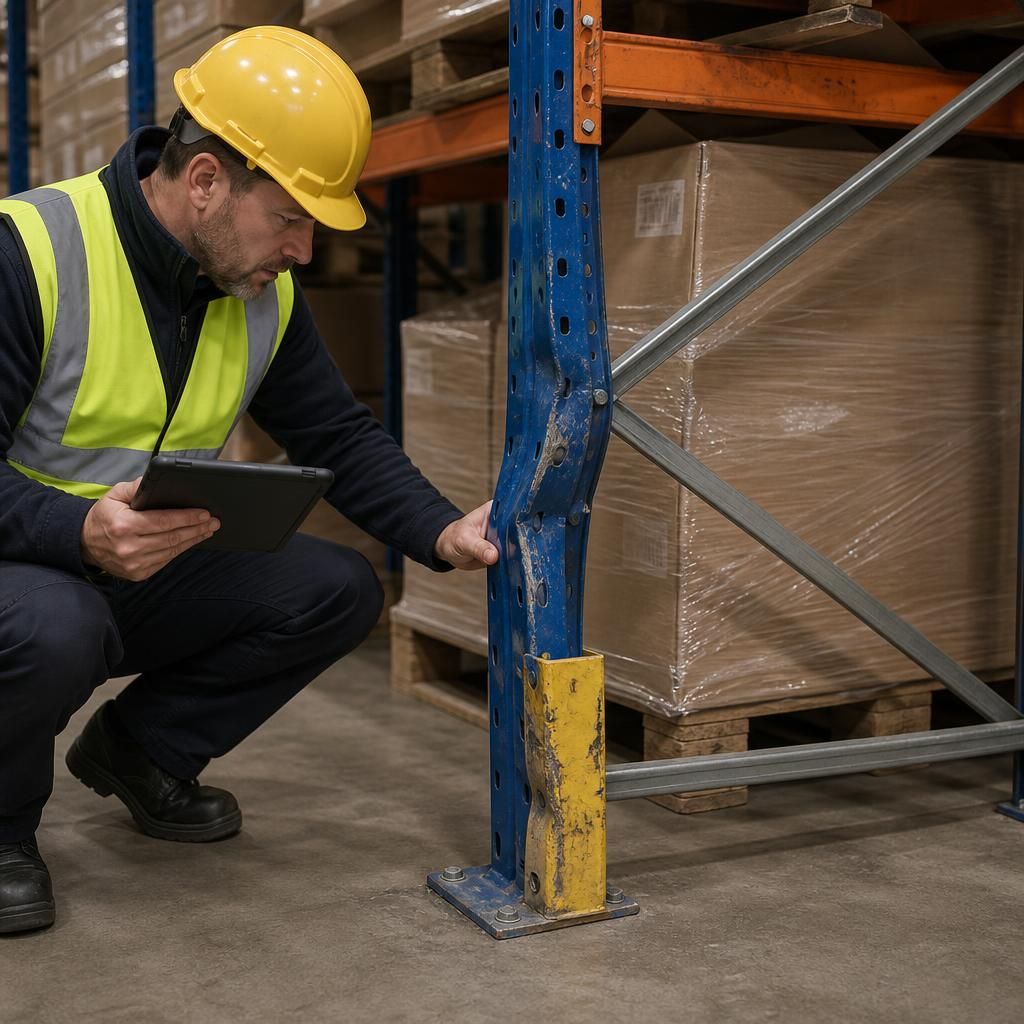
Forklift impact is a common sign that warehouse rack repair may be needed, even when the damage appears minor. Dents, scrapes, bent uprights, displaced bracing, damaged frame guards or gaps around floor fixings can indicate that force has affected the structure beyond the visible mark.
Isolate the affected bay where necessary, report the incident and arrange a competent inspection before it is returned to use. Do not straighten damaged components or rely on repainting to conceal defects. The assessment should confirm whether the affected parts can be repaired, need replacing or have caused damage to connected sections. If impacts recur in the same area, review aisle controls, protection and operator procedures as well as completing the immediate repair.
Arrange a Warehouse Rack Repair Assessment
Arrange a warehouse rack repair assessment with Able Racking to identify the cause and severity of any damage. Our competent team can advise whether components require repair, replacement or further inspection before the affected area is returned to use.